Spelman scholar using data to improve how AI represents Black women's hairstyles

The natural hair movement entered the mainstream during the civil rights movement. It became even more accepted in the 2000s when social media helped drive a resurgence.
But when it comes to nascent technologies like artificial intelligence, there isn't enough training data to create accurate representations of Black hair. In Atlanta, a Spelman College researcher is working to change that.
This pineapple hairstyle is one of Blanca Burch's signature looks, something she couldn't replicate when she tried to generate an AI image of herself.
"The AI, when I just typed in a Black woman with a pineapple hairstyle, struggled a little bit," Burch said. "Most notably, it would actually put a pineapple on the top of my head or change the hair color to green."
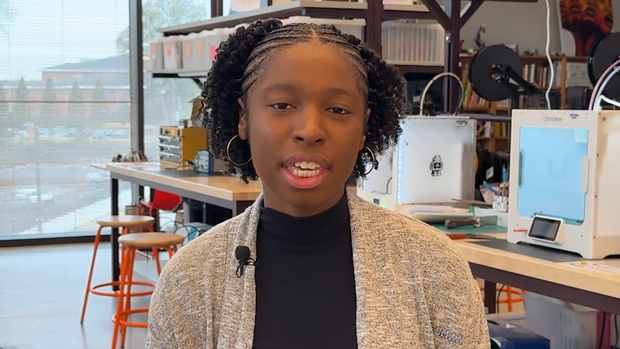
Burch is determined to improve how Black women are represented in AI. The Spelman College researcher recently launched "In the Context of Curls," a study gathering feedback on how accurately AI images depict Black hairstyles and hair textures.
"You can let us know if you think it's Fulani braids, Bantu knots, two-strand twists," she said.
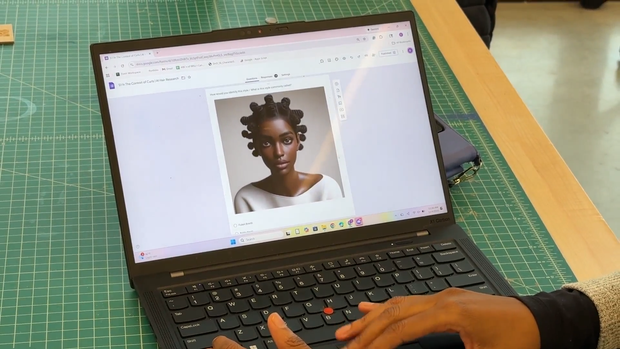
Over the next year, Burch hopes to have at least 200 participants in the study.
"When I worked in tech, one of the first products I had to work on was a video background blur for a video chat application. And one of the first things that we did was test it with me as the person who was in the foreground," said Spelman professor Jaycee Holmes, one of Burch's mentors on the project. "And we were trying to blur the background, but it didn't understand my hair texture at that time. And so that was just a really obvious example of, 'Hey, technology should work for everyone.'"
Burch's goal is to help developers create more accurate and inclusive AI technology.
"We're at the start of a technological era, and so all of the feedback that's being given is important and can make a really big difference," she said.
From afros to braids to cornrows — and yes, pineapples, too — a push for better representation.