Watch CBS News

How did schools spend COVID-19 funds?

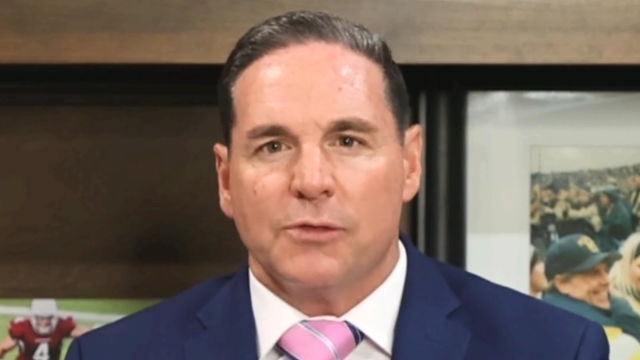
Congress provided nearly $200 billion in emergency funding for schools within the first year of the COVID-19 pandemic. But despite the huge sums of money, the nation's report card found student test scores are still lower across the board compared with pre-pandemic levels. Professor Thomas Kane, economist and faculty director at Harvard University's Center for Education Policy Research, joined CBS News to discuss why schools have struggled to get a handle on COVID recovery.

Aug 3, 2023 (05:29)

TRANSCRIPT FOR: “HOW DID SCHOOLS SPEND COVID-19 EMERGENCY FUNDS?”

JOHN DICKERSON:
00:00:00

When COVID-19 sent teachers and students from the classroom to the kitchen table, Congress leapt into action. They provided nearly $200 billion in emergency funding within the first year of the pandemic. But despite the huge sums of money, our nation's report card says student test scores are still lower across the board when compared with their pre-pandemic levels. Professor Thomas Kane joins us now. He's an economist and the Faculty Director at Harvard University's Center for Education Policy Research. Professor, you were on the team that studied the school COVID recovery in 12 districts across 10 states. Give us an outline of what you found.

THOMAS KANE:
00:00:44

So parents, and teachers, and students are eager to get back to school as normal. But they need to realize that normal school and normal school schedules will not be enough. The most effective strategies that we're seeing are those that involve more instructional time. So a number of states have launched tutoring initiatives, like Colorado, and Tennessee, and DC. Many districts have expanded summer learning. It's just-- and many of these things are having effects. They're just not doing them at a big enough scale.

JOHN DICKERSON:
00:01:26

And does scale mean more hours with the small-group tutoring? Or does it mean more teachers? Because what's worked has been these intensive small-group tutoring sessions, and therefore, you need more tutors.

THOMAS KANE:
00:01:43

Yeah. So districts have struggled to hire enough tutors to be able to deliver high-dosage tutoring to students. That continues to be a problem. And so it's either extending the school year, which is politically difficult, or expanding summer learning-- expanding the proportion of students attending summer school-- far beyond what has traditionally been like 6% or 10% of students. We need more districts to have 60% or 70% of students attending summer learning in the next couple of years if we're going to catch up.

JOHN DICKERSON:
00:02:24

And what did you determine, or what did you find in terms of the COVID money that went out? What went wrong or what wasn't working? Was it the result of the syntheses of the COVID period? Or was it that schools are fundamentally missing something in the way we educate our kids that was exacerbated during the COVID period?

THOMAS KANE:
00:02:47

So the recovery effort has been undersized from the very beginning. And part of that is due to the American Rescue Plan law itself, which only required districts to spend 20% on academic recovery. So think about it-- so the average student in the US lost the equivalent of about half a year's worth of learning. And half of annual spending on K-12 is about $330 billion. So you just reported that the aid that's been provided is $190 billion. So some districts will have had to spend almost all of their recovery dollars in order to be able to pay for the catch up that's necessary, not 20%. And it's that 20% minimum that has been guiding district spending decisions. And as a result, they've been way under spending. And we're going to discover, when the test scores start coming back in the coming weeks, that not only were students behind in May of 2022, they're still behind in May of 2023 by about the same amount in many places, is what I'm expecting to see.

JOHN DICKERSON:
00:04:10

And finally, were there any findings about how the students' age, race, or economic status affected outcomes during this period?

THOMAS KANE:
00:04:19

So losses were larger in high-poverty, high-minority school districts for two reasons. Number one, they were more likely to stay remote for longer. In every state, the number of weeks remote were higher in the high-poverty, high-minority school districts. But second, for each week that schools were closed, the losses were larger in high-poverty, high-minority schools, presumably because just access to educational resources outside of school were just lower or life was even more stressful in those communities during the pandemic. So the losses were larger for both reasons. About a third of it was due to longer school closures and about two-thirds was due to larger losses per week of closure.

JOHN DICKERSON:
00:05:18

Professor Thomas Kane, economist and Faculty Director at Harvard University Center for Education Policy Research. Thank you so much for being with us.

THOMAS KANE:
00:05:28

Thank you.

View CBS News In
CBS News App Open
Chrome Safari Continue