
Will SpaceX's blockbuster IPO soar or sputter? Past IPOs offer clues.
Splashy initial public offerings often skyrocket early on, only to return to earth with a thud, Wall Street analysts say.
Watch CBS News

Splashy initial public offerings often skyrocket early on, only to return to earth with a thud, Wall Street analysts say.

The iPhone was introduced in 2007, the same year the U.S. birth rate started to slide. The issues could be linked, a new analysis finds.
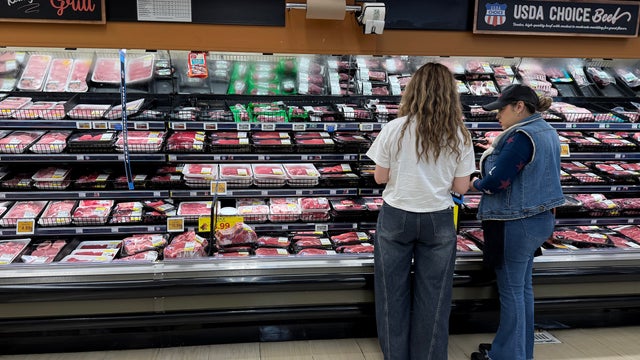
The Consumer Price Index rose last month at a 4.2% annual rate amid a spike in U.S. energy prices.
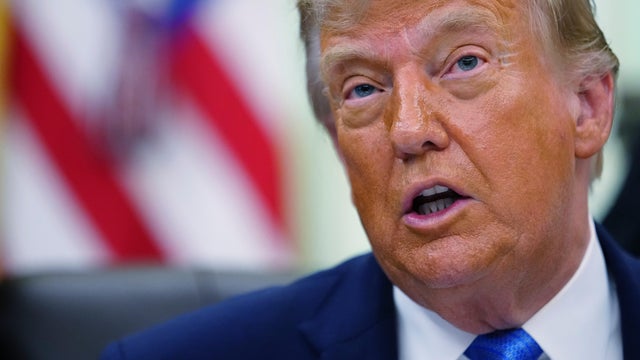
President Trump said the U.S. is seizing "millions" of barrels of Iranian oil in the dead of night, and said inflation will come down when the war ends.

The recall affects certain Honda Pilot, Ridgeline, Passport, and Acura MDX vehicles sold in 23 states and the District of Columbia.

Many Americans spend decades saving for retirement, but lack a plan for using that money once they stop working, a new survey finds. Here's what to know.

The report offers a fresh look at the finances of a program that provides benefits to more than 70 million Americans.

SpaceX is setting aside a large chunk of shares for ordinary investors as it seeks to raise a record $75 billion. Here's what to know.

According to a recent survey, 71% of U.S. public school teachers said they work at least one second job.

Inflation just rose to its highest level since 2023. Here are three CD account moves savers should make in response.

Social Security disability benefits can provide crucial income support, but eligibility is notoriously strict.

A new report says that Social Security will be insolvent by 2032. Here are four ways recipients should respond now.

CBS News is tracking the rising cost of products most impacted by tariffs imposed and soon-to-be-imposed by President Trump, from grocery items to cars and trucks.

These charts track prices consumers pay for groceries and other goods now compared to five years ago.
Many Americans spend decades saving for retirement, but lack a plan for using that money once they stop working, a new survey finds. Here's what to know.

Beneficiaries would continue receiving payments if Social Security's trust fund is depleted, but checks could shrink by about 24%, according to a new report.

Retirees say inflation, health care costs and market volatility are threatening their financial security.

"AI can make everything that was on my plate visible to colleagues while I'm gone," one expert said.

Although working remotely offers flexibility, it also takes a toll on people's mental health, experts said.

Economists at the New York Federal Reserve say they've identified the main reason some recent college grads are having trouble landing a job.

Jake Lang, a far-right influencer who was charged in connection with the Jan. 6, 2021, Capitol insurrection, was arrested in Dallas on a state charge of making terroristic threats.
According to a recent survey, 71% of U.S. public school teachers said they work at least one second job.

The wrongful arrest is just one of over a dozen in recent years linked to facial recognition technology.
The iPhone was introduced in 2007, the same year the U.S. birth rate started to slide. The issues could be linked, a new analysis finds.
Splashy initial public offerings often skyrocket early on, only to return to earth with a thud, Wall Street analysts say.
According to a recent survey, 71% of U.S. public school teachers said they work at least one second job.
The iPhone was introduced in 2007, the same year the U.S. birth rate started to slide. The issues could be linked, a new analysis finds.
Splashy initial public offerings often skyrocket early on, only to return to earth with a thud, Wall Street analysts say.
President Trump said the U.S. has taken out "millions" of barrels of Iranian oil in the dead of night, and said inflation will come down when the war ends.
The recall affects certain Honda Pilot, Ridgeline, Passport, and Acura MDX vehicles sold in 23 states and the District of Columbia.
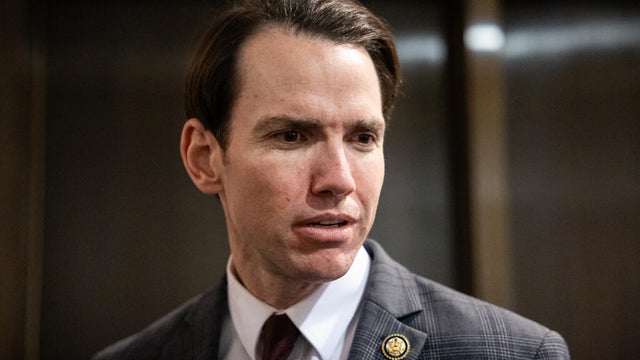
California's Democratic Gov. Gavin Newsom spearheaded a redistricting initiative that was intended to make up to five more districts more friendly to Democrats. Voters may have different ideas.
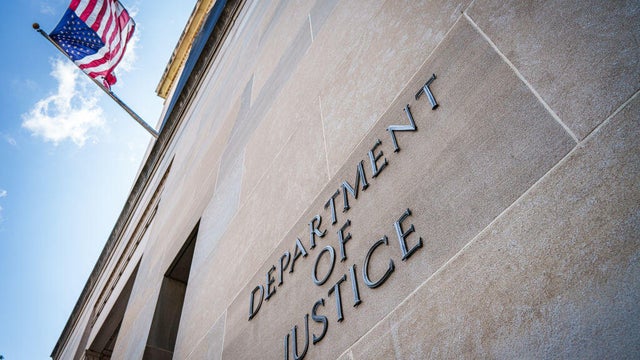
A judge denied a request to block the DOJ's "anti-weaponization fund," noting Acting Attorney General Todd Blanche had already vowed not to move forward. But the judge warned: "Don't play possum with this court."
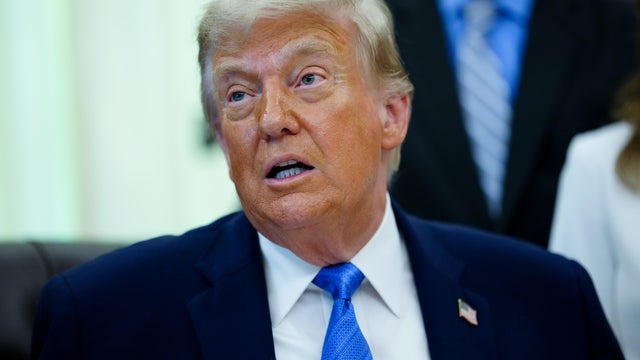
The U.S. military launched an additional round of strikes on targets within Iran early Thursday morning local time, hours after President Trump vowed to hit Iran "hard."
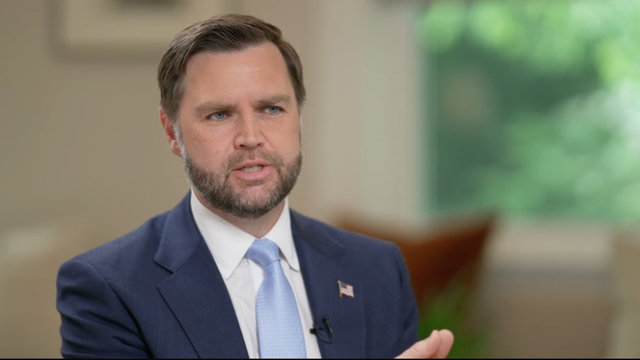
The vice president said President Trump "has been very clear about what is in our best interest" as the relationship with Israel is tested over the Iran war.

ICE has extended training for new officers and mandated additional instruction for those onboarded under a shortened process that has now been scrapped.
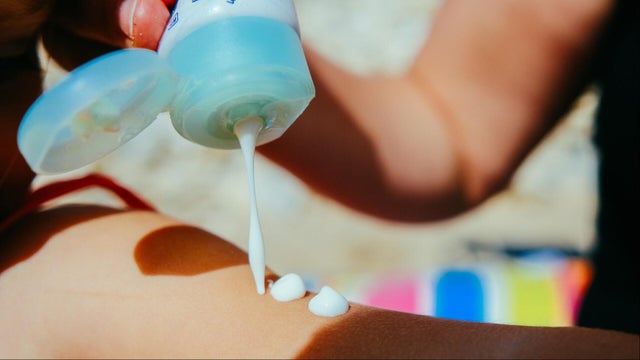
The FDA approved a new ingredient for sunscreen that's been in use in Europe for years. Dr. Jon LaPook has more details.

A sunscreen ingredient that's been available in Europe, Japan and South Korea for years has finally been approved by the FDA for sale in the U.S.

There's a new safety concern about doctors prescribing one experimental weight loss treatment, retatrutide, that hasn't even been FDA approved yet. Adam Yamaguchi reports.

Doctors are jumping the gun to prescribe a medication lacking FDA approval that has gone viral on social media. "Why are we waiting?" one physician asked.

Approved 20 years ago as a diabetes treatment, GLP-1 drugs have been found to help patients reduce weight, changing the lives of more than 30 million people in the U.S. But there also have been troubling side effects reported.

Police have used water cannons on protesters in Northern Ireland after violence erupted for a second night over a stabbing in Belfast.
The U.S. military launched an additional round of strikes on targets within Iran early Thursday morning local time, hours after President Trump vowed to hit Iran "hard."
The vice president said President Trump "has been very clear about what is in our best interest" as the relationship with Israel is tested over the Iran war.
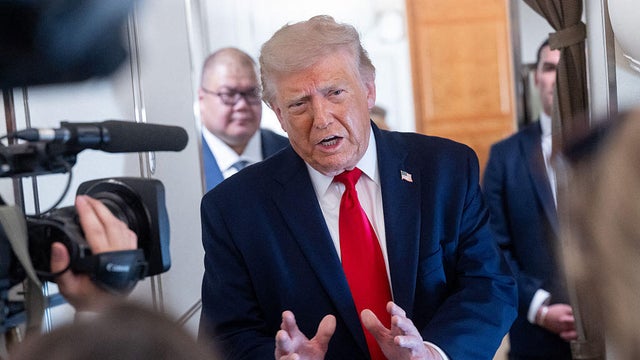
President Trump has offered timelines of days and weeks for the Iran war, but a solution remains elusive.

A growing number of Europeans see the U.S. as a rival or an adversary, especially in Denmark, France, Spain and Switzerland, according to the poll.
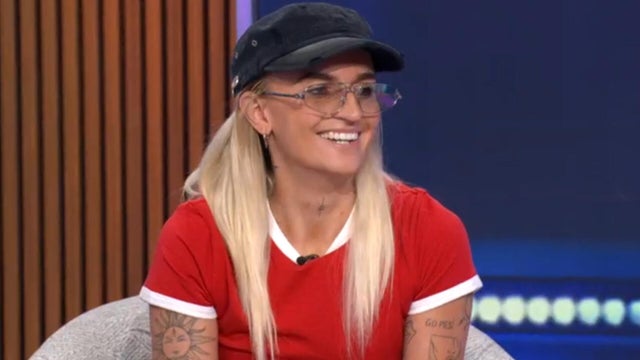
Musician G Flip first rose to fame in Australia but has become a global star since their song "Bed of Fire" appeared in the series "Off Campus." They speak to "CBS Mornings" about how the song's popularity has impacted their music, family support and advice for young artists.

Amazon Books editorial director Sarah Gelman joins "CBS Mornings" to reveal Amazon's best books of the year so far and why they made the list.

Pope Leo XIV met with music superstar Bad Bunny in Spain as the pontiff continues his multi-city tour. CBS News' Chris Livesay reports.

Bettors have wagered millions of dollars on platforms like Polymarket and Kalshi as rumors swirl surrounding the wedding of Taylor Swift and Travis Kelce. Jo Ling Kent has more.

Hollywood stars like Daniel Radcliffe and Rachel Dratch took to the stage this Broadway season. CBS News' Taylor Masi spoke with some of the stars at the 2026 Tony Awards.

Major tech players are racing to put AI on your face, literally, with smart glasses. Ziad Asghar, senior vice president and general manager of XR, Wearables and Personal AI for Qualcomm, joins CBS News to discuss.
The iPhone was introduced in 2007, the same year the U.S. birth rate started to slide. The issues could be linked, a new analysis finds.

From labor shortages to environmental impacts, farmers are looking to AI to help revolutionize the agriculture industry. One California startup, Farm-ng, is tapping into the power of AI and robotics to perform a wide range of tasks, including seeding, weeding and harvesting.

Last week, Anthropic, valued at almost a trillion dollars, filed to go public. Yesterday, its chief rival OpenAI confidentially filed for an initial public offering. Later this week, SpaceX is set to go public in what could be the largest IPO ever. Jon Krohn, the co-founder and CEO of Y Carrot, joins CBS News to discuss.

Meta pledged to invest $115 million to train electricians, plumbers and other workers needed to operate data centers.

The researchers saw many strange animals — many believed to be new to science — living off the whale carcasses.

NASA's Artemis III astronauts plan to carry out rendezvous and docking procedures with commercial moon landers being built by SpaceX and Blue Origin.
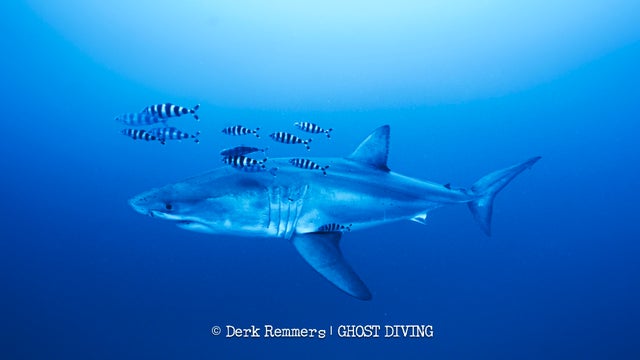
Great white sharks are classified as "critically endangered" in the Mediterranean Sea, and underwater sightings are incredibly rare.

The expected arrival of El Niño this summer could trigger another mass coral bleaching event, which would be the fifth on record, researchers said.

More than 5,300 years ago, Oetzi the Iceman was strolling through the Alps on the border of Austria and Italy when he was killed by an arrow in the back.
The wrongful arrest is just one of over a dozen in recent years linked to facial recognition technology.
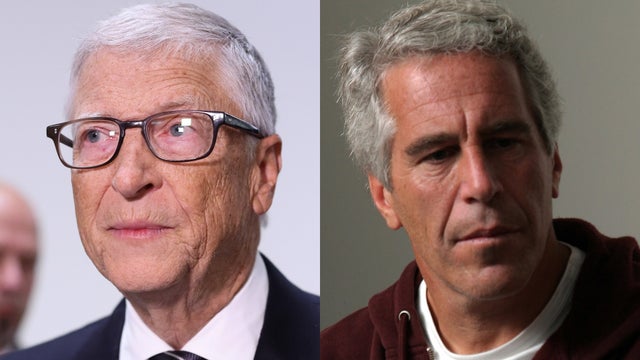
Microsoft co-founder Bill Gates spoke to reporters on Capitol Hill Wednesday before testifying for members of the House Oversight Committee about his ties to convicted sex offender Jeffrey Epstein. CBS News' Taurean Small reports.
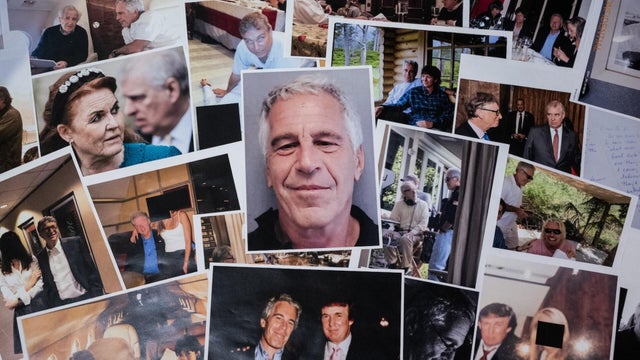
The release of the Epstein files triggered a "freakout" inside the White House for President Trump's top advisers, a new report from The New York Times shows. CBS News' Nancy Cordes has more.

An Air Canada pilot is accused of flying 900 flights over 17 years without a proper license. The man used false documents after being promoted to captain in 2009 until his retirement last year, authorities said. He did have a valid commercial pilot license, but never got the license required to act as a captain.
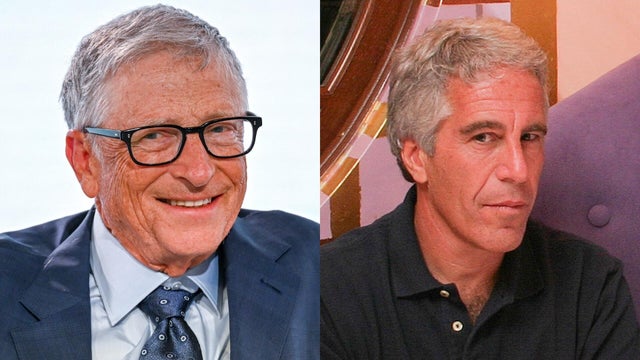
Microsoft co-founder Bill Gates is expected to testify before members of the House Oversight Committee in a closed-door interview to discuss his ties to convicted sex offender Jeffrey Epstein. CBS News' Taurean Small reports.
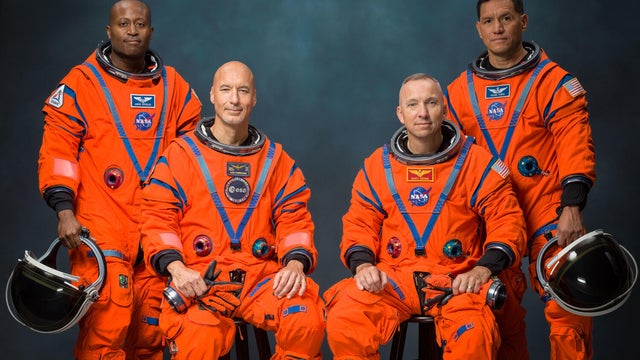
NASA's Jared Isaacman says the crew was selected solely based on their experience, expertise and availability for flight assignment.
NASA's Artemis III astronauts plan to carry out rendezvous and docking procedures with commercial moon landers being built by SpaceX and Blue Origin.

Out of an abundance of caution, NASA briefly directed five of the seven crew members aboard the International Space Station to wait inside the docked SpaceX Crew Dragon "Freedom" spacecraft.

Three solar flares burst from the sun this week, raising the chances of seeing the northern lights for people across the United States.

NASA officials said the $582 million MAVEN orbiter could not be recovered after a problem on the far side of Mars late last year, and that its extraordinarily successful mission was at an end.

A look back at the esteemed personalities who've left us this year, who'd touched us with their innovation, creativity and humanity.

Summer is the time to enjoy live music, indoors and out. Scroll through our gallery of some of 2026's leading musical acts, featuring images by CBS News photojournalist Jake Barlow and photographers Ed Spinelli and Kirstine Walton.

Does the evidence show a cover-up, or was Todd Kendhammer wrongfully convicted for the murder of his wife?
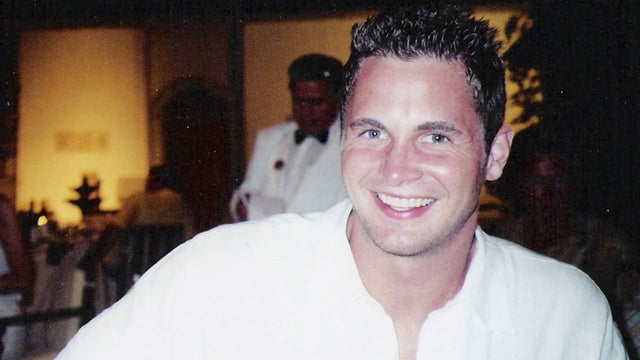
Family seeks answers in death of newlywed who disappeared in 2005 while on Mediterranean honeymoon cruise.
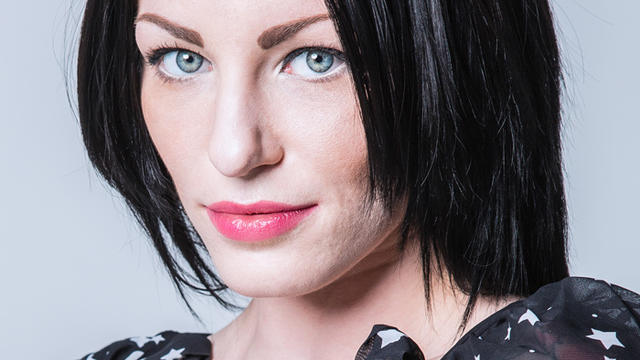
Meet the tattooed beauty charged in the death of Google executive Forrest Hayes.

A new poll from Edward Jones and Gallup of more than 5,000 adults found only 16% felt financially "fulfilled." More than half said they feel financially "conflicted," experiencing both stability and uncertainty. 32% were financially stressed. Washington Post columnist Michelle Singletary joins "The Daily Report" to discuss her article about the poll.

A federal judge has halted an effort by the Trump administration to force states to comply with conditions tied to SNAP food benefits. Twenty Democratic states sued over requirements surrounding gender ideology, immigration and fair opportunities in sports for women and girls. CBS News legal contributor Jessica Levinson answers constitutional questions about the case.
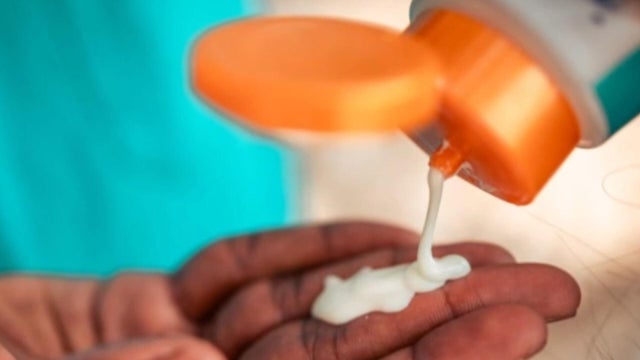
The Food and Drug Administration approved the chemical compound bemotrizinol in sunscreens sold in the U.S. It's the first time in over 25 years that the FDA has approved a new sunscreen ingredient. CBS News medical correspondent Dr. Céline Gounder has more.
The U.S. launched strikes against Iran on Wednesday night following the downing of an Apache helicopter earlier in the week. CBS News Pentagon reporter Eleanor Watson has the latest. Then, Ret. Army Maj. Mike Lyons joins with analysis.
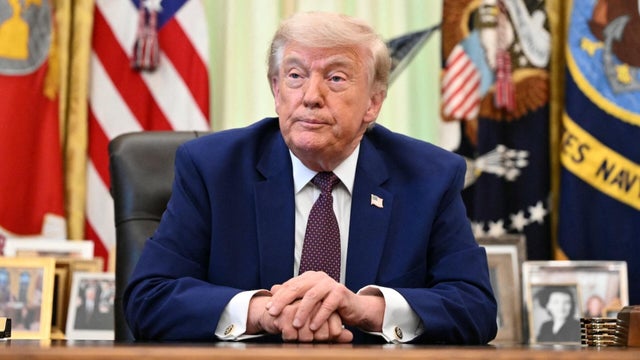
U.S. Central Command said the U.S. launched a new round of what it called self-defense strikes against Iran on Wednesday. Two U.S. officials familiar with the strikes told CBS News the targets include amminuition depots, command and control centers and warehouses. CBS News' Charlie D'Agata and Courtney Kealy have more.