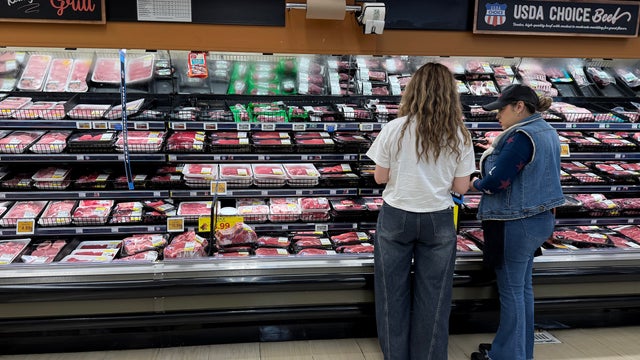
Inflation topped 4% in May as CPI surged to its highest level in more than 3 years
The Consumer Price Index rose last month at a 4.2% annual rate amid a spike in U.S. energy prices.
Watch CBS News

The Consumer Price Index rose last month at a 4.2% annual rate amid a spike in U.S. energy prices.

Many Americans spend decades saving for retirement, but lack a plan for using that money once they stop working, a new survey finds. Here's what to know.

The report offers a fresh look at the finances of a program that provides benefits to more than 70 million Americans.

SpaceX is setting aside a large chunk of shares for ordinary investors as it seeks to raise a record $75 billion. Here's what to know.

Meta pledged to invest $115 million to train electricians, plumbers and other workers needed to operate data centers.

Banca Monte dei Paschi di Siena has been operating for well over 500 years, and some Italian officials reportedly want to ensure it stays in Italian hands.

Economists expect the Consumer Price Index this week to show U.S. inflation continuing to rise due to higher energy costs.

The Pentagon has added several prominent Chinese businesses, including tech giant Alibaba, to its list of Chinese military companies, keeping them from getting U.S. defense contracts.
Stellantis is recalling almost 1.08 million Jeep Wranglers and Gladiators in the U.S. that could catch fire even when they're parked and turned off, federal regulators say.

Your Social Security check isn't fully shielded from old federal student loans. Here's how much is at risk.

Inflation just jumped to its highest point since April 2023. Here's what that may mean for mortgage interest rates.
Moving $200,000 out of your retirement account into a CD may make sense now. Here's how much interest you can earn.

CBS News is tracking the rising cost of products most impacted by tariffs imposed and soon-to-be-imposed by President Trump, from grocery items to cars and trucks.

These charts track prices consumers pay for groceries and other goods now compared to five years ago.
Many Americans spend decades saving for retirement, but lack a plan for using that money once they stop working, a new survey finds. Here's what to know.

Beneficiaries would continue receiving payments if Social Security's trust fund is depleted, but checks could shrink by about 24%, according to a new report.

Retirees say inflation, health care costs and market volatility are threatening their financial security.

"AI can make everything that was on my plate visible to colleagues while I'm gone," one expert said.

Although working remotely offers flexibility, it also takes a toll on people's mental health, experts said.

Economists at the New York Federal Reserve say they've identified the main reason some recent college grads are having trouble landing a job.
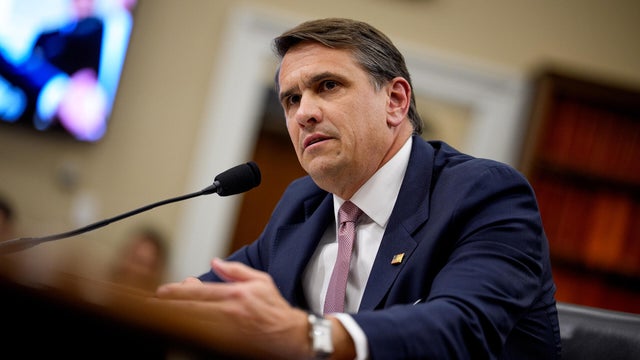
House Oversight and Reform Committee Chairman James Comer said he wants Acting Attorney General Todd Blanche to appear before lawmakers in July.

A federal judge banned Alabama from executing an inmate by nitrogen hypoxia, calling the method unconstitutionally cruel.
The Consumer Price Index rose last month at a 4.2% annual rate amid a spike in U.S. energy prices.

Police are treating the case as a possible homicide and have a Thai woman in custody, sources told The Associated Press.
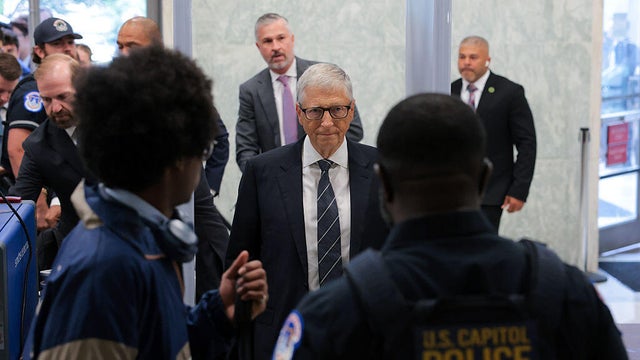
Microsoft co-founder Bill Gates is sitting for a transcribed interview as revelations about his relationship with Epstein have rocked his philanthropic foundation.
The Consumer Price Index rose last month at a 4.2% annual rate amid a spike in U.S. energy prices.
Economists expect the Consumer Price Index this week to show U.S. inflation continuing to rise due to higher energy costs.
Many Americans spend decades saving for retirement, but lack a plan for using that money once they stop working, a new survey finds. Here's what to know.
Banca Monte dei Paschi di Siena has been operating for well over 500 years, and some Italian officials reportedly want to ensure it stays in Italian hands.
Medicare's hospital insurance trust fund will be unable to pay full benefits in 2033, which could lead to higher health care costs for Americans over 65.
House Oversight and Reform Committee Chairman James Comer said he wants Acting Attorney General Todd Blanche to appear before lawmakers in July.
Microsoft co-founder Bill Gates is sitting for a transcribed interview as revelations about his relationship with Epstein have rocked his philanthropic foundation.

Democrats are aiming to unseat Nevada GOP Gov. Joe Lombardo in one of the country's most tightly contested gubernatorial contests this year.
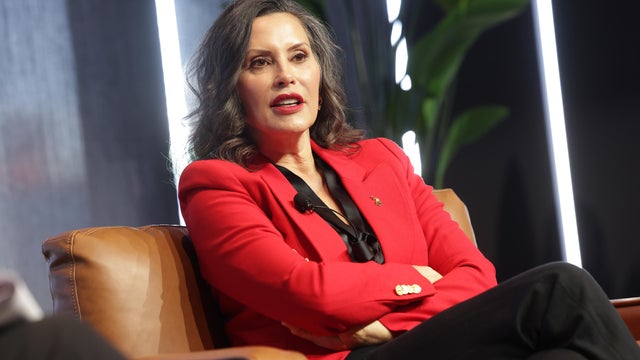
In a 3-0 ruling, the Michigan Court of Appeals on Tuesday overturned a conviction against a man in connection with the 2020 plot to kidnap Gov. Gretchen Whitmer.
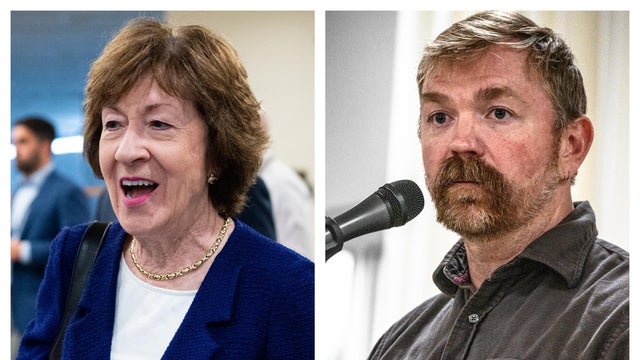
The primary victories set up a race that could be key to Democrats' hopes of winning control of the Senate.

The FDA approved a new ingredient for sunscreen that's been in use in Europe for years. Dr. Jon LaPook has more details.

A sunscreen ingredient that's been available in Europe, Japan and South Korea for years has finally been approved by the FDA for sale in the U.S.

There's a new safety concern about doctors prescribing one experimental weight loss treatment, retatrutide, that hasn't even been FDA approved yet. Adam Yamaguchi reports.

Doctors are jumping the gun to prescribe a medication lacking FDA approval that has gone viral on social media. "Why are we waiting?" one physician asked.

Approved 20 years ago as a diabetes treatment, GLP-1 drugs have been found to help patients reduce weight, changing the lives of more than 30 million people in the U.S. But there also have been troubling side effects reported.

Left stranded in freezing temperatures near Everest's "death zone," the climber said he survived for days with almost no food or water.

Israeli restaurateur Yehezkel Schweiger tells CBS News why he's willing to brave daily Hezbollah attacks to bring customers a bit of joy.

Pakistan says it killed 26 militants in "precise and calibrated" strikes, but Afghanistan's Taliban rulers claim 11 children and a woman are among the dead.
Police are treating the case as a possible homicide and have a Thai woman in custody, sources told The Associated Press.

The U.S.-Iran ceasefire appears to crumble as Trump says he's considering new strikes and Tehran will "pay the price" for not accepting a deal.

Amazon Books editorial director Sarah Gelman joins "CBS Mornings" to reveal Amazon's best books of the year so far and why they made the list.

Pope Leo XIV met with music superstar Bad Bunny in Spain as the pontiff continues his multi-city tour. CBS News' Chris Livesay reports.

Bettors have wagered millions of dollars on platforms like Polymarket and Kalshi as rumors swirl surrounding the wedding of Taylor Swift and Travis Kelce. Jo Ling Kent has more.

Hollywood stars like Daniel Radcliffe and Rachel Dratch took to the stage this Broadway season. CBS News' Taylor Masi spoke with some of the stars at the 2026 Tony Awards.

"Marshals" actor Logan Marshall-Green joins CBS News 24/7 Mornings to discuss his recent work on "The Odyssey," "Boiúna: Legend of the Amazon" and "Killing Castro."

Last week, Anthropic, valued at almost a trillion dollars, filed to go public. Yesterday, its chief rival OpenAI confidentially filed for an initial public offering. Later this week, SpaceX is set to go public in what could be the largest IPO ever. Jon Krohn, the co-founder and CEO of Y Carrot, joins CBS News to discuss.
Meta pledged to invest $115 million to train electricians, plumbers and other workers needed to operate data centers.

From labor shortages to environmental impacts, farmers are looking to AI to help revolutionize the agriculture industry. One California startup, Farm-ng, is tapping into the power of AI and robotics to perform a wide range of tasks, including seeding, weeding and harvesting.

Apple is rolling out an update with new parental controls to help navigate screen time and keep kids safe. Jo Ling Kent explains the changes.
SpaceX is setting aside a large chunk of shares for ordinary investors as it seeks to raise a record $75 billion. Here's what to know.

NASA's Artemis III astronauts plan to carry out rendezvous and docking procedures with commercial moon landers being built by SpaceX and Blue Origin.

Great white sharks are classified as "critically endangered" in the Mediterranean Sea, and underwater sightings are incredibly rare.

The expected arrival of El Niño this summer could trigger another mass coral bleaching event, which would be the fifth on record, researchers said.

More than 5,300 years ago, Oetzi the Iceman was strolling through the Alps on the border of Austria and Italy when he was killed by an arrow in the back.

Days after a meteor exploded over New England, another fireball was spotted, visible in the Midwest to the Northeast. Rob Marciano has more.

An Air Canada pilot is accused of flying 900 flights over 17 years without a proper license. The man used false documents after being promoted to captain in 2009 until his retirement last year, authorities said. He did have a valid commercial pilot license, but never got the license required to act as a captain.
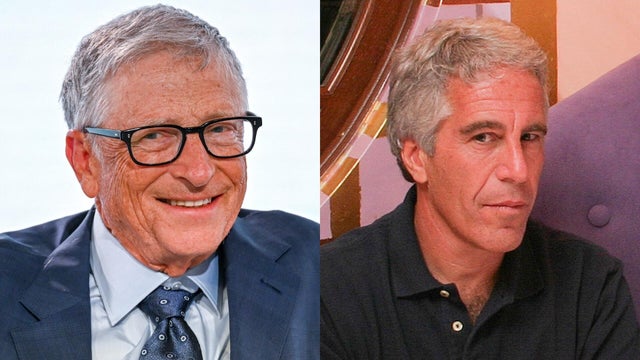
Microsoft co-founder Bill Gates is expected to testify before members of the House Oversight Committee in a closed-door interview to discuss his ties to convicted sex offender Jeffrey Epstein. CBS News' Taurean Small reports.

A jury in Texas found 19-year-old Karmelo Anthony guilty of murder in a fatal stabbing of a fellow high school athlete. Jonah Kaplan reports.

"This is similar to a doctor that is licensed to practice family medicine but is doing brain surgery in their office," police said.
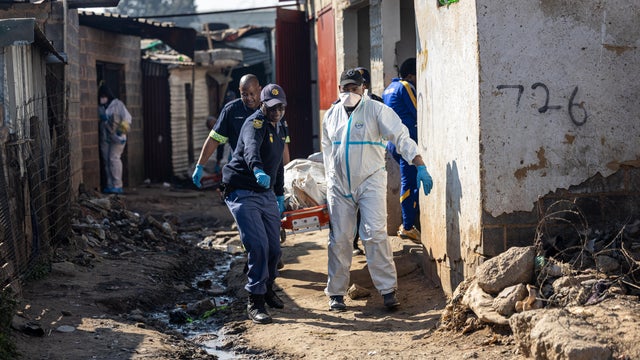
Multiple attackers killed at least 12 people and wounded nine others in a late-night mass shooting near South Africa's biggest city, Johannesburg, police say.
NASA's Artemis III astronauts plan to carry out rendezvous and docking procedures with commercial moon landers being built by SpaceX and Blue Origin.

Out of an abundance of caution, NASA briefly directed five of the seven crew members aboard the International Space Station to wait inside the docked SpaceX Crew Dragon "Freedom" spacecraft.

Three solar flares burst from the sun this week, raising the chances of seeing the northern lights for people across the United States.

NASA officials said the $582 million MAVEN orbiter could not be recovered after a problem on the far side of Mars late last year, and that its extraordinarily successful mission was at an end.

Damage to Blue Origin's lone launch pad in the wake of last week's spectacular explosion was not as severe as initially feared, the company said.

A look back at the esteemed personalities who've left us this year, who'd touched us with their innovation, creativity and humanity.

Summer is the time to enjoy live music, indoors and out. Scroll through our gallery of some of 2026's leading musical acts, featuring images by CBS News photojournalist Jake Barlow and photographers Ed Spinelli and Kirstine Walton.

Does the evidence show a cover-up, or was Todd Kendhammer wrongfully convicted for the murder of his wife?

Family seeks answers in death of newlywed who disappeared in 2005 while on Mediterranean honeymoon cruise.

Meet the tattooed beauty charged in the death of Google executive Forrest Hayes.

President Trump said Wednesday on social media that Iran has "taken too long to negotiate a deal" and will "pay the price," as Iran said it launched new attacks on U.S. installations across the Middle East. CBS News' Charlie D'Agata and Olivia Rinaldi have more.

Household budgets are under increased pressure as new Consumer Price Index data shows inflation rose to 4.2%, the highest level since April 2023. The Federal Reserve will meet later in June to discuss interest rates. CBS News' Kelly O'Grady breaks it down.

Democrat Graham Platner will face Republican incumbent Sen. Susan Collins in the 2026 midterm election, CBS News projects after Tuesday's primary. Caitlin Huey-Burns has more.
Amazon Books editorial director Sarah Gelman joins "CBS Mornings" to reveal Amazon's best books of the year so far and why they made the list.

Mirra Andreeva joins CBS News' Errol Barnett to discuss her rise to fame and her next challenge -- Wimbledon. This comes as Serena Williams returns to the court.