Mexican party taps first woman for presidential run
Mexican presidential candidate Josefina Vazquez Mota celebrates her victory with her counterparts Santiago Creel, left, and Ernesto Cordero from the National Action Party during a press conference in Mexico City Feb. 5, 2012.
/ AFP/Getty Images"It's Josefina!" read the headlines in Mexico today, after the ruling National Action Party chose Josefina Vazquez Mota as the party's first female presidential candidate ahead of elections on July 1.
Vazquez Mota, 51 -- a mother of three, avid Twitter user, and a former radio anchor, congresswoman and education secretary -- faces an uphill battle for the presidency. Her contenders are the photogenic Enrique Pena Nieto, 45, of the Institutional Revolutionary Party (PRI), the party that ruled Mexico for most of the 20th century and Andres Manuel Lopez Obrador, from the left-of-center Democratic Revolution Party (PRD) who narrowly lost to President Felipe Calderon in 2006.
Continue »
Mexican health officials keep careful eye on Swine flu spike
A man gets a voluntary swine flu vaccination from a nurse at a subway station in Mexico City, Tuesday Jan. 31, 2012. Federal Health Secretary Salomon Chertorivski Woldenberg said Tuesday there have been 1,623 cases of all strains of flu in Mexico so far in January, 90 percent of them H1N1. Despite the spike, Chertorivski said the cases are within normal range for a flu season.
/ Photo/Eduardo VerdugoMEXICO CITY -- There were more swine flu (H1N1) cases for the month of January 2012 than the total cases for the whole of last year, according to Salomon Chertorivski, Mexico's health secretary. But in an effort to allay fears regarding the latest influenza scare, the health secretary noted that H1N1 cases were down overall in 2011.
"There's no cause for alarm, or worry, but rather action," said Chertorivski, while addressing a group of reporters over breakfast in Mexico City on Tuesday.
A total of 32 people have died in Mexico due seasonal influenza (29 of the victims had H1N1). Chertoriviksi said 70 percent of the recent fatalities also had other health issues such as diabetes, obesity or cancer.
Continue »Report slams military role in Mexico atrocities
Gustavo Acosta Luj?n is seen in an undated photo.
/ The Acosta family/Human Rights WatchSusana Seijas is CBS News producer based in Mexico City
MEXICO CITY - A leading human rights group issued a report Wednesday charging the Mexican military and police with widespread abuses in the war on drugs.
Human Rights Watch released the report after meeting with Mexican President Felipe Calderon. Calderon told the group that in his view the biggest threat to human rights in Mexico comes from criminals. "They are the ones who, by committing serious crimes such as murder, kidnapping and extortion, systematically violate the rights of citizens and their families," Calderon said according to a written statement put out after the meeting by his office. Continue »Teacher sings Barney amid drug cartel gunfire
Updated at 11:45 a.m. ET, May 31 with comments from Rivera.
Marta Rivera Alanis, a 33-year-old kindergarten teacher and mother of two, received a special recognition from local Mexican authorities for her heroic action calming her 15 pre-school-age students during a gun battle which raged outside her classroom Friday.
The incident occurred Friday at a school in Monterrey, 140 miles south of the Texas border and once one of the safest, most prosperous cities in Mexico.
But in recent years, drug traffickers have been settling into Monterrey's posh neighborhoods, changing the tranquility of the city.
The video Rivera shot from her Blackberry while a shootout between rival drug cartels took place outside her school has now gone viral.
Bar shut down at Mexico prison
Federal and local authorities discovered the bar behind bars at a prison workshop at a minimum-security prison in the northern state of Chihauhua Monday.
/ Chihuahua State Prosecutor's OfficeSusana Seijas is a CBS News producer based in Mexico City.
MEXICO CITY, Mexico - It looked more like a frat house than the inside of a prison.
Federal and local authorities discovered the bar behind bars at a prison workshop at a minimum-security prison in the northern state of Chihauhua Monday.
Continue »Human smuggling exposed by truck x-ray
An x-ray shows more than 500 people packed into two trucks in southern Mexico.
/ Chiapas state government websiteby Susana Seijas, a CBS News producer based in Mexico
The x-ray photo says it all: more than 500 migrants packed into trucks like sardines, as many as 4 people per 1 square meter, some crouching, others standing and holding onto ropes from the truck's rooftop. The reality of human smuggling brutally exposed in the migrant's subhuman travelling conditions.
Continue »Billionaire Slim opens art museum in Mexico City
A man runs up the stairs of the Soumaya Museum in Mexico City, March 1, 2011.
/ AP Photo/Dario Lopez-MillsThe museum, named in honor of Slim's late wife, Soumaya, is in the upscale Polanco neighborhood and will display 60,000 of the tycoon's art pieces. The building was designed by Mexican architect Fernando Romero, Slim's son-in-law. (See a picture.)
The aluminum-encased asymmetrical building houses several Rodin sculptures, works by El Greco, Rubens, Monet, Renoir and Degas as well as murals by Mexican muralists Rufino Tamayo and Diego Rivera. The museum will open to the public later this month, entrance is free of charge.
Slim originally made his fortune in telecommunications and is worth $53.5 billion, according to Forbes magazine.
Hundreds of Calderon's security detail -- known here as the Estado Mayor -- swarmed the vast block that makes up Plaza Carso (short for Carlos and Soumaya).
To everyone's surprise, King kicked off the event by taking off his blazer and showing his trademark suspenders. Slim was one of the last big interviews on Larry King Live before King's retirement last year.
"I love this country and I love this city," said King while standing at the podium in an apparent PR effort to counter the murder and mayhem headlines coming out of Mexico these days.
Calderon, who spoke after King and Slim, thanked King in English for his comments. But it was Slim who had the last word.
"I want fine art at the reach of Mexicans who can't travel abroad," he said.
Mexican Drug Queen Acquitted on Trafficking Charges
Sandra Avila Beltran
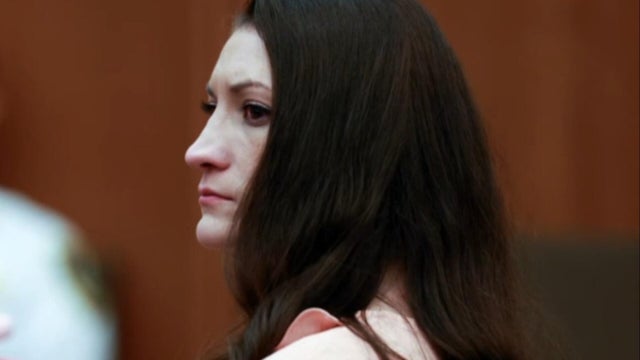
/ CBSSandra Avila Beltran was reputed to play a key public relations role for the Sinaloa cartel, headed by Joaquin "El Chapo" Guzman, Mexico's most wanted drug trafficker. Avila Beltran is said to have worked on various shipments of cocaine from Colombia to Mexico. She was arrested outside a restaurant in the San Jeronimo neighborhood of Mexico City in September 2007.
Avila Beltran, used to Chanel makeup and the best things money can buy - has been languishing in the Santa Marta Acatitla women's prison in Mexico City.
Watch 60 Minutes' Anderson Cooper Interview Sandra Avila
The Colombian capo, Juan Diego Espinoza, alias "The Tiger," an alleged collaborator of Avila Beltran's who is reputed to have been her lover, was also absolved of any drug smuggling charges. They were both charged with trafficking up to 10 tons of cocaine, seized by Mexican authorities aboard a ship off the coast of Manzanillo in 2001.
The ruling is still open for appeal by Mexico's Attorney General's Office, the institution which accused Avila Beltran and Juan Diego Espinoza of drug trafficking charges back in September 2007.
But Avila Beltran won't get out of prison just yet - the United States government has an order for her extradition on drug trafficking and money laundering charges. Meanwhile, "The Tiger," Sandra Avila's old flame is in Florida serving six years as a protected witness, on charges linked to the cocaine shipment.
Avila Beltran is the very stuff of narco legend - she grew up among drug traffickers in the state of Sinaloa and "the godfather" of Mexican drug trafficking, none other than Miguel Angel Felix Gallardo, is her uncle. The Queen of the Pacific is reputed to have attended lavish parties at the hideouts of famous Mexican drug lords. She has inspired narco ballads, like "Reina de Reinas" by the Tigres del Norte, which says, "the more beautiful the rose, more dangerous the thorn."
At the time of her arrest, the video of her testimony seemed made for a telenovela. She told authorities she was a housewife who made money from selling clothes and real estate.
Read Mexico's "Queen Of The Pacific"
In 2009, 60 Minutes interviewed Julio Scherer, journalist and author of "Queen of the Pacific: It's time to talk," in the 60 Minutes interview Scherer said that Sandra Avila "opens many avenues of investigation" into the world of drug trafficking.
Female Police Chief Murdered in Mexico
Mexican federal police officers man a roadblock in the town of Meoqui, state of Chihuahua, northern Mexico, Monday Nov. 29, 2010 after the police chief of the town was gunned down.
/ AP PhotoHermila Garcia, 38, was shot on her way to work Monday by a convoy of gunmen. Garcia, a trained lawyer, took the job as police chief on Oct. 9 in the town of Meoqui, in drug violence-ridden Chihuahua state.
The assailants intercepted her in the town of Los Garcia, some 10 kilometers from Meoqui around 7:20 a.m. Monday. Garcia was in charge of up to 90 police agents in a mostly agricultural region of the Chihuahua state, some 70 kilometers south of Chihuahua City, the capital of the state.
"La Jefa," as she was known to her police agents, didn't carry weapons or have bodyguards.
"If you don't owe anything, you don't fear anything," she was fond of saying when asked why she didn't have security.
Mexican media reported that Garcia was single and lived with her parents, whom she supported financially.
Continue »Singing to Death: Minstrels to the Mexican Cartels
Fabian Ortega, better known as "El Halcon de la Sierra"
/ Youtube/music videoOrtega, killed Oct. 19 in the northern Mexican state of Chihuahua, was a "grupero" musician. Gruperos often sing ballads, called "narcocorridos," about drug trafficking and drug traffickers. Ortega's body, along with two others, was found riddled with bullet holes on a highway. While unconfirmed, drug-related violence is suspected.
Carlos Gonzalez, a spokesman for the local prosecutor's office, said the bodies had multiple gunshot wounds and looked like they had been killed by several men, judging from the number of empty bullet casings.
Musicians like Ortega often compose "narcocorridos" in honor of particular drug traffickers. The corresponding videos frequently appear on YouTube. The songwriting is "not always an outright celebration of the cartel bosses," says Elijah Wald, a music journalist and author of Narcocorrido: A Journey Into the Music of Drugs, Guns, and Guerrillas.
Ortega is known for his song "Puros huevos y frijoles", (Only scrambled eggs and beans), which explains the temptation of drug-trafficking to many Mexicans. "I was tired of eating eggs and beans, of being humiliated by everyone, I dedicated myself to trafficking to find better things," he sang.
And find better things he did -- along with a criminal record. Ortega was arrested last year after being found in possession of crystal meth, illegal weapons, $20,000 in cash and more than 844 assault rifle rounds. That arrest, and the seizure of the illicit goods, took place on a yacht off the coast of Baja California, while Ortega was in the company of a hitman for drug kingpin Teodoro Simental, who earned the nickname "The Stewmaker," for having the corpses of tortured rivals dissolved in acid.
Ortega was the fifth grupero singer killed in Mexico in just three years. Other narcocorrido musicians who met the same fate were Valentin Elizalde, known as the "Gallo de Oro" (Golden rooster), Sergio Gomez, of the group K-Paz, and Sergio Vega, known as "El Shaka," who was killed earlier this year as he made his way to a concert in his red Cadillac. The grandfather of narcocorridos, Chalino Sanchez, was assassinated in the early 90's.
Why was Ortega killed? The Mexican newspaper La Jornada reports that Ortega was known for being friends with drugtraffickers who often hired him to sing at their parties. Grupero music, in general, is known for its connections with organized crime.
In 2009, Mexican authorities arrested Ramon Ayala and Los Bravos del Norte, for their alleged links with the Beltran Leyva cartel. They were arrested at a "narcofiesta" which the Beltran Leyva brothers were hosting near Cuernavaca, Morelos a few days before Arturo Beltran Leyva "the boss of bosses" was killed by Mexican security forces.
It may be an actual drug trafficker who explained the execution of the singers best, admitting the futile reasons for their slayings.
Edgar Valdez Villareal, aka La Barbie, one of Mexico's top capos arrested in August told authorities the cartels kill grupero musicians, "because they go around with different groups or cartels, because they didn't go and sing to a certain narco, or for other silly reasons."
This story was filed by CBS News producer Susana Seijas in Mexico City.
Mexico's Bravest Woman Replaces Beheaded Police Chief
Police Chief Marisol Valles on the phone in her office in the northern Mexican border town of Praxedis, Chihuahua State, Mexico, Oct. 19, 2010.
/ Getty ImagesHer predecessor was kidnapped more than a year ago. His head was deposited outside the police station a few days after he disappeared. After that, no one came forward to fill the police chief vacancy for more than a year -- until Valles put her name down for the position.
The town's former mayor was killed in June, but the spiraling violence in the state of Chihuahua -- Mexico's deadliest -- didn't deter the young criminology student and mother to a baby boy. She says she took the job because she wants a better future for her son.
"I took the risk because I want my son to live in a different community to the one we have today. I want people to be able to go out without fear, as it was before," Valles said during her swearing in ceremony on Wednesday.
"My people are out there going door to door, looking for criminals, and (in homes) where there are none, trying to teach values to the families," she told the Associated Press before the ceremony.
Praxedis is about an hour drive from Juarez, better known these days as "the murder capital of the world" thanks to its high murder rate. The Juarez valley, where Praxedis is located, has had a total of 2,500 drug violence-related deaths this year.
With a population of just 10,000, the town had eight murders last week alone.
It was once a peaceful town. Now, those who are able flee to other areas to escape the violence between the Sinaloa and Juarez cartels, as they battle for control of the lucrative smuggling routes into the U.S.

Valles will have a total of 19 police officers under her command, at least half of whom are women. She plans to hire more women and says she will focus on reviving family values, public spaces and a better work ethic.

This "easy money" is the biggest problem facing Mexico today, often corrupting underpaid police who will moonlight for drug traffickers.
President Felipe Calderon is pushing for an overhaul of the national police force in an attempt to root out corruption. His plan is to bring as many as 2,500 municipalities like Praxedis under the control of state governments, which are thought to be less corrupt.
Mexico's drug violence has claimed almost 29,000 lives since President Calderon took office in late 2006 and sent about 45,000 soldiers to fight the powerful drug cartels. But the cartels' activities now extend beyond drug smuggling to include human trafficking, kidnapping, extortion and piracy.
"Young people need to engage with their communities," said Valles. "I don't have experience, but experience builds up on the job."
This story was filed by CBS News producer Susana Seijas in Mexico City.
D'oh! Homer Simpson Decorated Seized Pot
Packages of seized marijuana are displayed during a presentation for the media in Tijuana, Mexico, Oct. 18, 2010.
/ AP PhotoMEXICO CITY -- Mexico celebrated a rare coup in its fight against the country's powerful drug cartels: the seizure of more than 105 tons of marijuana with a street value of $340 million in the border city of Tijuana.
The pre-dawn raid took place Monday in two of Tijuana's most impoverished neighborhoods, Arroyo La Mar and Playas de Tijuana. A further raid is said to have taken place in Rosarito, a popular destination with American tourists, 16.5 miles south of Tijuana.
Continue »Mexican Journalists March in Protest of Cartel Attacks
Journalists march in Mexico City August 7, 2010 to protest kidnappings and other attacks on reporters. The banner reads, "For our right to know and the right to inform."
"Los queremos vivos," or "we want them alive," read banners carried by journalists who marched from Mexico City's Angel of Independence down Reforma Avenue towards the Ministry of the Interior, demanding justice and protection for journalists.
Journalism in Mexico has been a life-threatening profession for some years now. A total of 67 journalists have been killed here since 2000, according to Reporters Without Borders, making Mexico one of the most dangerous countries to be a journalist.
As drug-related violence in Mexico has intensified, claiming some 28,000 lives since President Felipe Calderon took office on Dec 1, 2006 and declared war on Mexico's ruthless drug cartels, reporters have increasingly become the targets of organized crime.
"This is the first march organized by journalists calling for the protection of journalists," said Marcela Turati, who heads Journalists on Foot, an organization that assists reporters threatened by organized crime. "It's an important first step that so many of us have come out today protesting the insecurity suffered by journalists, some of the most vulnerable members of Mexican society today. But we need more follow-up, more mechanisms to protect journalists," added Turati.
"We've reached a critical extreme," said investigative reporter Victor Ronquillo during Saturday's march. "The kidnapping of four journalists last month was the last straw. Our colleagues were just covering a breaking news event, not doing any muckraking investigative work, which shows you the level of total impunity and danger we've reached."
Miriam Ruiz, a radio reporter, takes part in the march.
The turning point in the debate over journalists' safety, however, came when four journalists, including three from major TV networks, were abducted by drug traffickers on July 26 while covering the Gomez Palacio prison in Durango state, where prison wardens allegedly armed and let out inmates on a night-time killing spree that ended in the massacre of 17 partygoers in nearby Torreon, Coahuila state on July 18.
In a rare outcome for the kidnapping victims, two of the reporters were rescued days later, on August 1, by Mexico's federal forces. (The other two journalists had been released earlier on in the week.)
Mexico's Security Minister, Genaro Garcia Luna, said Joaquin "El Chapo" Guzman, Mexico's most wanted drug trafficker who heads the Sinaloa cartel, was behind the kidnappings and allegedly demanded Mexican media run clips that accused Durango state officials of favoring a rival gang.
"What this march shows is total solidarity with reporters in the most dangerous parts of Mexico - mostly in the north of the country," said Manuel Clouthier, a federal congressman who is part of a committee that monitors attacks on the media at Congress and one of the few politicians present at the march.
"In the past, before the four journalists were abducted, we had a total disconnect between what happened to journalists in other states. It's as if attacks on the media were happening in another country," Clouthier said. "We have to applaud that Mexico City and journalists here are in complete solidarity with colleagues in places like Durango and Juarez."
"Attacks on the media are now part of the national debate," said Carlos Zuniga, a news anchor at Milenio TV who took to the airwaves denouncing his colleagues' abduction. Javier Canales, a cameraman for Milenio in Torreon was one of the four journalists kidnapped last month.
"Let's hope something good comes of this march, we all need to get more involved - we need to further the dialogue of journalism safety among media owners and the government," Zuniga added.
Georgina Olson, a Mexico City-based reporter for Excelsior newspaper, said the march was creating awareness and strengthening ties among reporters.
"If we don't come out and protest, the narcos are going to end up terrorizing us all," said Olson.
"For Mexico City and foreign journalists covering the drug war we have the luxury of being able to parachute in and out of places like Juarez, but for our colleagues who live and work there, there is no reprieve, no time out from the violence," said Ronquillo as journalists put up protest banners on the gates of the Ministry of the Interior. "What's worse, not even the Mexican government can guarantee our safety."
Mexico's Brutal Turf War

For Mexicans living in Ciudad Juarez, this week's massacre at the rehab center could've been just another violent day in Mexico's deadliest city.
But this latest killing spree has jolted Juarez, recently dubbed "Mexico's murder capital."
Wednesday's rampage on a drug rehab center claimed the lives of 18 men shot down by an armed commando with AK-47s. The multiple homicides are reported to have taken place in a matter of 10 to 15 minutes.
Continue »
Mexico's State of Determination

Different must be a euphemism for horrible. This was bound to be a difficult year to summarize for Mexico's beleaguered President. In the past year he has been battered with several challenges: the world economic recession, the influenza outbreak, diminishing oil resources, the worst drought the country has seen in years, escalating drug violence, topped by the world's belief that Mexico is ungovernable.
Surrounded by heavy security, Calderon delivered the annual address at the Palacio Nacional, rather than risk the jeering of an aggressive opposition at Congress, where the address was traditionally held. Calderon?s past addresses became almost undeliverable because of the heckling from opposition lawmakers after the disputed 2006 election.
Continue »
- no previous page
- Next