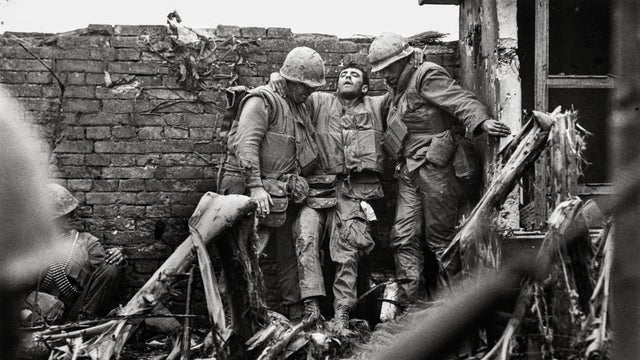
"Pictures to hurt you": A war photographer's final testament to Vietnam
"I want my pictures to hurt," British war photographer Sir Don McCullin told CBS News ahead of the publication of his final book: "Vietnam."
Watch CBS News
"I want my pictures to hurt," British war photographer Sir Don McCullin told CBS News ahead of the publication of his final book: "Vietnam."
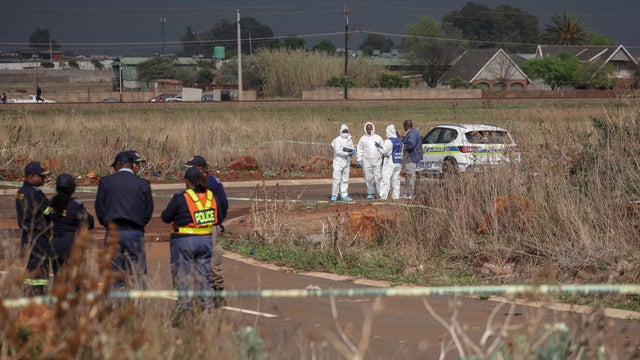
The discovery of the nine bodies has fueled fear and anger, as authorities investigate whether a serial killer or killers were responsible.

The scale and duration of Iran's response appeared to take the U.S. goverenment by surprise, three sources who were in Bahrain at the time told CBS News, in part because families hadn't yet been required to evacuate.

Meloni said the government would bring the proposed legislation to the Council of Ministers, after which it would require parliamentary approval to become law.

Police have not said what led to the shooting or whether the synagogue or Jewish community was targeted.
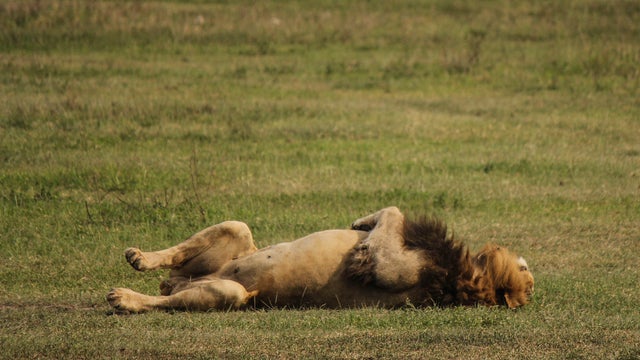
An investigation is underway to establish the definitive cause of the deaths inside the area where wildlife including lions, elephants and black rhinos live.

As President Trump touts a looming decision on his next move in the war, Tehran says any "new aggression" would be met with different weapons in new places.
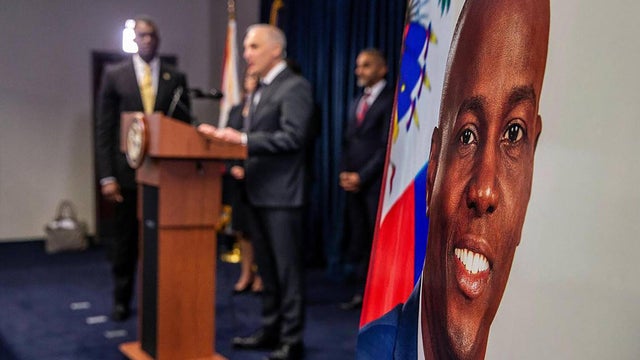
Eighteen suspects who were arrested in the July 2021 killing of Haitian President Jovenel Moïse were awaiting extradition to the U.S. on Sunday.

German Chancellor Friedrich Merz acknowledged that the result was a "disaster" but said he would still move ahead with his government's reform agenda.
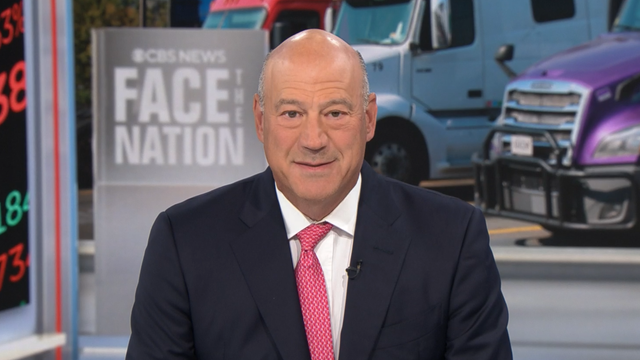
The following is the transcript of the interview with IBM vice chair Gary Cohn, who served as an economic adviser in President Trump's first term, that aired on "Face the Nation with Margaret Brennan" on Sept. 20, 2026.
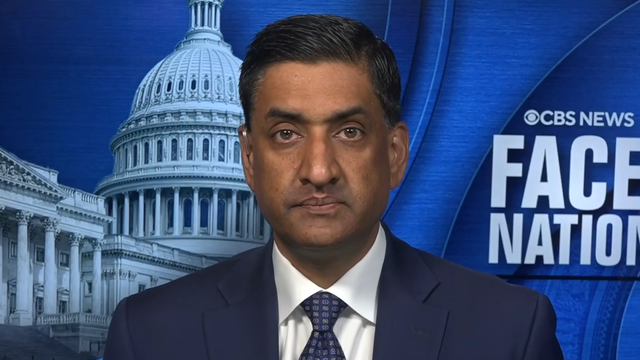
The following is the transcript of the interview with Rep. Ro Khanna, Democrat of California, that aired on "Face the Nation with Margaret Brennan" on Sept. 20, 2026.
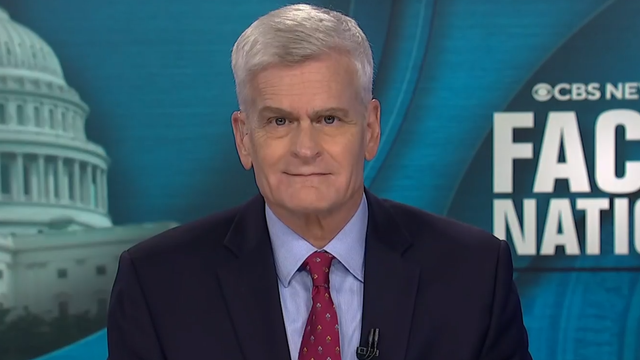
The following is the transcript of the interview with Sen. Bill Cassidy, Republican of Louisiana, that aired on "Face the Nation with Margaret Brennan" on Sept. 20, 2026.
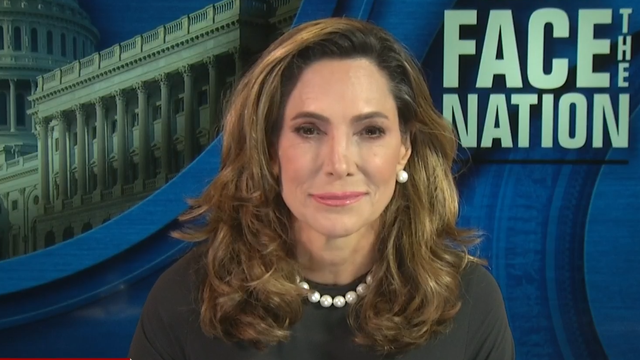
The following is the transcript of the interview with Rep. Maria Elvira Salazar, Republican of Florida, that aired on "Face the Nation with Margaret Brennan" on Sept. 20, 2026.
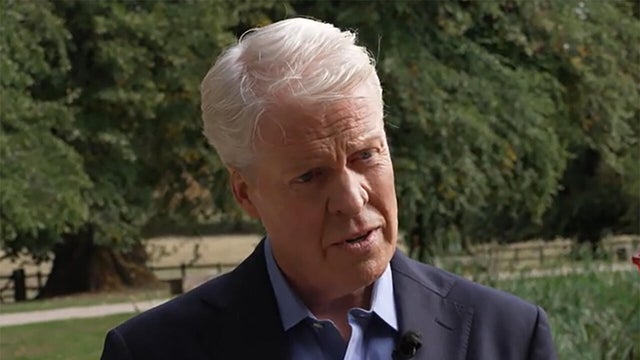
In his first interview about his new book, "Swan Song: Diana, My Sister," Charles Spencer talks about his attempt to set down what he calls the definitive story of Princess Diana.

The launches came just days after Pyongyang reasserted its status as a nuclear-armed state and rejected a U.N. resolution demanding it halt its nuclear activities.
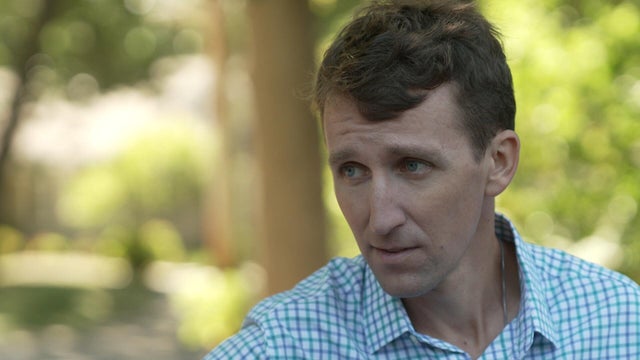
In the first interview since his ex-wife's trial, Patrick Clancy describes what happened at home before his children were killed and how he handled his grief.
As President Trump touts a looming decision on his next move in the war, Tehran says any "new aggression" would be met with different weapons in new places.

C.C. Yin's family has donated nearly $3 million to state-level California political causes and an additional $1,455,027 to federal campaigns.

CNN was set to provide pool coverage on Monday and accompany President Trump on a trip to New York City, but there will not be a network TV pool team traveling with him.

Trump Media & Technology recently launched a Truth Social API data feed, charging $100,000 for "real-time access to posts from the highest-ranking Truth Social accounts."

Illinois Gov. JB Pritzker revealed to "CBS Mornings" that for the last two years he has been using a GLP-1 medication to lose weight.
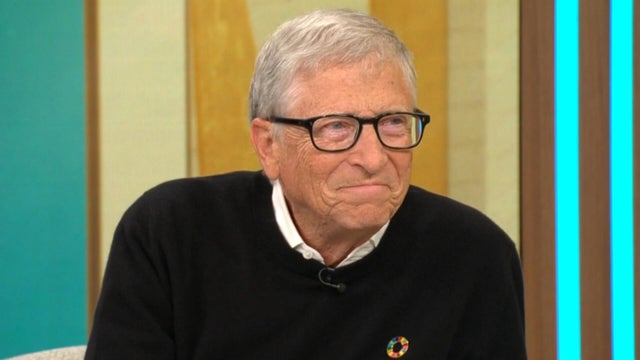
"Most of society is still not aware of how quickly it's moving," Gates said of the latest advances in artificial intelligence.
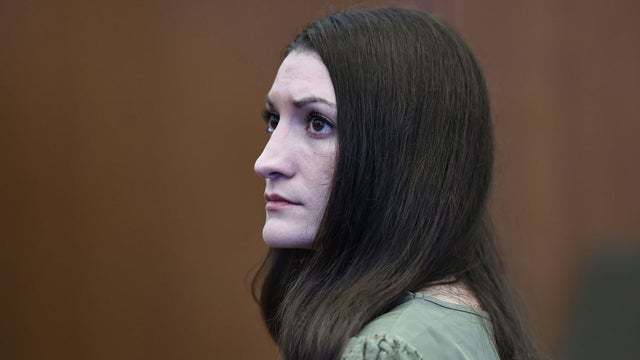
Lindsay Clancy's lawyers asked a judge to question the holdout juror about his alleged use of a cellphone during deliberations and his answers on a questionnaire.

Flights at Newark Liberty International, John F. Kennedy International and LaGuardia airports were delayed due to an equipment outage, the FAA says.
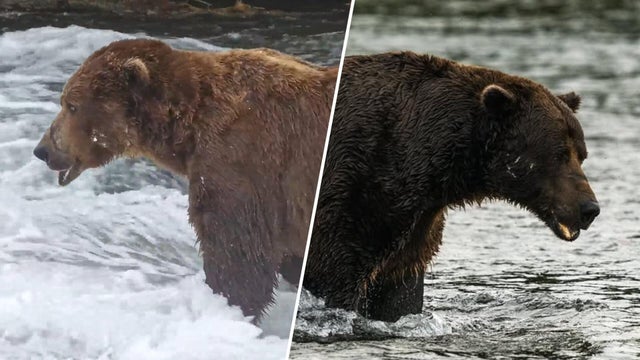
Sixteen bears are facing off in Fat Bear Week 2026, the highly anticipated tournament among the chunkiest bears at the Katmai National Park and Preserve in Alaska.

Wilber Rafael Garces Perez, the 28-year-old Venezuelan national shot by an ICE officer on Sunday, said in a phone call on Monday that he's "not doing well."
Lindsay Clancy's lawyers asked a judge to question the holdout juror about his alleged use of a cellphone during deliberations and his answers on a questionnaire.
Trump Media & Technology recently launched a Truth Social API data feed, charging $100,000 for "real-time access to posts from the highest-ranking Truth Social accounts."
C.C. Yin's family has donated nearly $3 million to state-level California political causes and an additional $1,455,027 to federal campaigns.
Trump Media & Technology recently launched a Truth Social API data feed, charging $100,000 for "real-time access to posts from the highest-ranking Truth Social accounts."

Paramount's agreement with 12 state attorneys general paves the way for the company to complete its $110 billion acquisition of Warner Bros. Discovery.
"Most of society is still not aware of how quickly it's moving," Gates said of the latest advances in artificial intelligence.

Nike-owned Converse acknowledged that an ad for its Chuck Taylor sneaker is "deeply upsetting."

Predictions that AI could destroy humanity in a few years are irresponsible and not based on science, Nvidia's co-founder told CBS News.
Wilber Rafael Garces Perez, the 28-year-old Venezuelan national shot by an ICE officer on Sunday, said in a phone call on Monday that he's "not doing well."
Trump Media & Technology recently launched a Truth Social API data feed, charging $100,000 for "real-time access to posts from the highest-ranking Truth Social accounts."
C.C. Yin's family has donated nearly $3 million to state-level California political causes and an additional $1,455,027 to federal campaigns.
CNN was set to provide pool coverage on Monday and accompany President Trump on a trip to New York City, but there will not be a network TV pool team traveling with him.
Illinois Gov. JB Pritzker revealed to "CBS Mornings" that for the last two years he has been using a GLP-1 medication to lose weight.
Illinois Gov. JB Pritzker revealed to "CBS Mornings" that for the last two years he has been using a GLP-1 medication to lose weight.
As knowledge about genetics advances, some doctors say cancers should be defined by their mutations, not the tissues where they manifest.
Lisa Fasone's first pregnancy went smoothly. Then a rare health condition put her dreams of a second child on hold.
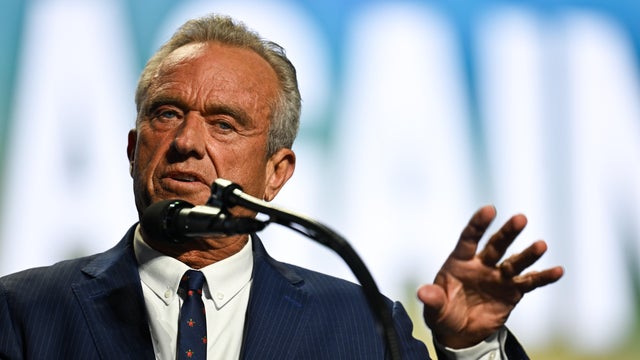
Health and Human Services Secretary Robert F. Kennedy Jr. spoke at a conference hosted by an organization he once led that has promoted doubts about vaccines.

The twins were born in Ethiopia with a rare condition that left them joined at the head. Doctors spent a year planning a separation surgery.
"I want my pictures to hurt," British war photographer Sir Don McCullin told CBS News ahead of the publication of his final book: "Vietnam."
The discovery of the nine bodies has fueled fear and anger, as authorities investigate whether a serial killer or killers were responsible.
The scale and duration of Iran's response appeared to take the U.S. goverenment by surprise, three sources who were in Bahrain at the time told CBS News, in part because families hadn't yet been required to evacuate.
Meloni said the government would bring the proposed legislation to the Council of Ministers, after which it would require parliamentary approval to become law.
Police have not said what led to the shooting or whether the synagogue or Jewish community was targeted.
Sixteen bears are facing off in Fat Bear Week 2026, the highly anticipated tournament among the chunkiest bears at the Katmai National Park and Preserve in Alaska.
Nike-owned Converse acknowledged that an ad for its Chuck Taylor sneaker is "deeply upsetting."
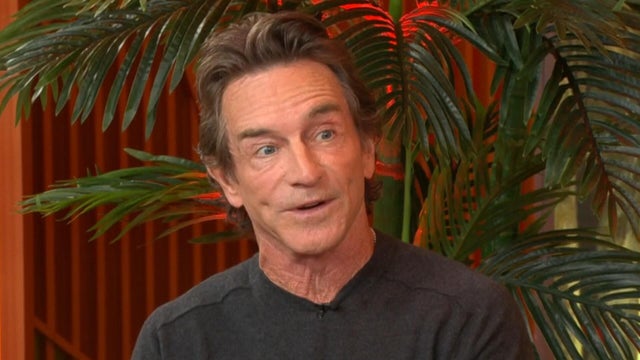
"Survivor" host Jeff Probst sits down with "CBS Mornings" to discuss the show's upcoming 51st season, which features some new twists and turns.

Ed Sheeran performed alone at his first concert since Macklemore was dropped from the tour for his pro-Palestinian comments onstage, resulting in Sheeran's other openers leaving as well. Sheeran told fans he "never wanted to be an activist musician" amid the controversy. Vlad Duthiers has the latest.
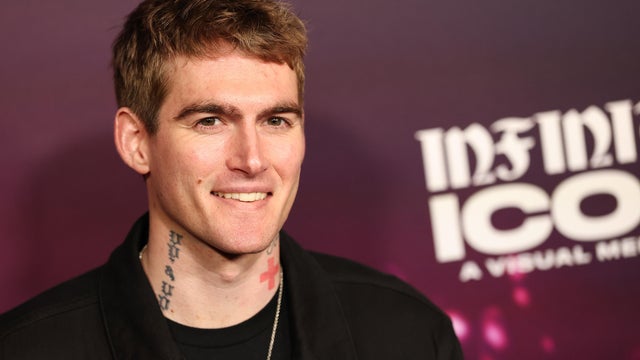
Presley Gerber, the son of Cindy Crawford and Rande Gerber, has died at 27, a family spokesperson has confirmed.

Microsoft co-founder Bill Gates is in New York City this week for the UN General Assembly, hoping to prepare world leaders for the huge potential and huge threats AI poses. He spoke with Tony Dokoupil about his concerns.

Axios co-founder Jim VandeHei found a silver lining in the ongoing AI doom-and-gloom and co-wrote a modern survival guide called "Simplify: Do 50% More with 50% Less." Vandehei joins "The Takeout" to discuss the book, artificial intelligence and the Trump administration.

From labor shortages to environmental impacts, farmers are looking to AI to help revolutionize the agriculture industry. One California startup, Farm-ng, is tapping into the power of AI and robotics to perform a wide range of tasks, including seeding, weeding and harvesting.

A new lawsuit alleges that several leading artificial intelligence companies violated antitrust laws by agreeing to a coordinated slowdown. Renée DiResta, associate research professor at Georgetown University's Massive Data Institute, joins with analysis.

Betting apps are being accused of fueling addictive behavior, especially for vulnerable gamblers. Alex Klavens, a data journalist for The New York Times, interviewed former DraftKings employees who claim the platform may have been targeting addicts. He joins CBS News 24/7 to discuss his findings.
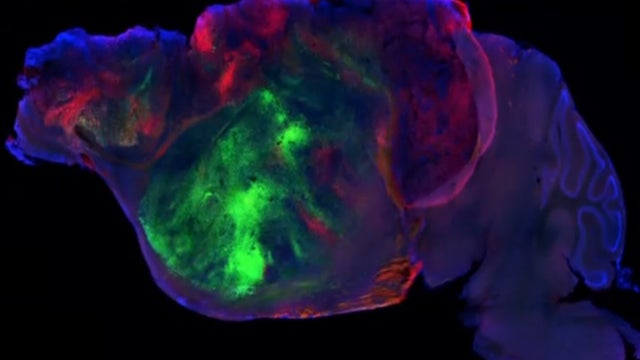
Neuroscientists at Stanford University successfully grew human brain tissue inside mice in the hopes of further enabling the development of treatments for brain disorders. Stanford Medicine professor of psychiatry and behavioral sciences Dr. Sergiu Pasca, who led the study, joins CBS News to break down the findings.

Scientists have discovered a new species of wild cat for the first time in more than a century, a Bolivian researcher says.

The footage shows a female humpback whale staying close to the dead calf as it lies motionless on the seafloor, touching it with its head and fin.
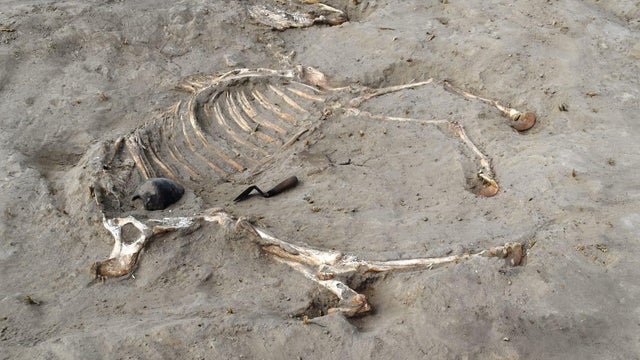
Archaeologists say they've discovered the remains of a likely ancient Egyptian warhorse given an honorific burial more than 3,000 years ago.

Artificial intelligence technology is developing at an "exponential" rate, Anthropic CEO Dario Amodei told CBS News, calling the situation a "warning sign" for the industry that requires serious safeguards.
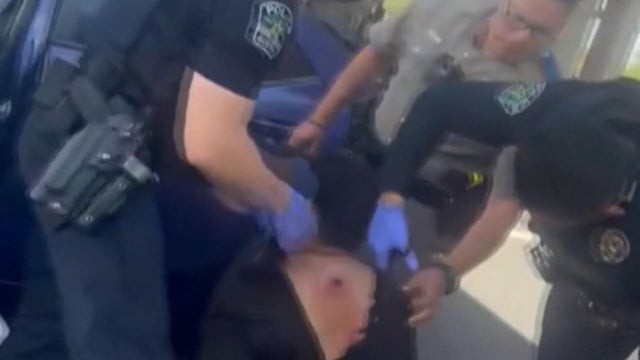
In Austin, Texas, an ICE officer shot and wounded a 28-year-old Venezuelan man who, according to his lawyer, is now in federal custody with a bullet lodged in his spine. Jason Allen has video from the scene and more details.
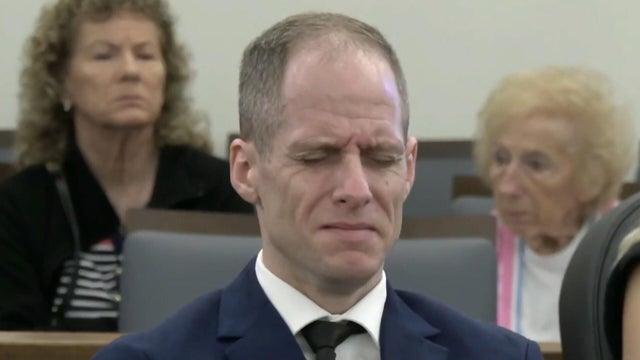
A former "American Idol" contestant broke down in court on Monday as images and information about his ex-wife's execution-style killing were laid out in court. Tom Hanson has more details on the murder trial.
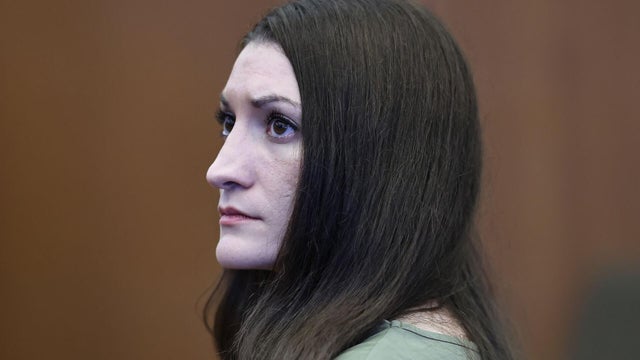
Lindsay Clancy's defense attorney is now asking the judge at her murder trial to question the holdout juror and review his phone records. Shanelle Kaul has more on that and an unseen part of the 60 Minutes Patrick Clancy interview.

The holiest day of the Jewish calendar, Yom Kippur, got off to a violent start just after sundown on Sunday night in Canada, when a gunman opened fire on a police officer outside a synagogue in Ontario. It's the latest in a string of synagogue attacks there this year. Ian Lee reports.

Protesters are speaking out in Austin, Texas, following another shooting involving a federal immigration officer. CBS News immigration correspondent Camilo Montoya-Galvez reports.

Scientists have discovered a crater on the moon that's bigger than the Roman Colosseum, the result of a powerful impact two years ago.

NASA's Roman Space Telescope launched shortly after daybreak from Kennedy Space Center and blazed toward an observation point 1 million miles away.

The $4.3 billion telescope is expected to discover tens of thousands of exoplanets while probing the nature of mysterious dark matter and energy.

President Trump plans to award the Congressional Space Medal of Honor to the crew of NASA's Artemis II mission in a ceremony Aug. 28.

The mission to save NASA's sinking space telescope has been called off, dooming the telescope to a fiery reentry later this year.

A look back at the esteemed personalities who've left us this year, who'd touched us with their innovation, creativity and humanity.
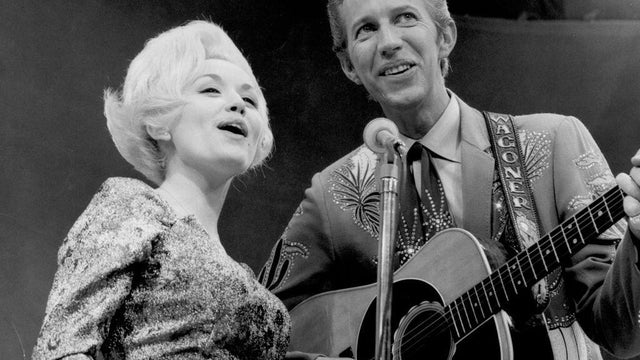
Dolly Parton, the country music legend who became a feminist icon, has died at the age of 80. Here is a look back at her life in pictures.

Sylvie Cachay was found dead in an overflowing bathtub at the exclusive Soho House in New York City on Dec. 9, 2010. A water leak at the hotel gave away a timeline that may have revealed her killer.

Summer is the time to enjoy live music, indoors and out. Scroll through our gallery of some of 2026's leading musical acts, featuring images by CBS News photojournalist Jake Barlow and photographers Ed Spinelli and Kirstine Walton.
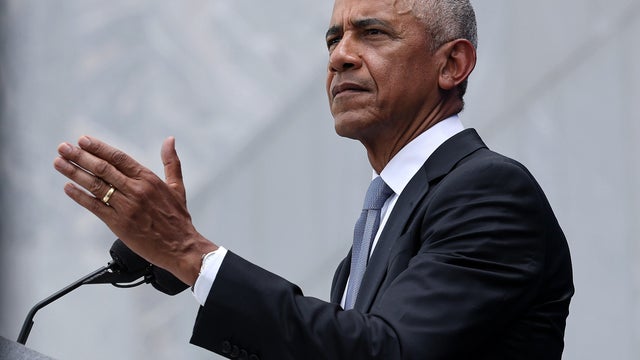
The Obama Presidential Center, museum and library opens in Chicago with a star-studded grand opening ceremony and public watch party on Midway Plaisance.
In Austin, Texas, an ICE officer shot and wounded a 28-year-old Venezuelan man who, according to his lawyer, is now in federal custody with a bullet lodged in his spine. Jason Allen has video from the scene and more details.

A California family gave over $4.4 million in political donations to Governor Gavin Newsom, Kamala Harris and other leading California politicians. And now, that family's alleged past links to infamous suspected honeypot spy Fang Fang, also known as Christine Fang, and other Chinese government officials have thrust them into an ongoing debate over foreign influence in American politics.

World leaders are in New York City this weekend for the United Nations General Assembly. President Trump is set to speak at the event on Tuesday. CBS News intelligence and national security reporter Olivia Gazis has more.

President Trump started his New York trip on Monday with a visit to Gracie Mansion for a meeting with Mayor Zohran Mamdani. CBS News reporter Jared Ochacher has the details.

American sneaker company Converse is apologizing for an ad campaign that critics say evokes racist imagery. CBS News MoneyWatch reporter Megan Cerullo has more.