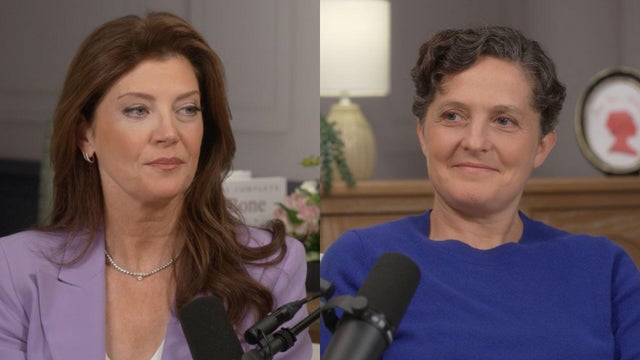
Bone health and the "silent disease": 4 things women should know
In the latest episode of "Healthful," Dr. Jocelyn Wittstein, an orthopedic surgeon at Duke University School of Medicine, discusses what women should know about protecting their bones.
Watch CBS News

In the latest episode of "Healthful," Dr. Jocelyn Wittstein, an orthopedic surgeon at Duke University School of Medicine, discusses what women should know about protecting their bones.
New research highlights common themes shared by people who found reasons to keep living through dark times.
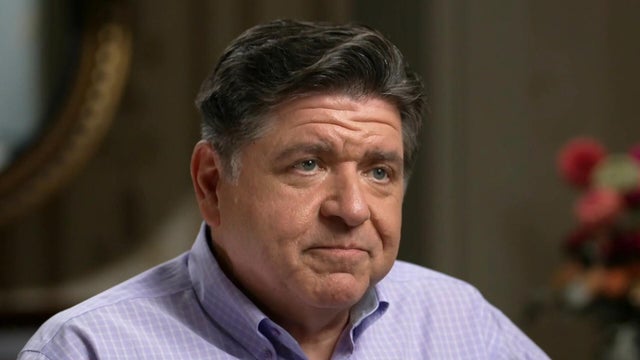
Illinois Gov. JB Pritzker revealed to "CBS Mornings" that for the last two years he has been using a GLP-1 medication to lose weight.
As knowledge about genetics advances, some doctors say cancers should be defined by their mutations, not the tissues where they manifest.
Lisa Fasone's first pregnancy went smoothly. Then a rare health condition put her dreams of a second child on hold.

Health and Human Services Secretary Robert F. Kennedy Jr. spoke at a conference hosted by an organization he once led that has promoted doubts about vaccines.

The twins were born in Ethiopia with a rare condition that left them joined at the head. Doctors spent a year planning a separation surgery.
In the latest episode of "Healthful," Olympic gold medalist Aly Raisman discusses what she's learned about speaking up for herself and taking care of her body.

Selling retatrutide commercially is prohibited by federal law. Yet, companies have promoted the drug on social media, thanks in part to being certified by LegitScript.
In the latest episode of "Healthful," Dr. Jocelyn Wittstein, an orthopedic surgeon at Duke University School of Medicine, discusses what women should know about protecting their bones.
In the latest episode of "Healthful," Olympic gold medalist Aly Raisman discusses what she's learned about speaking up for herself and taking care of her body.
Amid a national blood supply crisis, Dr. Courtney Lawrence sat down with Norah O'Donnell to talk about donating blood, health myths and more.
Dr. Temeka Zore, a double board-certified OB-GYN and fertility specialist, joined "Healthful" for a deep dive on all things fertility, from endometriosis to PMOS (formerly known as PCOS) to egg freezing.
Lisa Fasone's first pregnancy went smoothly. Then a rare health condition put her dreams of a second child on hold.
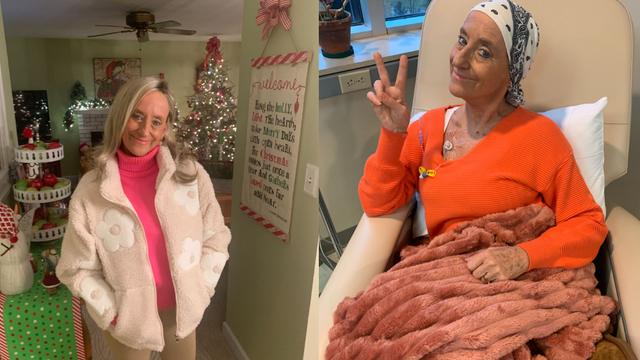
Kate Ping thought she was just stressed out. A nurse practitioner's surprising recommendation led to a shocking diagnosis.
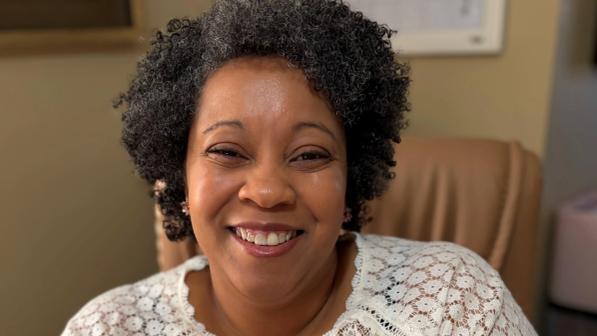
Dawn Jemison started dealing with pelvic pain as a preteen. It took decades to learn why — and to find a solution.

Some Trump-aligned candidates are calling for an end to the Iran war, even as Trump stands by his Iran strategy and has suggested escalation is possible.

Researchers project nearly half a million more heat-related deaths from June 2026 to February 2027 compared with a typical year, as a result of El Niño.

Raising payroll taxes enough to stabilize Social Security could add thousands of dollars in annual costs, according to one analysis.

The non-profit Green Oceans asked the Coast Guard to reopen an investigation that had classified the F/V Mistress as lost.

As rates climb, more buyers are seeking riskier adjustable-rate mortgages, according to the Mortgage Bankers Association.
Raising payroll taxes enough to stabilize Social Security could add thousands of dollars in annual costs, according to one analysis.
As rates climb, more buyers are seeking riskier adjustable-rate mortgages, according to the Mortgage Bankers Association.
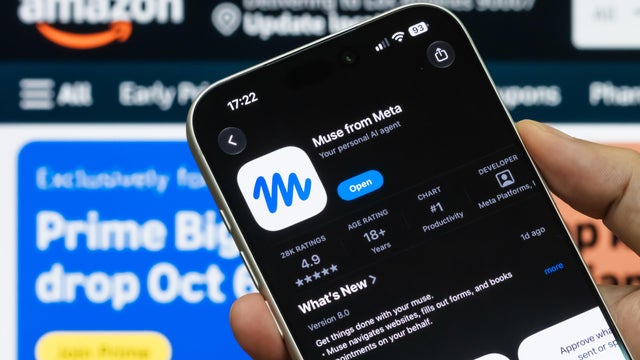
Meta's new AI tool now ranks at the top of the App Store. Some retail experts see a "natural evolution from search."

One of Silicon Valley's most prominent venture investors is gearing its new tech academy toward aspiring entrepreneurs focused on building AI.

Cybersecurity researchers from a small firm called Hacktron in India broke into OpenAI, showing how vulnerable frontier labs are.
Some Trump-aligned candidates are calling for an end to the Iran war, even as Trump stands by his Iran strategy and has suggested escalation is possible.

The Justice Department claimed that reporting from CNN, MS NOW and Politico raises national security concerns and accused their journalists of failing to act with "professionalism and decorum."

Min Zin, a Myanmar scholar, has been held for more than 100 days at what human rights groups say is a "black site" in China.

U.S. and Iranian delegations met on the sidelines of the U.N. General Assembly, rekindling diplomacy amid Trump's threat to "annihilate" the regime.

The fight over Missouri's congressional map returned to the U.S. Supreme Court for a third time after an appeals court ordered the revival of new districts backed by President Trump.
In the latest episode of "Healthful," Dr. Jocelyn Wittstein, an orthopedic surgeon at Duke University School of Medicine, discusses what women should know about protecting their bones.
New research highlights common themes shared by people who found reasons to keep living through dark times.
Illinois Gov. JB Pritzker revealed to "CBS Mornings" that for the last two years he has been using a GLP-1 medication to lose weight.
As knowledge about genetics advances, some doctors say cancers should be defined by their mutations, not the tissues where they manifest.
Lisa Fasone's first pregnancy went smoothly. Then a rare health condition put her dreams of a second child on hold.
Researchers project nearly half a million more heat-related deaths from June 2026 to February 2027 compared with a typical year, as a result of El Niño.
Min Zin, a Myanmar scholar, has been held for more than 100 days at what human rights groups say is a "black site" in China.
U.S. and Iranian delegations met on the sidelines of the U.N. General Assembly, rekindling diplomacy amid Trump's threat to "annihilate" the regime.

The wall dating from the Gallo-Roman period was discovered beneath a hotel on the Île de la Cité, a stone's throw from Notre Dame Cathedral.
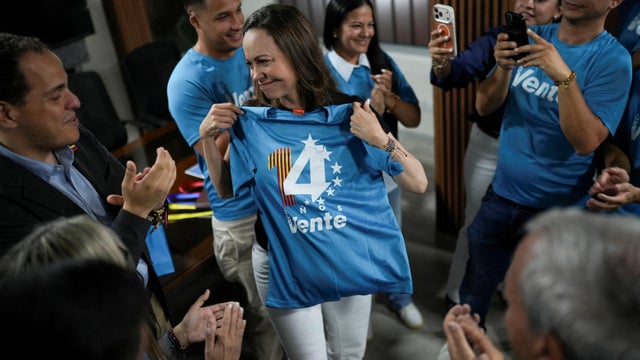
Venezuelan opposition leader María Corina Machado tried 3 times to enter her country "by air and sea but has been turned away each time," her team says.
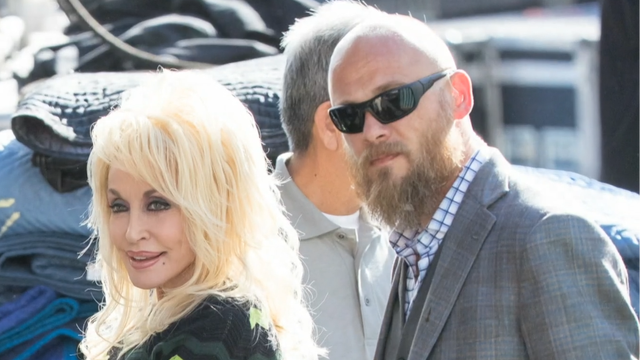
Dolly Parton's estate has accused her nephew, Bryan Seaver, of extortion. Seaver, who announced the singer's death last month, was also fired as her head of security. Adriana Diaz reports.

Taylor Swift announced she's releasing a new song, "Patient Zero," on Friday. Jo Ling Kent reports.
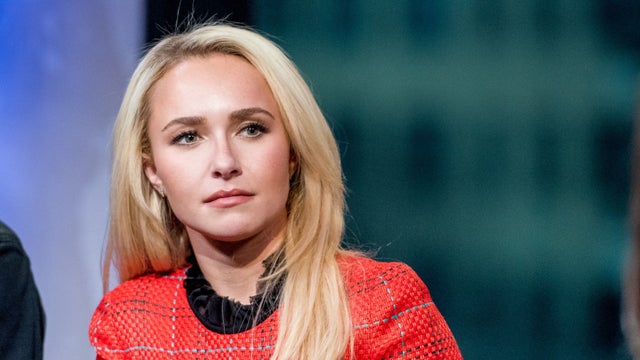
Hayden Panettiere died of an accidental overdose involving fentanyl, the coroner's office said in its autopsy report. Lillia Luciano reports.

Actress Hayden Panettiere died from an accidental overdose of fentanyl and several other drugs, according to a coroner in South Carolina. Lilia Luciano reports.

A South Carolina coroner revealed Tuesday that actor Hayden Panettiere died from an accidental overdose of several drugs, including fentanyl. CBS News national correspondent Lilia Luciano has more.

President Trump has downplayed the threat posed by artificial intelligence amid growing calls for AI regulation. MIT professor and artificial intelligence expert Max Tegmark weighs in on Mr. Trump's planned meeting with China's Xi Jinping.

Experts are worried about the dangers of "swarms" of AI models coming together to accomplish a complex task for nefarious reasons. CBS News' Megan Cerullo breaks down what this means.

From labor shortages to environmental impacts, farmers are looking to AI to help revolutionize the agriculture industry. One California startup, Farm-ng, is tapping into the power of AI and robotics to perform a wide range of tasks, including seeding, weeding and harvesting.
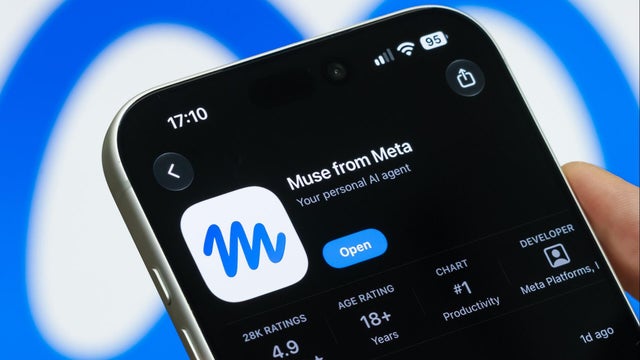
Meta's new AI personal assistant, Muse, has reached the top of the U.S. App Store charts, surpassing competitor ChatGPT. CBS News digital reporter Lauren Fichten details how the app's popularity is helping Meta play catch-up in the AI race.

At the U.N. General Assembly on Tuesday, President Trump told world leaders that the U.S. rejects efforts to rein in artificial intelligence. Stephen Witt, a journalist focused on AI, joins "The Takeout" with analysis.
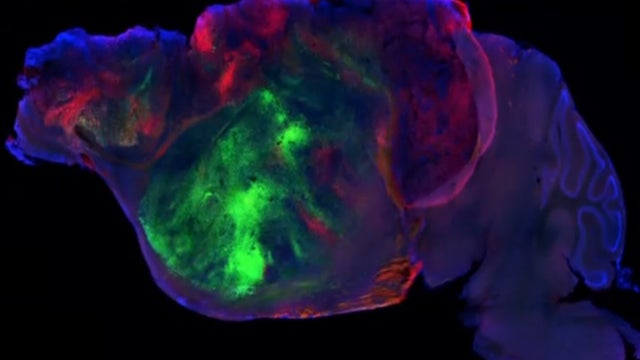
Neuroscientists at Stanford University successfully grew human brain tissue inside mice in the hopes of further enabling the development of treatments for brain disorders. Stanford Medicine professor of psychiatry and behavioral sciences Dr. Sergiu Pasca, who led the study, joins CBS News to break down the findings.

Scientists have discovered a new species of wild cat for the first time in more than a century, a Bolivian researcher says.

The footage shows a female humpback whale staying close to the dead calf as it lies motionless on the seafloor, touching it with its head and fin.
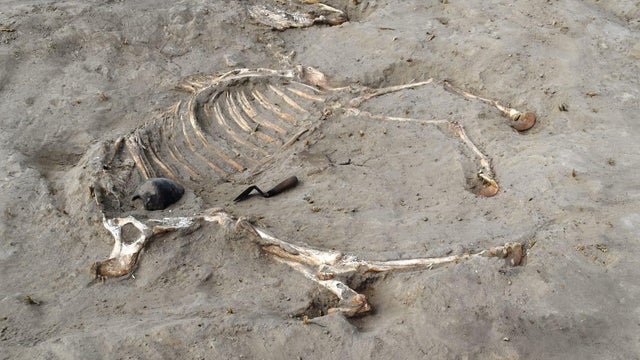
Archaeologists say they've discovered the remains of a likely ancient Egyptian warhorse given an honorific burial more than 3,000 years ago.
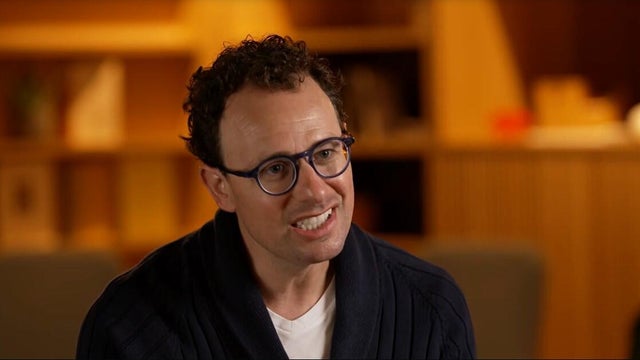
Artificial intelligence technology is developing at an "exponential" rate, Anthropic CEO Dario Amodei told CBS News, calling the situation a "warning sign" for the industry that requires serious safeguards.
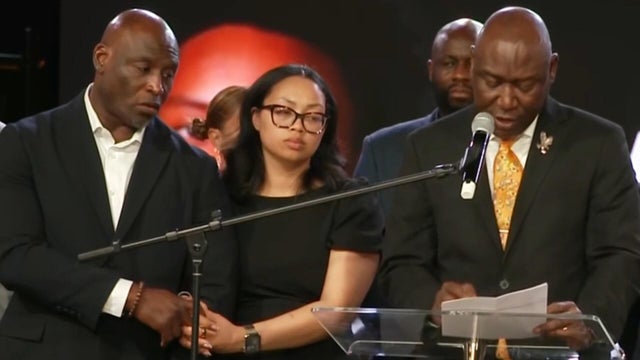
An attorney for the family of Mississippi teen Nolan Wells is calling for the Department of Justice to step in after a grand jury declined to charge anyone in his drowning death. CBS News' Skyler Henry reports.

When a school bus stops to pick up kids, the other cars on the road are supposed to stop with it. But thousands of times a day, they do not. As Mark Strassmann reports, some areas have found a way to crack down.
Actress Hayden Panettiere died from an accidental overdose of fentanyl and several other drugs, according to a coroner in South Carolina. Lilia Luciano reports.

A family tied to a suspected Chinese spy made $4.4 million in donations to California politicians, including Gov. Newsom, a CBS News investigation found. CBS News' Josh Boswell breaks it down.

Wilber Rafael Garces Perez was shot in the back by an Immigration and Customs Enforcement agent in Austin, Texas. Garces Perez's lawyer says he had a work permit and was seeking asylum but had missed a deportation order sent to an old address. CBS News' Jason Allen reports.

Scientists have discovered a crater on the moon that's bigger than the Roman Colosseum, the result of a powerful impact two years ago.

NASA's Roman Space Telescope launched shortly after daybreak from Kennedy Space Center and blazed toward an observation point 1 million miles away.

The $4.3 billion telescope is expected to discover tens of thousands of exoplanets while probing the nature of mysterious dark matter and energy.

President Trump plans to award the Congressional Space Medal of Honor to the crew of NASA's Artemis II mission in a ceremony Aug. 28.

The mission to save NASA's sinking space telescope has been called off, dooming the telescope to a fiery reentry later this year.

A look back at the esteemed personalities who've left us this year, who'd touched us with their innovation, creativity and humanity.
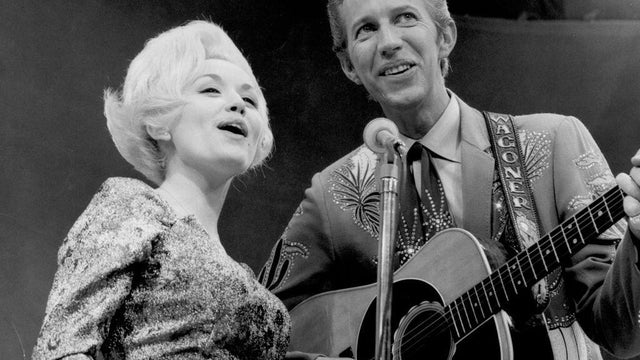
Dolly Parton, the country music legend who became a feminist icon, has died at the age of 80. Here is a look back at her life in pictures.

Sylvie Cachay was found dead in an overflowing bathtub at the exclusive Soho House in New York City on Dec. 9, 2010. A water leak at the hotel gave away a timeline that may have revealed her killer.

Summer is the time to enjoy live music, indoors and out. Scroll through our gallery of some of 2026's leading musical acts, featuring images by CBS News photojournalist Jake Barlow and photographers Ed Spinelli and Kirstine Walton.

The Obama Presidential Center, museum and library opens in Chicago with a star-studded grand opening ceremony and public watch party on Midway Plaisance.
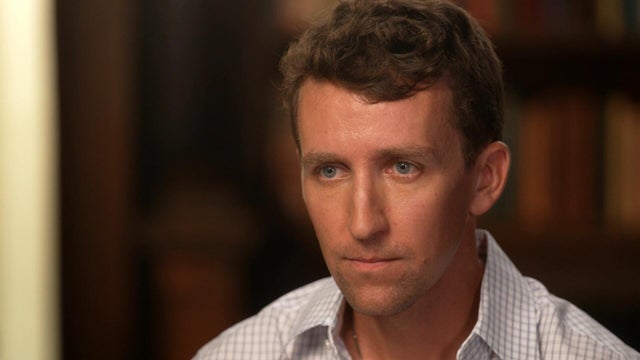
Patrick Clancy wrestles with grief and shares memories of his children in his first interview since his ex-wife Lindsay Clancy's murder trial ended without a verdict.
About half of women over the age of 50 experience bone density loss, but most don't even know they have a problem. That's why Dr. Jocelyn Wittstein calls it a "silent disease." Dr. Wittstein has been at the forefront of understanding how joint pain and joint health evolve over a woman's lifetime. She tells Norah how you can reverse bone loss and what impact hormones have on bone density.
Dolly Parton's estate has accused her nephew, Bryan Seaver, of extortion. Seaver, who announced the singer's death last month, was also fired as her head of security. Adriana Diaz reports.

On this edition of CBS Deals, we show you items that could help improve your everyday lifestyle. Visit cbsdeals.com to take advantage of these exclusive deals today. CBS earns commissions on purchases made through cbsdeals.com.

Nearly 47% of American households say they feel financial hardship after a primary wage earner dies, according to a recent survey, which is where life insurance comes in. Jill Schlesinger joins with more.