Trump says U.S. officials heading to Pakistan for talks but Iran says it doesn't plan to take part
Follow updates on the war in the Middle East for Monday, April 20, here. See earlier developments below.
What to know about the Iran war:
- President Trump posted on social media early Sunday that he was sending representatives to Pakistan for another round of negotiations with Iran. Sources told CBS News that Vice President JD Vance, special envoy Steve Witkoff and presidential son-in-law Jared Kushner will travel to Islamabad for the talks.
- Iran state media said Sunday that Tehran doesn't plan to be involved in the new round of talks due to the U.S. blockade of iranian ports.
- Iran's parliamentary speaker said early Sunday that the Strait of Hormuz will remain closed "if the U.S. does not lift the blockade."
Hezbollah claims first attack on Israeli forces since Israel-Lebanon truce began
Hezbollah said it detonated explosives Sunday afternoon in an attack against Israeli forces in southern Lebanon.
The group said in a statement Monday that bombs planted by Hezbollah fighters exploded and destroyed four tanks in a convoy of eight tanks that was passing the village of Deir Siryan.
It was the first claim of an attack by Hezbollah since a 10-day ceasefire went into effect at midnight Thursday.
The Israeli military did not immediately comment.
Iran not planning to attend talks with U.S. in Pakistan
Iran isn't currently planning to attend talks with the United States, the regime said, after President Trump sent U.S. negotiators to Pakistan to take part in renewed talks on Monday, just days before a ceasefire in the Middle East expires.
The ongoing U.S. blockade of Iranian ports has been a significant sticking point, an issue further complicated by an American destroyer on Sunday firing on and seizing an Iranian ship that tried to evade it.
Tehran said it would retaliate, with the state-run Tasnim news agency reporting that Iran had sent drones in the direction of U.S. military ships after its vessel was seized.
Iran Foreign Ministry spokesperson Esmaeil Baqaei said in a weekly press briefing Monday that, "As of now ... we have no plans for the next round of negotiation, and no decision has been made in this regard."
State broadcaster IRIB on Sunday cited Iranian sources as saying "there are currently no plans to participate in the next round of Iran-U.S. talks."
The Fars and Tasnim news agencies had earlier cited anonymous sources as saying "the overall atmosphere cannot be assessed as very positive," adding that lifting the U.S. blockade was a precondition for negotiations.
State-run IRNA meanwhile pointed to the blockade and Washington's "unreasonable and unrealistic demands," saying that "in these circumstances, there is no clear prospect of fruitful negotiations."
Iran and the United States, along with Israel, are just days away from the end of the two-week ceasefire that halted the Middle East war, ignited by surprise US-Israeli strikes on Iran on February 28.
There has so far been only a single, 21-hour negotiating session held in Islamabad on April 11 that ended inconclusively, though groundwork for fresh talks continued afterwards.
"We're offering a very fair and reasonable DEAL, and I hope they take it," Mr. Trump said in a social media post Sunday, while also renewing his threats against Iran's infrastructure if a deal isn't reached.
Israel says image of soldier striking Jesus statue in Lebanon is authentic
The Israeli army said Monday that it had determined an image circulating on social media that shows a soldier in south Lebanon hitting a statue of Jesus Christ is authentic and depicts one of its troops.
The image appears to show an Israeli soldier using a sledgehammer to strike the head of a statue of a crucified Jesus that had fallen off a cross.
Arab media reports indicated that the statue was in the Christian village of Debl in south Lebanon, near the border with Israel.
The Debl municipality told AFP that the statue was located in the village, but couldn't confirm whether it had been damaged.
The Israel army said it viewed the incident with "great severity," adding that the "soldier's conduct is wholly inconsistent with the values expected of its troops," in a post to its official X account on Monday.
"Following the completion of an initial examination regarding a photograph published earlier today of an IDF soldier harming a Christian symbol, it was determined that the photograph depicts an IDF soldier operating in southern Lebanon," it said in the post.
The incident is being investigated by the Northern Command and is currently being "addressed through the chain of command," the military added.
It said "appropriate measures will be taken against those involved" but didn't go into further detail.
The Israel army said it's working with the community to "restore the statue to its place."
The IDF added that it's "operating to dismantle the terrorist infrastructure established by Hezbollah in southern Lebanon, and has no intention of harming civilian infrastructure, including religious buildings or religious symbols."
CBS/AFP
Oil prices rise as U.S.-Iran standoff in the Strait of Hormuz creates more uncertainty
Oil prices rose in early trading Sunday as a standoff between Iran and the U.S. prevented tankers from using the Strait of Hormuz, the Persian Gulf waterway that is crucial to global energy supplies.
The price of U.S. crude oil increased 6.4% to $87.90 per barrel an hour after trading resumed on the Chicago Mercantile Exchange. The price of Brent crude, the international standard, climbed 5.8% to $95.64 per barrel.
The market reaction followed more than two days of lifted hopes and dashed expectations involving the strait. Crude prices plunged more than 9% Friday after Iran said it would fully reopen the strait, which it effectively controls, to commercial traffic.
Tehran reversed that decision and fired on several vessels Saturday after President Trump said a U.S. Navy blockade of Iranian ports would remain in effect.
Sunday's higher prices wiped out much of the declines seen Friday, signaling renewed doubts about how soon ships will again transport the vast amounts of oil the world gets from the Middle East.
Iran's military vows swift response to U.S. seizure of Iranian-flagged tanker
The Iranian military headquarters said the attack and subsequent boarding of an Iranian vessel by U.S. forces was a violation of the ceasefire and an act of "maritime piracy," saying that "Iran will respond soon," according to Iran's state-run broadcaster.
The United States says it fired on the ship and seized it because it had crossed the blockade line after ignoring multiple warnings.
The response came as Iran has yet to comment on President Trump's announcement of new talks in Pakistan this week. Iranian state media, without citing anyone beyond unnamed sources, issued brief reports on Sunday suggesting the talks would not happen.
Iran's president calls U.S. blockade violation of ceasefire
Iranian President Masoud Pezeshkian said in a phone conversation with Pakistan's prime minister earlier Sunday that the U.S. blockade in the Strait of Hormuz is a violation of the ceasefire agreement, according to the Iranian government.
In a post on X, the Iranian government said Pezeshkian called the naval blockade "a clear violation of the ceasefire understanding and contrary to the UN Charter."
The Iranian judiciary's Mizan news agency also reported Sunday that Pezeshkian alleged bullying and unreasonable behavior by the United States during negotiations and the ceasefire.
The report said Pezeshkian warned Pakistani Prime Minister Shehbaz Sharif that the U.S. actions and threatening rhetoric have led to increased suspicion among Iranian officials about the seriousness of the Americans and the possibility that it will repeat previous patterns and "betray diplomacy."
The report did not say whether Iran's president commented on a second round of talks in Pakistan, or on President Trump's announcement that U.S. forces had fired at and seized an Iranian-flagged ship.
CBS/AP
Video shows U.S. destroyer shooting at Iranian ship
U.S. Central Command posted a video showing a U.S. Navy destroyer shooting at an Iranian-flagged ship after CENTCOM alleges it ignored warnings that it was in violation of the American blockade.
In the video, a voice can be heard saying, "Vacate your engine room. We're prepared to subject you to disabling fire." The video then cuts to shots being fired.
The Iranian cargo ship, Touska, was attempting to sail toward an Iranian port on Sunday when it was intercepted by USS Spruance in the north Arabian Sea, CENTCOM said.
The U.S. said Touska's crew failed to comply with repeated warnings over a six-hour period before the shots were fired.
"Spruance disabled Touska's propulsion by firing several rounds from the destroyer's 5-inch MK 45 Gun into Touska's engine room. U.S. Marines from the 31st Marine Expeditionary Unit later boarded the non-compliant vessel, which remains in U.S. custody," CENTCOM said. "American forces acted in a deliberate, professional, and proportional manner to ensure compliance."
Since the U.S. blockade of the Strait of Hormuz began last week, U.S. forces have directed 25 vessels to turn back or return to Iranian ports, CENTCOM said.
French shipping company says one of its ships was target of Iran's warning shots
CMA CGM, a French shipping company, said Sunday that one of its vessels was a target of Iran's warning shots.
The International Maritime Organization confirmed that a French-flagged vessel was involved. The IMO, which regulates international shipping, said there have been 24 incidents in the Strait of Hormuz and across the Middle East since March 1. The latest, on April 18, involved the CMA CGM Everglade, a container ship sailing under French flag. The IMO said it was damaged north of Kumzar, Oman, though no pollution or injuries were reported.
President Trump said earlier Sunday that Iran had fired on ships in the Strait of Hormuz.
"Many of them were aimed at a French Ship, and a Freighter from the United Kingdom," Mr. Trump said on Truth Social without providing further details.
He called the incident "A Total Violation" of the U.S.-Iran ceasefire agreement.
CBS/AP
Iran's Ambassador to Pakistan says "faultlines remain" as long as U.S. blockade is in place
Iran's Ambassador to Pakistan said disagreements between the U.S. and Iran will remain as long as the American blockade of the Strait of Hormuz remains in place.
"You cannot keep violating the international law, double down on your blockade, threaten Iran with further war crimes, insist on unreasonable demands, pace out with rethorics and pretend to be pursuing 'Diplomacy'," Reza Amiri Moghadam said Sunday on X.
"As long as the naval blockade remains, faultlines remain."
Trump says U.S. military has custody of sanctioned Iranian ship
An Iranian cargo ship that attempted to bypass a U.S. blockade in the Strait of Hormuz is in U.S. custody, President Trump said Sunday on Truth Social.
Mr. Trump said the U.S. Navy destroyer USS Spruance intercepted the Iranian-flagged ship, Touska, in the Gulf of Oman and gave the 900-foot-long vessel "fair warning" to stop.
"The Iranian crew refused to listen, so our Navy ship stopped them in their tracks by blowing a hole in the engine room," the president said. "The TOUSKA is under U.S. Treasury sanctions because of its prior history of illegal activity. We have full custody of the ship and are seeing what's on board."
Top Pakistani and Iranian diplomats speak ahead of new round of talks
Pakistan's Foreign Minister Mohammad Ishaq Dar spoke by phone with his Iranian counterpart on Sunday, as U.S. officials headed to Islamabad for a new round of talks. Iran has not officially confirmed its attendance in Pakistan.
The Pakistani foreign ministry said Dar discussed with Iran's Foreign Minister Abbas Araghchi "the need for continued dialogue and engagement as essential to resolving the current issues as soon as possible."
Iranian President Masoud Pezeshkian and Pakistani Prime Minister Shehbaz Sharif also spoke Sunday. Sharif described their conversation as "warm and constructive" in a post on X.
Sharif said that he told Pezeshkian that "Pakistan remains fully committed to its role as an honest and sincere facilitator of lasting peace and regional stability."
U.K. police investigate if Iranian proxies are behind attacks on Jewish sites
An arson attack caused smoke damage at a synagogue in North London overnight, just one day after a similar incident in the city and the third such occurrence this week, British officials said Sunday.
The Metropolitan Police said its counterterrorism officers are investigating if the spate of attacks are linked to Iranian proxies. Deputy Assistant Commissioner Vicki Evans said a little-known group, Harakat Ashab al-Yamin al-Islamiya, with links to Iran, has claimed responsibility for many of the attacks.
"We are aware of public reporting that suggests this group may have links to Iran. As you would expect, we will continue to explore that question as our investigation evolves," she said.
"I've spoken previously about the Iranian regime's use of criminal proxies, and we're considering whether this tactic is being used here in London," Evans added.
Tehran has not decided whether to join new talks, Iranian media reports
Iran has yet to decide whether it will take part in a new round of talks with the United States, local media reported Sunday, with the IRNA state news agency saying "there is no clear prospect of fruitful negotiations."
The Fars and Tasnim news agencies, quoting anonymous sources, said Tehran had yet to decide whether it would participate and that "the overall atmosphere cannot be assessed as very positive", with Fars citing one source as saying the lifting of a US blockade on Iranian ports was a precondition for talks.
IRNA, meanwhile, pointed to Washington's "maximalism and unreasonable and unrealistic demands, frequent changes of positions, constant contradictions and the continuation of the so-called naval blockade", adding that "in these circumstances, there is no clear prospect of fruitful negotiations."
USS Gerald Ford returns to Middle East
The USS Gerald R Ford Aircraft Carrier has returned to the Middle East after a brief stop in the eastern Mediterranean, a U.S. official told CBS News.
The carrier has transited the Suez Canal into the Red Sea, along with two destroyers, the USS Mahan and the USS Winston S. Churchill.
The Ford, at sea since June and off the back of a deployment to the Caribbean, has already broken the record for the longest carrier deployment since the Vietnam War. It returns to the Middle East following a fire in a laundry department that forced the ship back to port for repairs.
The Ford joins the USS Abraham Lincoln operating in the north Arabian Sea. The USS George HW Bush is rounding the Cape of Good Hope and is expected to reach the neighborhood sometime near the end of the month, making it three aircraft carriers and their strike groups operating inside that region.
Iranian official says U.S. blockade "amounts to war crime"
Iran's foreign ministry spokesman Esmail Baghaei said Sunday that the U.S. blockade of Iran's ports and coastline is an act of aggression that violates the shaky Pakistani-mediated ceasefire between the two countries.
By "deliberately inflicting collective punishment on the Iranian population, it amounts to war crime and crimes against humanity," Baghaei said on social media.
Baghaei's comments came after Iran's renewed threats on shipping, in response to the U.S. blockade, fully reclosed the strategic Strait of Hormuz.
Biden energy adviser says "Iranians have a card they never had" with strait closure
Amos Hochstein, who served as a top energy and national security advisor during the Biden administration, said Sunday that "no matter how the war ends, the Iranians now have a card they never had before," pointing to their control over the Strait of Hormuz.
"In theory, we knew they can close the straits, but they never did," Hochstein said on "Face the Nation with Margaret Brennan." "And now, for the foreseeable future, they have this card against us and against their neighbors."
On gas prices, Hochstein said "we're over $4 now because we have a real disruption."
"When you have an energy crisis like the Strait of Hormuz, it's very slow moving, and then it's like falling off a cliff," Hochstein said. "Because when you close the straits, the world still has all the tankers that were on the water before, and that could take 25, 30, days to get to their destination. But right now, there are no tankers on the seas, to Asia and to Europe. So we're getting to the point now where certain countries no longer have any fuel, no longer have jet fuel."
The former energy adviser said the president has "a couple of weeks before this can go much higher."
Data shows ships waiting again near Strait of Hormuz
Vessels trying to transit the Strait of Hormuz have reversed course, according to the MarineTraffic shipping tracker, after the Iranian navy reimposed tight restrictions on transit through the waterway amid a U.S. blockade of Iran's ports and waters.
The standoff has left hundreds of vessels waiting in both directions for clearance through the waterway where a fifth of the world's oil supplies normally passes.
U.N. Ambassador Mike Waltz says U.S. is "never going to take an approach of trust" with Iran
U.N. Ambassador Mike Waltz said Sunday that the U.S. is "never going to take an approach of trust" with Iran as the two sides prepare to meet for a second round of talks in Islamabad in the coming days.
"Any deal that comes out of this will have to absolutely be verifiable and be enforceable," Waltz said on "Face the Nation with Margaret Brennan."
The U.N. ambassador said there have been "extensive discussions" with the International Atomic Energy Agency, which he said would have a "key role in ensuring Iran lives up to any deal."
The comments come after President Trump announced earlier Sunday that U.S. representatives would travel to Pakistan for the talks with Iran. Waltz said he expects the talks will be a "continuation of the terms that the vice president offered a week ago."
"Iran does not have the cards and we are confident they will come to the table, and finally give up their obsession with having a nuclear weapon," Waltz said.
Multiple sources told CBS News ahead of the interview that Vice President JD Vance, special envoy to the Middle East Steve Witkoff and the president's son-in-law, Jared Kushner, will be traveling to Islamabad for the talks with Iran. Asked about the importance of having the vice president participate in the talks, Waltz said "the vice president leading shows the level of engagement from the U.S. side — that we are absolutely serious."
Vance, Witkoff and Kushner going to Pakistan for Iran talks
Vice President JD Vance, special envoy to the Middle East Steve Witkoff and Jared Kushner, President Trump's son-in-law, will be traveling to Islamabad for talks with Iran, sources familiar told CBS News.
The trio are expected to arrive Monday evening for talks on Tuesday. The two-week ceasefire between Iran and the United States is set to expire Tuesday.
Islamabad prepares to host another round of peace talks
Security in Pakistan's capital Islamabad was stepped up visibly on Sunday ahead of upcoming peace talks between the United States and Iran.
Authorities earlier announced road closures and traffic restrictions across the city, as well as in neighbouring Rawalpindi.
AFP journalists saw armed guards and checkpoints near Islamabad's most secure hotels, including the Marriott and the Serena, where the last round of talks between US and Iranian delegations took place.
Most streets leading to the Serena Hotel were closed on Sunday, with barbed wire, barricades, heavy security and traffic diversions.
"Citizens are earnestly requested to cooperate with the security agencies," a city official posted on X.
Pope Leo calls Lebanon ceasefire "cause for hope"
Pope Leo XIV said Sunday that the ceasefire between Israel and Lebanon is "cause for hope" and continued to advocate for a diplomatic solution to the conflict in the Middle East.
"I encourage those who are working toward a diplomatic solution to continue peace talks, so that the cessation of hostilities throughout the Middle East may become permanent," Leo said at the end of a Mass attended by over 100,000 people in Angola.
Leo said he was also "deeply saddened by the recent escalation of attacks against Ukraine," and again called "for weapons to fall silent and for the path of dialogue to be pursued."
Trump accuses Iran of violating ceasefire
President Trump on Sunday accused Iran of violating the ceasefire set to end this week by firing on ships in the Strait of Hormuz a day earlier.
Mr. Trump also reiterated that a U.S. blockade is in place in the vital waterway.
"Iran recently announced that they were closing the Strait, which is strange, because our BLOCKADE has already closed it. They're helping us without knowing, and they are the ones that lose with the closed passage, $500 Million Dollars a day!" Mr. Trump wrote on TruthSocial. "The United States loses nothing."
Mr. Trump said that "many Ships are headed" to the U.S. to "load up" on oil and fuel.
Trump threatens Iran: "NO MORE MR. NICE GUY!"
President Trump said Sunday that he would target civilian infrastructure in Iran, including bridges and power plants, if the country did not accept the U.S. peace deal.
"We're offering a very fair and reasonable DEAL, and I hope they take it because, if they don't, the United States is going to knock out every single Power Plant, and every single Bridge, in Iran," Mr. Trump wrote on TruthSocial.
Mr. Trump has made a series of aggressive threats in an attempt to establish a peace deal. Hours before the ceasefire was established on April 7, Mr. Trump threatened that an "entire civilization will die" unless a deal was reached.
"NO MORE MR. NICE GUY!" Mr. Trump wrote Sunday. "They'll come down fast, they'll come down easy and, if they don't take the DEAL, it will be my Honor to do what has to be done, which should have been done to Iran, by other Presidents, for the last 47 years. IT'S TIME FOR THE IRAN KILLING MACHINE TO END!"
Trump says representatives are going to Pakistan for negotiations
President Trump said on TruthSocial Sunday that government representatives are going to Islamabad, Pakistan for another round of negotiations with Iran.
Trump said on Fox News that special envoy to the Middle East Steve Witkoff is on his way to Islamabad. He said his son-in-law Jared Kushner would also take part in the negotiations. He did not say if Vice President JD Vance, who led last week's talks, would be involved.
Trump says Iran has committed a "serious violation" of ceasefire, ABC News reports
ABC News' Jonathan Karl posted on social media on Sunday that he had spoken to President Trump, who said Iran had committed a "serious violation" of the ceasefire.
But Karl wrote that Mr. Trump said a peace deal "will happen. One way or another. The nice way or the hard way. It's going to happen. You can quote me."
Israel says it killed Hezbollah commander just before ceasefire
The Israeli army said Sunday that it carried out a series of strikes that killed more than 150 Hezbollah fighters.
Among those killed was Ali Rida Abbas, which Israel said was Hezbollah's commander in Bint Jbeil. The southern Lebanese town and its surroundings were the site of intense clashes between Israeli troops and Hezbollah militants in the days leading up to the ceasefire.
Israel gave no evidence to support its claims, and Hezbollah didn't immediately confirm the death of its commander.
The ceasefire took effect early Friday.
Iran's chief negotiator says his country wants "a lasting peace"
Iran's chief negotiator says his country wants "a lasting peace."
Parliamentary Speaker Mohammad Bagher Qalibaf made the comments in a televised interview, a few days before a ceasefire deadline is set to expire, according to Iranian state media.
"What is fundamental for us is distrust of the United States," he said. "At the same time, we have good intentions and seek a lasting peace — one that prevents the recurrence of war."
Trump posts on social media that Israel is a "great ALLY" of U.S.
President Trump did not make any public comments on Iran on Saturday after saying at a news conference in the morning that the U.S. is having "very good conversations" with Iran.
But Mr. Trump posted on social media on Saturday night about Israel.
"Whether people like Israel or not, they have proven to be a GREAT Ally of the United States of America," Mr. Trump wrote on Truth Social. "They are Courageous, Bold, Loyal, and Smart and, unlike others that have shown their true colors in a moment of conflict and stress, Israel fights hard, and knows how to WIN! President DJT"
Iran negotiator says strait will remain closed
"It is impossible for others to pass through the Strait of Hormuz while we cannot," Iran's parliamentary Speaker Mohammed Bagher Qalibaf said early Sunday.
Qalibaf, who is Iran's chief negotiator with the United States, said the strait is now under Iran's control, linking the choke point's reopening to Washington lifting of its naval blockade.
"If the U.S. does not lift the blockade, traffic in the Strait of Hormuz will definitely be restricted," he said in televised comments aired by Iranian semiofficial media.
Israel says one soldier killed, 8 hurt in combat incident in Lebanon
The Israeli military said one soldier was killed and eight others injured in a combat incident in southern Lebanon.
The Israeli soldier was identified as Sgt. 1st Class Lidor Porat.
Four soldiers suffered moderate injuries in the incident, and four more sustained minor injuries, Israel Defense Forces said on Telegram.
The wounded soldiers were evacuated to an Israeli hospital, IDF said.
This brings to 14 the number of Israeli soldiers killed in the latest war in Lebanon.
CBS/AP
Iran's parliamentary speaker says there has been progress in U.S. peace talks, but both sides still far apart
Progress had been made in negotiations with the U.S. to end the war, Iran's parliamentary speaker said on Saturday night, but added the sides were still far from an agreement.
"We are still far from the final discussion," Mohammad Bagher Ghalibaf, who is also one of Iran's negotiators, said in a national televised address, adding "we made progress in the negotiations, but there are many gaps and some fundamental points remain."
Several people familiar with the deliberations told CBS News Friday that the Trump administration could send senior officials back to Pakistan within days for a second round of talks.
Vice President JD Vance led a marathon session of direct talks with Iranian officials last weekend in Islamabad that yielded no immediate results.
CBS/AFP
Vance "grateful" to Pope Leo over latest remarks seeking to diffuse tensions with White House
Vice President JD Vance said Saturday evening he was "grateful" to Pope Leo for remarks in which the pope appeared to attempt to diffuse tensions with the White House regarding his recent criticisms of the Iran war.
While traveling from Cameroon to Angola Saturday, Leo told reporters that it was not his intention "to debate" President Trump.
"It was looked at as if I was trying to debate, again, the president, which is not in my interest at all," Leo said.
"I am grateful to Pope Leo for saying this," Vance, who converted to Catholicism, wrote on social media. "While the media narrative constantly gins up conflict–and yes, real disagreements have happened and will happen–the reality is often much more complicated. Pope Leo preaches the gospel, as he should, and that will inevitably mean he offers his opinions on the moral issues of the day. The President–and the entire administration–work to apply those moral principles in a messy world. He will be in our prayers, and I hope that we'll be in his."
The pope's remarks on the Iran war have become more pointed of late.
"Anyone who is a disciple of Christ, the Prince of Peace, is never on the side of those who once wielded the sword and today drop bombs," the pope wrote April 10 on social media.
His comments have drawn the ire of Mr. Trump, who told CBS News senior correspondent Norah O'Donnel in an April 13 phone interview that Leo is "wrong on the issues."
That same day Leo countered that he has "no fear of the Trump administration, or speaking out loudly of the message of the Gospel, which is what I believe I am here to do, what the church is here to do."
Macron blames Hezbollah for killing of French peacekeeper in Lebanon
A French soldier was killed and three others wounded in an ambush Saturday on United Nations peacekeepers in Lebanon that French President Emmanuel Macron blamed on Hezbollah, an accusation the Iranian-backed militant group has denied.
"Everything points to Hezbollah being responsible for this attack," Macron said on X, urging Lebanese authorities to arrest the perpetrators.
U.N. Secretary-General Antonio Guterres condemned the attack in a statement and said an initial assessment by the U.N. Interim Force in Lebanon found it was carried out by Hezbollah.
But Hezbollah denied involvement in the attack that killed the French peacekeeper, identified as Staff Sgt. Florian Montorio.
"Hezbollah denies any connection to the incident that occurred with UNIFIL forces in the Ghandouriyeh-Bint Jbeil area," it said in a statement.
The group urged "caution in making judgements and assigning responsibilities" pending the results of the Lebanese army's investigation into the incident.
Saudi Arabia's foreign ministry issued a statement expressing its "strong condemnation and denunciation of the attack" that killed the French soldier, but stopped short of naming Hezbollah as being responsible.
The fighting in Lebanon has seen UNIFIL deployed there repeatedly targeted, by both Israeli and Hezbollah forces.
Montorio, was caught in an "ambush" as his unit headed to a UNIFIL outpost cut off by fighting and he died from a "direct gunshot," France's armed forces minister Catherine Vautrin said on X.
He is the second French soldier to die since the start of the war in the Middle East, after an Iranian-designed drone killed Chief Warrant Officer Arnaud Frion last month in Iraq's Kurdistan region.
CBS/AFP
Strait of Hormuz "is under Iran's control," top Iranian politician reiterates after Iran fires on several ships
Iran's parliament speaker, Mohammad Bagher Ghalibaf, reiterated that the Strait of Hormuz is under Iranian control.
In a statement released late Saturday local time through Iran's semi-official Iranian Students News Agency, Ghalibaf said that "the Strait of Hormuz is under Iran's control."
"If America does not abandon the blockade, passage through the Strait of Hormuz will certainly be restricted," Ghalibaf said.
Ghalibaf also alleged that Iran had "decisively confronted" U.S. efforts to clear the strait of mines, calling it a violation of the two-week ceasefire.
This appeared to contradict a Truth Social post from President Trump Friday, in which he said that Iran, with the help of the U.S., "has removed, or is removing, all sea mines!"
The mines are believed to have been placed in the strait by Tehran's regime after the Iran war began on Feb. 28.
Meanwhile, Indian officials reported that two Indian-flagged ships were fired on in the strait Saturday, while the U.K. Maritime Trade Operations Centre also said that two Iranian Revolutionary Guards gunboats fired on a tanker in the strait as well.
The UKMTO later added that a container ship was damaged in a strike in the strait about 25 nautical miles northeast of Oman, while a commercial vessel was also targeted in a strike three nautical miles east of Oman.
Hezbollah leader says truce can't be one-sided, vows to respond to Israel attacks
Hezbollah leader Naim Qassem said on Saturday that the ongoing 10-day truce with Israel cannot be one-sided, vowing that his fighters would respond to Israeli attacks on Lebanon.
"A ceasefire means a complete cessation of all hostilities. Because we do not trust this enemy, the resistance fighters will remain in the field with their hands on the trigger, and they will respond to violations accordingly," Qassem said in a statement read out on TV.
"There is no ceasefire from the side of the resistance only, it must be from both sides."
Ukraine asks U.S. to reinstate Russian sanctions amid Iran war
Ukraine's ambassador to the United States asked the Trump administration to reinstate sanctions on Russia amid the Iran war, saying that Moscow "must not be allowed to profit from the actions of its ally."
"It is in our common interest to limit the funding Russia uses for its attack on Ukraine and for aiding U.S. adversaries," Olha Stefanishyna said. "If Russia sees that destabilization and fanning the war are beneficial, new problems in the world will not be long in coming."
The Trump administration has paused sanctions on some Russian oil to ease shortages caused by the Iran war. The pause, called a general license, was first enacted in March, and was extended for 30 days by the U.S. Treasury Department on Friday.
Lindsey Graham calls promises from Iran "worthless"; should put Kharg Island in "crosshairs"
Sen. Lindsey Graham, R-S.C., delivered a stern warning to Iran on Saturday after the country said it was taking back control of the Strait of Hormuz, one day after opening the route to commercial shipping traffic.
"Control the strait. Continue the blockade. Put Kharg island in the crosshairs," he wrote on X, referring to the island off the Iran coast that processes much of the country's oil. "Over time, we have all the cards."
Graham, one of President Trump's fiercest allies in the Senate, urged the president to continue the military blockade, which has turned back at least 23 ships exiting or entering Iranian ports.
"After Iran's brazen IRGC-led attack on international shipping and declaration that they're now in control of the Strait, it is imperative America and the world answer this provocation," Graham wrote. "The U.S. and others must demonstrate the ability to control the Strait without Iranian interference."
Trump had insisted during an event in the Oval Office on Saturday that negotiations were going well and he expected to provide a positive update later in the day.
Graham, however, struck directly at the regime, saying, "It's abundantly clear that after 47 years, promises coming from the Iranian regime are worthless."
India expresses concern over its tankers targeted in Strait of Hormuz
India has confirmed two of its ships were targeted in earlier attacks by Iran, and India's foreign secretary has spoken to the Indian ambassador to Iran about their concerns.
"During the meeting, Foreign Secretary conveyed India's deep concern at the shooting incident earlier today involving two Indian-flagged ships in the Strait of Hormuz," the Indian Ministry of Foreign Affairs said in a statement. "He noted the importance that India attached to the safety of merchant shipping and mariners and recalled that Iran had earlier facilitated the safe passage of several ships bound for India."
The foreign secretary, Vikram Misri, said he urged the ambassador to convey India's concerns to Iran and "resume at the earliest the process of facilitating India-bound ships across the Strait."
Several vessels were targeted in the Strait of Hormuz on Saturday after Iran said the U.S. naval blockade constituted a violation of the ceasefire and it was again closing the shipping lane.
No one was injured aboard the ships targeted by Iran on Saturday.
Hezbollah fighters struck again by Israeli army
Another group of Hezbollah fighters was struck and killed by the Israeli army on Saturday following similar incidents earlier in the day.
Israel accused the Hezbollah members of approaching a group of Israeli Defense Forces soldiers south of the defense line and thus violating the ceasefire. Israel has said it will still carry out attacks when threatened, despite the ceasefire.
"The terrorists posed a threat to the troops, and in response the IDF eliminated them," the Israeli army said on X. It's unclear how many people were killed.
Israel said it also struck a Hezbollah tunnel south of the line, and the Hezbollah members entering the shaft. Israel said it had launched several strikes on Hezbollah south of what it described as a "Yellow Line," a demarcation similar to the one separating its forces from territory still held by Hamas in Gaza.
Hezbollah disavows deadly attack on UNIFIL soldiers
Hezbollah has issued a statement saying it was not responsible for the attack on a group of French soldiers working for the United Nations Interim Force in Lebanon. One soldier was killed and three others were injured, according to French President Emmanuel Macron.
"Hezbollah denies any connection to the incident involving UNIFIL forces in the al-Ghandouriya-Bint Jbeil area, and calls for caution in assigning blame and responsibility pending the Lebanese Army's investigation to fully determine the circumstances of the incident," the Iranian-backed group said.
Macron had earlier said, "Everything suggests that responsibility for this attack lies with Hezbollah."
The Lebanese army said seven Lebanese civilians and one Palestinian had been arrested for firing weapons in the air and possessing unlicensed military weapons, though a search was still ongoing for remaining shooters involved in the alleged attack.
Iranian officials criticize Trump, U.S. amid negotiations
While President Trump said negotiations were "going very well" on Saturday, the same message does not seem to be coming from the Iranian side.
"Trump's policies are a blend of delusion and contradictory rhetoric, and his tweets are worthless," Iranian First Vice President Mohammad Reza Aref posted on X, translated from Persian. "Our response, however, lies not in words, but in the 'glory of the battlefield'; breaking the alleged maritime siege and a two- to threefold surge in oil exports in this very period are signs of Iran's decisive victory."
"The authority of this nation will not be tarnished by ravings" he concluded, at about the same time Mr. Trump was holding a press conference at the White House.
Meanwhile, Mohammad Bagher Zolghadr, the secretary of Iran's Supreme National Security Council, issued an update on the state of negotiations, saying Iran had received new proposals from the U.S., via Pakistani intermediaries, which they were "currently reviewing."
Zolghadr reiterated that Iran should "maintain oversight and control" over the Strait of Hormuz and collect from ships "the payment of relevant fees for services related to security, safety, and environmental protection, along routes designated by Iran."
"Furthermore, as long as the enemy seeks to disrupt maritime traffic and employ measures such as a naval blockade, the Islamic Republic of Iran will consider this a violation of the ceasefire and will prevent the conditional and limited opening of the Strait of Hormuz," the secretary said in the statement.
Iran's record-setting internet blackout reaches 50th day, monitor says
The monitoring organization NetBlocks said that the internet blackout imposed by Iranian authorities at the start of the war in the Middle East has entered an "unprecedented" 50th day.
"Metrics show the measure, unprecedented for a connected society, continues to the detriment of most Iranians' livelihoods and human rights," NetBlocks said on X. The monitor said the outage has lasted 1,176 hours.
The blackout was already the longest nationwide shutdown on record as of April 5, according to NetBlocks.
Iran's extremely restricted local intranet has been working throughout the war, enabling people to connect to domestic websites. To connect to the global web for news or to banned social media networks such as Instagram, some resort to virtual private networks (VPNs) to disguise their IP addresses in rare moments when network bandwidth is available. Far more limited numbers of people have access to Starlink or other satellite-based internet providers, which are also banned.
Iranians suspected of using VPNs since the war began have received text messages warning them of arrest or imprisonment.
Trump says conversations with Iran are "going very well"
President Trump said the U.S. is having "very good conversations" with Iranian leaders during a news conference in the Oval Office on Saturday morning.
"It's going very well," Mr. Trump said. He offered no specifics, but added the U.S. is "taking a tough stand" in conversations with Iran.
"We're talking to them. They wanted to close up the strait again, as they've been doing for years, and they can't blackmail us," Mr. Trump said. He did not mention Iranian claims that the Strait of Hormuz was closed again Saturday or address reports of strikes on ships in the vital waterway.
Mr. Trump repeated his claims that Iran has no navy, air force or leadership. He said the country has undergone "enforced regime change" after strikes targeting leaders.
More ships appear to come under fire in Strait of Hormuz
Two more incidents involving apparent attacks on ships in the Strait of Hormuz have been reported, according to the United Kingdom Maritime Trade Operations Centre.
The first report involved a container ship 25 nautical miles northeast from Oman, which was struck by an unknown projectile, according to the UKMTO. The unnamed vessel reported damage to some of the containers, but no fire or environmental impact.
About 45 minutes later, the master of an unnamed cruise ship 3 nautical miles east of Oman reported "sighting a splash in close proximity of the vessel," according to the UKMTO.
French soldier from U.N. force dies in attack in Lebanon
A French member of the United Nations Interim Force in Lebanon, or UNIFIL, was killed during an attack on Saturday in the southern part of the country, according to French President Emmanuel Macron.
The soldier was identified as Florian Montorio of the 17th Parachute Engineer Regiment. Macron said three other UNIFIL members were wounded in the attack.
"Everything suggests that responsibility for this attack lies with Hezbollah," Macron said on X, translated from French. "France demands that the Lebanese authorities immediately arrest the perpetrators and take their responsibilities alongside UNIFIL."
The UNIFIL, which was put in place following Israel's invasion of Lebanon in 1978, is a U.N. peacekeeping force made up of soldiers from dozens of U.N. countries assigned to patrol southern Lebanon. Montorio is the fourth member of the force to be killed this year; three Indonesian members were killed last month.
Lebanese President Joseph Aoun spoke to Macron by phone to apologize for the attack, according to the Lebanon president's office.
"[Aoun] stressed that Lebanon, which categorically rejects any attack on UNIFIL, is committed to ensuring the safety of these forces and creating the appropriate conditions for them to carry out their mission," the statement said. "He said he has issued instructions to the relevant agencies to conduct an immediate investigation into the incident and determine responsibility, underlining that Lebanon will not tolerate leniency in pursuing those involved and bringing them to justice."
U.S. blockade has forced 23 ships to turn around
Even as some confusion reins over whether the Strait of Hormuz is open to shipping traffic, the U.S. blockade on ships entering and exiting Iranian ports continues.
Twenty-three ships have now been forced to turn around at the behest of U.S. forces in the Gulf of Oman, according to the U.S. Central Command on Saturday. That is an increase from 21 ships about 12 hours ago.
President Trump said the blockade will remain in place until Iran and the U.S. agree to a final deal to end the war.
IDF says it has established a "Yellow Line" in Lebanon
The Israeli military said Saturday it had established a "Yellow Line" demarcation in southern Lebanon, similar to the one separating its forces from territory still held by Hamas in Gaza, adding that it had already struck suspected militants approaching its troops along the line.
"Over the past 24 hours, IDF forces operating south of the Yellow Line in southern Lebanon identified terrorists who violated the ceasefire understandings and approached the forces from north of the Yellow Line in a manner that posed an immediate threat," the military said, referring to such a line for the first time since a ceasefire came into effect.
"Immediately after identification and in order to eliminate the threat ... forces attacked the terrorists in several areas in southern Lebanon," it said, noting that the military was authorised to take action against threats, despite the ceasefire.
Iranian gunboats fire on tanker, British military says
Two Iranian gunboats have fired on a tanker in the Strait of Hormuz, the British military said Saturday.
The United Kingdom Maritime Trade Operations center said the tanker and crew were reported safe, without identifying the vessel or its destination.
Egypt and Pakistan are working "very hard" on peace deal, minister says
Egypt and Pakistan are working "very hard" as mediators to bring about "a final agreement between the United States and Iran," Egyptian foreign minister Badr Abdelatty said Saturday as he attended an Antalya Diplomacy Forum in Turkey.
Abdelatty said the countries hoped to reach an agreement "in the coming days."
"Not only us in the region, but the whole world is suffering from the continuation of this war," Abdelatty said, adding that mediators are "pushing very hard in order to move forward."
Iran reimposes restrictions on Strait of Hormuz
Iran swiftly reversed course on reopening the Strait of Hormuz, reimposing restrictions on the critical waterway on Saturday after the U.S. said the move would not end its blockade.
The country's joint military command said on Saturday that it "control of the Strait of Hormuz has returned to its previous state ... under strict management and control of the armed forces." It warned that it would continue to block transit through the strait as long as the U.S. blockade of Iranian ports remained in effect.
The announcement came the morning after President Trump said the American blockade "will remain in full force" until Tehran reaches a deal with the U.S., including on its nuclear program.
Trump says U.S. blockade will remain in place even if ceasefire ends
Speaking to reporters aboard Air Force One late Friday night, President Trump indicated that the U.S. blockade of Iranian ports will remain in place even if the current ceasefire deal with Iran expires next week.
"Maybe I won't extend it," Mr. Trump said of the two-week ceasefire with Iran. "But the blockade is going to remain. But maybe I won't extend it, so you have a blockade, and unfortunately, we'll have to start dropping bombs again."
Without an extension or a permanent peace agreement, the ceasefire deal, which began April 8, is slated to expire on Wednesday, April 22.
U.S. Central Command says the blockade, which began Monday, has forced 21 ships to turn around and return to Iran.
Trump says China's Xi is "very happy" Strait of Hormuz is open
President Trump alleged in a social media post late Friday night that Chinese President Xi Jinping is "very happy that the Strait of Hormuz is open and/or rapidly opening."
The president said that his trip to China, scheduled for next month, "will be a special one and, potentially, Historic. I look forward to being with President Xi — Much will be accomplished!"
China's Foreign Minister Wang Yi in a phone call Thursday told Iranian Foreign Minister Abbas Araghchi that "working to resume normal passage of the strait is a unanimous call from the international community."
Almost 20% of China's oil comes from Iran, and more than half its overall energy supplies come via the Strait of Hormuz.
Mr. Trump's trip to China, originally scheduled for early April, was delayed to mid-May because of the Iran War.
Mr. Trump's remarks come after multiple U.S. officials familiar with the matter confirmed to CBS News that U.S. intelligence assessed China was considering whether to provide Tehran with advanced radar systems after the Iran war broke out.
G20 members asked U.S. to extend sanctions waiver for Russian oil, source says
G20 member states had requested the new sanctions waiver for seaborne Russian oil that was issued by the Trump administration on Friday, a source familiar with the matter who was not authorized to speak on the record told CBS News — a move designed to ease pressure on oil prices.
Last month, the U.S. issued a license that let countries buy Russian oil that had already been loaded onto ships without facing onerous U.S. sanctions. That measure expired last weekend, and Treasury Secretary Scott Bessent told reporters Wednesday the administration would not renew it.
But one day later, at a gathering of G20 finance ministers on the sidelines of an International Monetary Fund and World Bank meeting on Thursday, member states asked for an extension, the source said.
The G20 includes several countries that are heavily reliant on Middle Eastern oil and are struggling with high prices and supply constraints due to the war with Iran.
The extension expires in about one month, and it only applies to oil that was seaborne as of Friday morning.
"As negotiations accelerate, Treasury wants to ensure oil is available to those who need it," a Treasury spokesperson said.
21 ships turned around since U.S. blockade on Iranian ports began, CENTCOM says
The U.S. military has forced 21 ships to turn around since it began its blockade of Iranian ports, U.S. Central Command said Friday.
Since the blockade got underway Monday, "21 ships have complied with direction from U.S. forces to turn around and return to Iran," CENTCOM, which oversees U.S. military operations in the Middle East, said in a social media post.
Iran announced early Friday that the Strait of Hormuz would be "completely open" to commercial vessels following the announcement of a 10-day ceasefire deal between Israel and Lebanon. However, President Trump later said that the U.S. blockade of Iranian ports would continue until a permanent peace deal is reached with Iran.
"THE NAVAL BLOCKADE WILL REMAIN IN FULL FORCE AND EFFECT AS IT PERTAINS TO IRAN, ONLY, UNTIL SUCH TIME AS OUR TRANSACTION WITH IRAN IS 100% COMPLETE," Mr. Trump wrote in a Truth Social post. "THIS PROCESS SHOULD GO VERY QUICKLY IN THAT MOST OF THE POINTS ARE ALREADY NEGOTIATED."
Trump administration again allows purchases of Russian oil at sea without sanctions
For the second time since the war with Iran began, the U.S. Treasury has greenlit the purchase of Russian oil that is already at sea, as the Trump administration grapples with tight oil markets.
The license allows oil buyers to avoid many of the U.S.'s heavy sanctions on Russia. It only applies to oil that had been loaded onto ships as of Friday morning, and expires on May 16.
The U.S. offered similar relief for Russian oil that was already at sea last month, but it expired last weekend. A sanctions license for Iranian oil at sea is set to expire on Sunday. It does not apply to transactions involving people located in the parts of Ukraine that are occupied by Russia, or people in Cuba, Iran or North Korea.
Treasury Secretary Scott Bessent had told reporters earlier this week the administration would not renew last month's licenses on Russian and Iranian oil, saying, "that was oil that was on the water prior to March 11th, so all that has been used."
A Treasury spokesperson told CBS News: "As negotiations accelerate, Treasury wants to ensure oil is available to those who need it."
The Trump administration has argued that these sanctions licenses have eased some of the pressure on oil prices caused by the Iran war. Bessent estimated this week that Russia may have made about $2 billion from last month's sanctions waiver, but he argued that the country would have made even more if oil prices had crept up higher.
Congressional Democrats have strongly criticized the sanctions waivers, arguing that they could offer financial relief to Russian President Vladimir Putin and undermine sanctions that were designed to make it harder for Russia to fund its war with Ukraine.
Here's what we saw when we took a boat into the Strait of Hormuz
It took weeks of planning to find a way into the Strait of Hormuz.
We studied maps. Talked through scenarios. How we would get in. How we would get out. Who we could call if something went wrong. And what would happen if we ran into trouble along the way.
Our plan was to reach one of the strait's narrowest points. Close enough to see, for ourselves, the oil tankers and cargo ships that had been backing up there for weeks.
When a ceasefire between the United States, Israel, and Iran, brokered by Pakistan, came into effect, we made the call. The first round of talks in Islamabad had failed. But the truce was largely holding, and for a moment, the risk felt manageable.
We crossed from one Gulf country into another and eventually found ourselves on a coastal road that felt almost too beautiful for the tensions that lay just offshore.
On one side were jagged mountains rising straight out of the earth, completely bare of vegetation. On the other, clear blue water stretched out into the Gulf.
And then, as the road curved, we saw the ships. Not one or two, but dozens. Sitting still. Waiting.
—Imtiaz Tyab, Sohel Uddin
Iran will close Strait of Hormuz if U.S. blockade not lifted, Iranian parliament speaker says
Iran's parliament speaker, Mohammad Bagher Ghalibaf, indicated in a social media post that Iran will again close the Strait of Hormuz if the U.S. does not lift its blockade of Iranian ports.
"With the continuation of the blockade, the Strait of Hormuz will not remain open," Ghalibaf wrote, adding that passage through the waterway would depend on authorization from Iran.
Earlier Friday, Iranian Foreign Minister Abbas Araghchi had said that "passage for all commercial vessels through Strait of Hormuz is declared completely open" during the duration of the 10-day Israel ceasefire in Lebanon.
CBS/AFP
Trump: Iran talks are "not in any way tied to Lebanon"
President Trump said at a Turning Point USA event that his efforts to reach a deal with Iran are "not in any way tied to Lebanon," which signed a ceasefire with Israel earlier this week.
Under the 10-day ceasefire, Israel agreed to cut back on its assault on Hezbollah, pledging to only hit the Lebanon-based militant group and Iranian proxy in response to imminent threats, an Israeli official told CBS News. Hezbollah is not a party to the deal, but has not rejected it.
But Iran's view has been that the situation in Lebanon is connected to its wider negotiations. Iran restricted traffic through the Strait of Hormuz until the Israel-Lebanon deal took effect on Friday, arguing that Lebanon was part of a 14-day U.S.-Iran ceasefire, which the U.S. and Israel denied. And Iranian officials issued a list of public demands for a longer-term peace deal last week that included an end to fighting with Hezbollah.
Mr. Trump said Friday that "we will make Lebanon great again."
"Hopefully the situation with Hezbollah will get straightened out quickly," he said.
The president also reiterated that he believes negotiations with Iran are going well. He said Iran has agreed to give up its nuclear material — which Iran has denied.
"We're getting along well, but who knows?" he said. "Who knows with anyone, but who knows with Iran in particular?"
USS Gerald R. Ford returns to Middle East following fire
The USS Gerald R. Ford, the world's largest aircraft carrier, has returned to the Middle East, a U.S. official told CBS News.
The carrier was in the Middle East at the beginning of the Iran war, but then suffered a fire that required repairs in the Mediterranean. Along with the USS Abraham Lincoln, it is now the second U.S. carrier in the Middle East.
A third, the USS George H.W. Bush, is on the way.
The USS Gerald R. Ford broke a record Wednesday for the longest deployment in U.S. history when it reached 295 days at sea.
Wall Street rallies to a record after Iran reopens Strait of Hormuz
U.S. stocks raced to another record Friday after Iran said the Strait of Hormuz is open again for commercial tankers carrying crude oil from the Persian Gulf to customers worldwide.
The S&P 500 leaped 1.2% to an all-time high and closed out a third straight week of big gains, its longest streak since Halloween. A freer flow of oil could take pressure off prices not only for gasoline but also for groceries and all kinds of other products that get moved by vehicles.
The Dow Jones Industrial Average surged as many as 1,100 points before paring its gain to 868, or 1.8%. The Nasdaq composite climbed 1.5%.
The U.S. stock market has jumped more than 12% since hitting a bottom in late March on hopes the United States and Iran can avoid a worst-case scenario for the global economy despite the war.
Iran says enriched uranium "not going to be transferred"
Iran's Foreign Ministry on Friday said the country's stockpile of enriched uranium would not be transferred anywhere, denying a claim by President Trump that the Islamic Republic had agreed to hand it over.
"Iran's enriched uranium is not going to be transferred anywhere," Iranian Foreign Ministry spokesman Esmaeil Baqaei told state TV.
Oil prices plummet after Iran says Strait of Hormuz is "completely open"
Oil prices plummeted by around 10% on Friday after Iran declared the Strait of Hormuz "completely open" amid a ceasefire between Israel and Lebanon.
The West Texas Intermediate, the U.S. benchmark, fell by $10.33, or 10.91%, to $84.36, according to oilprice.com. Brent, the international standard, dropped $8.89, or 8.94%, to $90.05 a barrel.
Trump says U.S. hasn't agreed to give Iran money for enriched uranium
During a phone interview with CBS News, President Trump said the U.S. has not agreed to provide Iran any money in exchange for the country's enriched uranium. "No, we are not paying 10 cents," he said.
Trump says enriched uranium from Iran will be transported back to U.S.
The president told CBS News that enriched uranium from Iran would be transported to the U.S. and that the two countries would work together to remove it.
"Our people, together with the Iranians, are going to work together to go get it. And then we'll take it to the United States," he said of the enriched uranium.
Trump says removing enriched uranium from Iran won't involve ground troops
On removing enriched uranium from Iran, President Trump has said the U.S. and Iran would work together to remove it. He insisted in a phone interview with CBS News that it would not involve U.S. ground troops. However, when asked who would retrieve it from the U.S. side, he would only say "our people."
"No. No troops," Mr. Trump said. "We'll go down and get it with them, and then we'll take it. We'll be getting it together because by that time, we'll have an agreement and there's no need for fighting when there's an agreement. Nice right? That's better. We would have done it the other way if we had to."
Trump: "They have agreed to everything"
Asked in a phone interview with CBS News if Iran has agreed to stop enriching uranium forever, President Trump said, "They have agreed to everything, they have agreed to everything. It's a great deal. It's a wonderful deal. They've agreed to everything."
Senior U.S. officials could be back in Pakistan for Iran talks within days, sources say
The Trump administration is weighing a renewed diplomatic push that could send senior officials back to Pakistan within days, according to several people familiar with the deliberations.
While still tentative, the effort is aimed at reviving negotiations with Iranian representatives in hopes of reaching a longer-term peace deal with Tehran. No firm date had been finalized as of Friday morning, but talks could resume as soon as Monday, underscoring the fluid and uncertain nature of the talks.
Lebanese state media: Israeli strike in south kills 1 despite ceasefire
Lebanese state media said Friday that an Israeli strike on a motorcycle in the south killed one person, despite the start of the 10-day ceasefire in the Israel-Hezbollah war.
"A motorcyclist was killed in the town of Kunin, in the Bint Jbeil district, after being targeted by an enemy drone," Lebanon's state-run National News Agency reported.
Under the terms of the truce, Israel reserves the right to continue targeting Iran-backed militant group Hezbollah to prevent "planned, imminent or ongoing attacks." It also said it will maintain a 10-kilometer (6-mile) security zone along the border in southern Lebanon.
U.S. military says 19 ships turned backed since blockade began
The U.S. military said Friday that 19 vessels have turned back to Iranian ports since the start of the U.S. blockade.
"Since commencement of the blockade, 19 ships have complied with direction from U.S. forces to turn around and return to Iran," U.S. Central Command said in a post on X. "ZERO vessels have evaded U.S. forces during the blockade."
The post features audio and video of a sailor on the USS Rafael Peralta directing a vessel back to an Iranian port. It includes the audio response of someone saying what sounds like, "Copy, sir. Thank you very much. Copy, copy sir. We are return to Iran. We are return to Iran. Thank you."
Trump says Iran agreed to suspend nuclear program indefinitely
President Trump said Friday that Iran has agreed to suspend its nuclear program indefinitely, Bloomberg reported.
He said in a phone interview with the outlet that a deal to end the Iran war is mostly complete and that talks on a lasting deal will "probably" take place this weekend.
"Most of the main points are finalized. It'll go pretty quickly," the president said, according to Bloomberg.
He also said Iran will not receive any frozen funds from the United States.
Lebanon says 2,294 killed in Israeli attacks since March 2
Israeli attacks on Lebanon have killed nearly 2,300 people since March 2, Lebanon's health ministry said on the first day of the ceasefire in the Israel-Hezbollah war. Officials said nearly a quarter of those killed were women, children and health workers.
In a statement, the ministry said that at least 2,294 have been killed, in a preliminary toll that included 274 women, 177 children and 100 health workers and rescuers.
"The final toll of the aggression will be made after the rubble has been cleared, the martyrs have been recovered, DNA tests have been completed, and the identities of their owners have been determined," the ministry added.
Meanwhile, Lebanese state media said an Israeli strike on a motorcycle in the south killed one person on Friday, despite the ceasefire.
Under the terms of the truce, Israel reserves the right to continue targeting Iran-backed militant group Hezbollah to prevent "planned, imminent or ongoing attacks."
The fighting broke out in Lebanon on March 2 when Hezbollah fired rockets at Israel a few days after the start of the Middle East war in retribution for the killing of Iran's supreme leader Ali Khamenei.
Hezbollah blasts Lebanese government for ceasefire with Israel, but reaffirms "cautious commitment"
The political wing of Hezbollah condemned Lebanon's government on Friday for agreeing to a ceasefire with Israel, but reaffirmed the Iranian-backed group's "cautious commitment" to the deal.
Hezbollah has long been designated a terrorist organization by the U.S. and Israel, but it has also functioned as a political party - and a powerful one - in Lebanon for decades. It was Hezbollah militants based in southern Lebanon who were exchanging deadly fire with Israel, not Lebanese state forces, until the 10-day ceasefire came into effect on Thursday evening.
In its statement Friday afternoon, Hezbollah's political wing said the group would adhere to the ceasefire, "provided it is comprehensive across all Lebanese territories, including border areas, and includes a full halt to hostilities and restrictions on the enemy's freedom of movement, serving as a prelude to Israeli withdrawal" from Lebanon.
Israel has said its forces will continue to occupy a section of Lebanon spanning the entire southern border indefinitely.
Hezbollah accused Lebanon's government on Friday of creating "dangerous challenges by adopting a path of concessions and submission to the enemy's will" by agreeing to the truce with Israel on terms that it said "undermine national sovereignty, security, and internal stability, and threaten to strip the country of its natural resources."
Iranian official: Military vessels banned from transiting Strait of Hormuz
Iran's IRIB state TV network quoted a senior Iranian military official as saying Friday that while commercial ships were now permitted to transit the Strait of Hormuz, "the passage of military vessels through the Strait of Hormuz remains prohibited."
"Only non-military vessels are permitted to transit, and strictly along designated routes with authorization from the IRGC Navy," IRIB quoted the official as saying.
The U.S. military's Central Command said two U.S. Navy destroyers transited the strait last weekend, to begin mine-clearing operations in the vital waterway.
The destroyers crossed through the Strait and operated in the Arabian Gulf, CENTCOM said in a social media post.
Iran's Islamic Revolutionary Guard Corps released a statement soon after threatening to deal "severely" with any military vessels transiting the strait, according to the French news agency AFP.
European allies discuss options to ensure safe passage in Strait of Hormuz, as Trump continues insulting them
Senior Western leaders are convening in Paris on Friday for talks aimed at safeguarding freedom of navigation through the Strait of Hormuz.
French President Emmanuel Macron was to host the meeting in person, alongside the U.K. Prime Minister Keir Starmer, German Chancellor Friedrich Merz and Italy's Giorgia Meloni, underscoring concern among major European powers over the restoration of free movement through the vital shipping lane.
More than 30 additional representatives from Europe, Asia, and Latin America were expected to join virtually.
According to a French official, the discussions were expected to address a range of potential measures, including coordinated naval escorts for commercial vessels, expanded demining operations, and enhanced intelligence-sharing mechanisms.
The official said organizers remained in continuous contact with both the United States and Iran. Neither the U.S. nor Israel was participating directly in Friday's talks.
President Trump has been disparaging of America's European and NATO allies, repeatedly calling the transatlantic defense alliance a "paper tiger" and bashing its members for declining to join offensive operations against Iran.
In a new post on his Truth Social platform, Mr. Trump said Friday: "Now that the Hormuz Strait situation is over, I received a call from NATO asking if we would need some help. I TOLD THEM TO STAY AWAY, UNLESS THEY JUST WANT TO LOAD UP THEIR SHIPS WITH OIL. They were useless when needed, a Paper Tiger!"
Israel eases wartime restrictions on residents' movement and gatherings
The Israel Defense Forces said Friday that "defensive guidelines" for all residents, which have limited people's ability to gather in large groups and constrained movements amid the threat of Iranian and Hezbollah attacks, were being lifted.
"In accordance with the guidelines, the entire country will move to full activity levels, with no restrictions" until at least April 23, the IDF said. The only exception was for residents who live close to Israel's northern border with Lebanon, where gatherings of more than 1,000 people will remain banned until Saturday evening.
It was not immediately clear why the change in restrictions was set to end on April 23, but the IDF said it would "conduct ongoing situational assessments" and that any "changes to the civilian defense policies will be communicated to the public accordingly."
Trump says Iran has "agreed to never close the Strait of Hormuz again"
President Trump said Friday that Iran had agreed never to block traffic through the Strait of Hormuz again.
Around 20% of global crude oil supplies typically depart Persian Gulf ports via the shipping lane, but when the U.S. and Israel launched their war with Iran on Feb. 28, Iran quickly retaliated by targeting ships and ports in the region, effectively blocking the waterway.
"Iran has agreed to never close the Strait of Hormuz again. It will no longer be used as a weapon against the World!" Mr. Trump declared in a post on his Truth Social network Friday, nine days into a two-week ceasefire with Iran.
Iran announced earlier that all commercial vessels would be allowed to safely transit the strait, at least while a new 10-day ceasefire that has halted fighting between Israel and Hezbollah in Lebanon endures.
Tehran has not confirmed any commitment not to threaten shipping in the Persian Gulf in the future.
Iran retains thousands of missiles and one-way attack drones, U.S. intel official says
Iran retains thousands of missiles and one-way attack drones, according to a statement by the head of the U.S. Defense Intelligence Agency.
Lt. Gen. James Adams submitted the statement to Congress ahead of a House Armed Services Committee hearing on Thursday.
The remaining missiles and drones "can threaten U.S. and partner forces throughout the region, despite degradations to [Iran's] capabilities," Adams wrote. "In addition, Iran poses a persistent threat to freedom of navigation throughout the Persian Gulf, Strait of Hormuz, and Gulf of Oman, including retaliatory seizures of commercial ships and the threat of mining the Strait of Hormuz."
Adams also wrote that Iran has signed strategic cooperation agreements with both China and Russia, but so far it has not received full weapons systems from them or from North Korea.
Trump says Iran, with help of U.S., "has removed, or is removing, all sea mines" from Strait of Hormuz
President Trump, continuing to post details of U.S. operations and indirect negotiations with Iran on his Truth Social platform, wrote Friday that "Iran, with the help of the U.S.A., has removed, or is removing, all sea mines!"
The mines, which the U.S. accused Iran of placing in the Strait of Hormuz, are explosive devices set underwater to damage or destroy ships.
In announcing the reopening of the strait to commercial vessels on Friday, Iran stressed that ships should stick to a designated route through the far north of the narrow shipping lane, which it previously said was necessary to avoid sea mines.
It's not clear how the U.S. will verify that all mines have been removed from the strait, but American Navy warships carried out at least one mine-clearing mission, a week ago, through the strait.
Last week, the New York Times reported that Iran could not locate all of the mines it had set in the waterway, and could not remove them all, citing U.S. officials.
Trump says U.S. won't have to pay for Iran's "nuclear dust," and Israel "PROHIBITED" from bombing Lebanon
In a post on Truth Social, President Trump said the U.S. will get all of Iran's "nuclear 'dust,'" and for no cost, in what would be a significant step toward an agreement. "Nuclear dust" is a phrase he has used for the enriched uranium remaining after the U.S. and Israel bombed Iranian nuclear sites last June.
"The U.S.A. will get all Nuclear 'Dust,' created by our great B2 Bombers - No money will exchange hands in any way, shape, or form," he wrote.
The president also said Israel is "PROHIBITED" from bombing Lebanon, a major point of contention among tensions in the Middle East.
"This deal is in no way subject to Lebanon, either, but the USA will, separately, work with Lebanon, and deal with the Hezboolah situation in an appropriate manner," the president wrote, misspelling Hezbollah. "Israel will not be bombing Lebanon any longer. They are PROHIBITED from doing so by the U.S.A. Enough is enough!!! Thank you!"
Trump says Strait of Hormuz is open, but U.S. blockade on Iran's ports and ships will remain for now
President Trump said Friday that while the Strait of Hormuz "is completely open and ready for business," following Iran's announcement, the U.S. blockade of Iran's ports, Iranian vessels and any other vessels carrying suspected contraband would remain in place until "OUR TRANSACTION WITH IRAN IS 100% COMPLETE."
Mr. Trump has voiced optimism that, with a ceasefire now in place to halt the fighting between Israel and Hezbollah in Lebanon, U.S. and Iranian officials can step up efforts to hammer out a wider peace deal to end the war currently paused under a separate, two-week truce that is set to expire on Tuesday.
"THE NAVAL BLOCKADE WILL REMAIN IN FULL FORCE AND EFFECT AS IT PERTAINS TO IRAN, ONLY, UNTIL SUCH TIME AS OUR TRANSACTION WITH IRAN IS 100% COMPLETE," Mr. Trump said in a Truth Social post. "THIS PROCESS SHOULD GO VERY QUICKLY IN THAT MOST OF THE POINTS ARE ALREADY NEGOTIATED."
What does Iran mean by ships needing to use "the coordinated route" through the Strait of Hormuz?
The declaration by Iran's foreign minister on Friday that the Strait of Hormuz was "completely open" to all commercial vessels for the duration of the ceasefire between Israel and Lebanon came with the caveat that ships must use "the coordinated route" previously designated by Iranian authorities.
It appeared to be a reference to maps and guidance issued via Iranian state media on April 8 for vessels - at that point, only ships cleared explicitly through communications with Iranian authorities — to sail via the far north of the narrow strait.
Iran's state-run Student News Network said in a message shared on social media on April 8 that, due to "the possibility of the presence of various anti-ship mines" in the "main zone of the Strait of Hormuz … all ships intending to transit the Strait of Hormuz are hereby notified that, in order to comply with the principles of maritime safety and to be protected from possible collisions with sea mines, in coordination with the IRGC Navy in the Strait of Hormuz, until further notice, they should proceed with alternative routes for traffic in the Strait of Hormuz as follows and according to the attached map:"
The post included a map showing a path through the strait that skirts the southern Iranian coast, coming very close to its Larak Island, which analysts said previously that the regime appeared to be using as a "toll booth" to collect fees for passage.
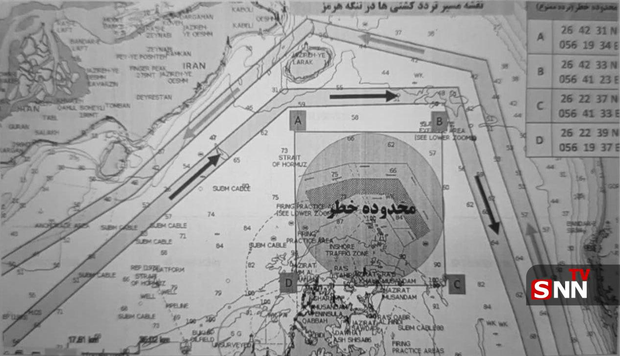
The short message posted by Foreign Minister Abbas Araghchi on Friday, declaring the strait open to all ships, did not mention any ongoing requirement for vessels to coordinate passage with Iranian authorities, stipulating only that they use the previously designated route.
Trump thanks Iran for announcement that Strait of Hormuz reopened to all shipping traffic
President Trump thanked Iran on Friday for its announcement that the Strait of Hormuz was reopened to all shipping traffic amid the ceasefire between Israel and Lebanon.
"IRAN HAS JUST ANNOUNCED THAT THE STRAIT OF IRAN IS FULLY OPEN AND READY FOR FULL PASSAGE. THANK YOU!," said Mr. Trump in a post on his Truth Social platform.
Iran declares Strait of Hormuz "completely open for the remaining period of ceasefire," on its designated route
Iran's Foreign Minister Abbas Araghchi said Friday that his country would allow all ships to pass safely through the Strait of Hormuz for the duration of the ceasefire between Israel and Lebanon.
"In line with the ceasefire in Lebanon, the passage for all commercial vessels through Strait of Hormuz is declared completely open for the remaining period of ceasefire, on the coordinated route" announced previously by Iran's port and maritime authorities, Araghchi said in a social media post.
Iran previously said ships that were granted explicit clearance by Iranian authorities — not linked to the U.S. or Israel — could transit the strait via a route that runs near its Larak Island, to avoid the risk of sea mines in the vital shipping lane.
The Lebanon-Israel ceasefire is to last 10 days, after taking effect at 5 p.m. Eastern on Thursday. The separate two-week ceasefire agreed between the U.S. and Iran is set to expire on Tuesday, but Araghchi appeared to peg the permission for vessels to transit the strait to the halt in fighting between Israel and Iranian-backed Hezbollah forces in Lebanon.
Oil prices drop on optimism for extension of U.S.-Iran ceasefire, but stocks mixed
World shares were mixed Friday even after Wall Street set another record, as investors watched for signs of more U.S.-Iran talks and an extension of the ceasefire of the Iran war that is expiring next week.
Oil prices fell Friday, while U.S. futures edged up.
President Trump suggested Thursday that he's open to extending the two-week ceasefire in the Iran war, and Iran's U.N. envoy said Tehran remained "cautiously optimistic" over negotiations with the U.S.
As optimism over an extended ceasefire grew, oil prices fell early Friday after climbing a day earlier. Brent crude, the international standard, was 3.2% lower at $96.25 per barrel. It had surged roughly 40% since the beginning of the Iran war in late February. Benchmark U.S. crude was down 3.6% to $87.86 a barrel.
Global energy shocks are growing over impacts of the Iran war, with the Strait of Hormuz remaining largely closed while the U.S. imposed a sea blockade on Iranian ports. The head of the International Energy Agency told The Associated Press on Thursday that Europe has "maybe six weeks or so" of jet fuel supplies remaining and warned of flight cancellations "soon."
In stocks, U.S. futures for the Dow Jones Industrial Average rose 0.5%, while futures for the S&P 500 and Nasdaq both ticked up 0.3% Friday.
Early European trading saw Britain's FTSE 100 index down 0.2% to 10,567.17. France's CAC 40 was 0.4% higher at 8,293.21, while Germany's DAX gained 0.6% to 24,308.82.
Asian stocks were mostly lower. Tokyo's Nikkei 225 fell 1.8% to 58,475.90 after reaching an all-time high on Thursday. South Korea's Kospi was 0.6% lower at 6,191.92. Hong Kong's Hang Seng dropped 0.9% to 26,160.33. The Shanghai Composite index edged down 0.1% to 4,051.43.
Australia's S&P/ASX 200 lost 0.1%. Taiwan's Taiex traded 0.9% lower, while India's Sensex gained 0.7%.
Iranian official calls Lebanon-Israel ceasefire a result of Hezbollah's "steadfastness"
The speaker of Iran's parliament, Mohammad Baqer Ghalibaf, welcomed the ceasefire between Israel and Lebanon on Friday, calling it a victory for Iran's powerful proxy force Hezbollah.
"The ceasefire was nothing but a result of Hezbollah's steadfastness and the unity of the Axis of Resistance; and we will deal with this ceasefire with caution, and we will remain together until the full realization of victory," Ghalibaf said in a post on social media. "I thank the mediating efforts of the State of Pakistan and General Asim Munir for endorsing this ceasefire. We are true to our pledge."
Iranian state media echoed the message, portraying the ceasefire as the result of the resistance mounted by Hezbollah to Israel's attacks and invasion of southern Lebanon.
Hezbollah is among the most powerful militias in the Middle East supported by Iran. It has long been designated as a terrorist organization by Israel and the U.S., and its military wing is also labeled a terror group by the European Union.
Lebanon president says objective now "to consolidate the ceasefire, ensure the withdrawal of Israeli forces"
Lebanon's President Joseph Aoun told a group of Lebanese lawmakers Friday, hours into his country's ceasefire agreement with Israel, that his goal "is to consolidate the ceasefire, ensure the withdrawal of Israeli forces from occupied southern territories, secure the release of prisoners, and address outstanding border disputes," according to a statement released by his office.
"The ceasefire is the gateway to moving forward with negotiations and is a path supported domestically and internationally," Aoun said. "Among its most notable signs is what U.S. President Donald Trump announced during yesterday's phone call, expressing support for Lebanon, its sovereignty, independence, and territorial integrity, as well as the United States standing with the Lebanese people to end their suffering, restore recovery, and reactivate the economy, which has been negatively affected by the recent war."
Aoun told lawmakers Lebanon's army would "play a fundamental role after the withdrawal of Israeli forces by deploying up to the southern international border [with Israel], ending armed manifestations, and reassuring southerners returning to their villages and towns that no armed forces will be present except the army and legitimate security forces."
Aoun did not mention Hezbollah by name. Southern Lebanon was long a stronghold for the Iran-backed group, which had exchanged intense fire with Israel during the Iran war until the current 10-day ceasefire took effect at midnight local time, which was 5 p.m. Eastern on Thursday.
"The Lebanese people, who have endured much in recent years, now face a new reality supported by Arab and international backing. This opportunity must not be wasted, as it may not be repeated," Aoun said.
Iranian army commander says forces remain "ready to confront any threat" as dual ceasefires hold
Iranian Army commander Major General Amir Hatami said Friday, nine days into his country's two-week ceasefire agreement with the U.S., that his forces remained "ready to confront any threat or aggression by enemies," but he indicated no new attacks by either side.
Hatami issued his statement, marking Army Day in Iran, hours after a parallel ceasefire took effect between Israel and Lebanon, which has halted fighting between Israeli forces and the Iranian backed group Hezbollah.
That separate battle had remained a potential disruptor to the U.S.-Iran truce, and President Trump pushed hard to get the Lebanon ceasefire nailed down to avoid a new flare up in the Iran war.
While the two-week ceasefire has halted U.S.-Israeli strikes on Iran and Iran's missile and drone fire at Israel and America's Persian Gulf allies, Tehran and Washington remain locked in a dispute over the Strait of Hormuz. The U.S. has blockaded Iranian ports, and Iran's looming threat to vessels not explicitly authorized by its authorities has kept traffic gridlocked in the vital shipping lane.
President Trump has demanded repeatedly that Iran drop its threat over the Strait, and Secretary of Defense Pete Hegseth warned Iranian commanders Thursday to "choose wisely" and make a deal to end the war and reopen the waterway, saying, "in the meantime, the War Department is locked and loaded."
Chairman of the Joint Chiefs of Staff Dan Caine also stressed the U.S. military's readiness to return to combat operations if diplomacy does not progress, saying Thursday that American forces remain "postured and ready to resume major combat operations at literally a moment's notice."
Residents of southern Lebanon hope to return to their homes under ceasefire
Residents of southern Lebanon forced to flee their towns and villages due to Israel's military operations told CBS News partner network BBC News on Friday they were hopeful that they might soon be able to return to their homes now that a ceasefire has come into effect.
But Israel's military told them explicitly not to, and Lebanese army vehicles were still blocking the path to some southern areas on Friday, the BBC reported, including the entrance to Khiam, which is still occupied by Israeli soldiers.
One man in his 70s told the BBC he was looking to return to his home, "hopefully soon."
A woman said she knew her house had been destroyed, but "it doesn't matter."
"Houses can be rebuilt, and all is worthless compared to a drop of blood of a martyr," she said, referring to Hezbollah fighters who have fought against Israel's invading forces.
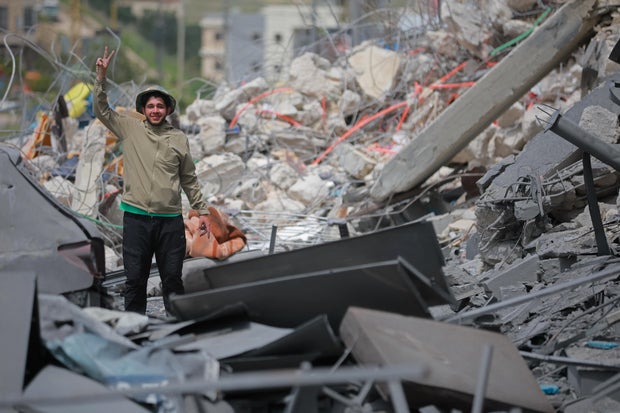
The BBC reported that residents of some southern areas of Lebanon were returning to their towns.
"We left [the town of Nabitiyeh] 25 days ago, and we are grateful for all those who helped with ending the war," one resident told the British network.
Asked if he thought the ceasefire would last, he told the BBC: "It will — thanks to those who imposed this one."
Israel warns southern Lebanon residents that troops are not leaving, and they should not return to their homes
Israel Defense Forces spokesman Avichay Adraee warned the displaced residents of towns and villages from a large region of southern Lebanon on Friday that IDF troops were not pulling out of the country amid the new ceasefire, and they should not attempt to return to their homes.
"With the entry of the ceasefire agreement into the implementation phase, the Israel Defense Forces continue to maintain their positions in southern Lebanon in the face of the ongoing terrorist activities of Hezbollah," Adraee said in his social media post.
"Out of concern for your safety and the safety of your families' members — until further notice — you are requested not to move south of the Litani River," he said, referring to a river that forms a de facto demarcation line across southern Lebanon.
Lebanese authorities say more than 1 million people — roughly a fifth of the country's entire population — have been displaced by the Israel operations.
Hezbollah says its fighters hands "remain on the trigger," but does not reject ceasefire
Hezbollah, the U.S.-designated terrorist group and close Iranian ally in Lebanon that's been at war with Israel on and off for years, indicated tacitly on Friday that it would respect the ceasefire between Israel and Lebanon announced by President Trump the previous day.
Hezbollah was not a formal party to the ceasefire, which took effect at 5 p.m. Eastern, agreed between the leaders of Israel and Lebanon. But it is Hezbollah — not Lebanese forces — that fired rockets at Israeli towns and cities during the war sparked by the joint U.S.-Israeli attacks on Iran on Feb. 28.
Israel ramped up its assault in Lebanon against Hezbollah targets in tandem with its joint strikes with the U.S. in Iran, also launching an extensive ground invasion which has seen Israeli forces occupy a significant portion of southern Lebanon. Lebanese officials say the Israeli operations have killed more than 2,000 people, including many women and children, and driven more than 1 million people from their homes.
Hezbollah issued a statement Friday lauding its attacks on Israel during the war, claiming thousands of strikes on Israeli positions and settlements in retaliation for Israel's attacks on Lebanese territory. The statement stressed that Hezbollah fighters would remain prepared for any new escalation.
"The hands of these fighters will remain on the trigger, anticipating the enemy's treachery and violation of promises," the group warned.
Pakistani leader says he'll keep backing "efforts aimed at lasting peace in the region"
Pakistan's Prime Minister Shehbaz Sharif, who has been a key intermediary helping to broker U.S.-Iran dialogue, including the ongoing two-week ceasefire, welcomed on Friday the tandem ceasefire agreed to the previous day by the Israeli and Lebanese leaders, which was announced by President Trump.
"I welcome the announcement of a ceasefire in Lebanon, facilitated through bold and sagacious diplomatic efforts led by President Donald Trump, and express the hope that it will pave the way for sustainable peace," Sharif said in a social media post.
"Pakistan reaffirms its unwavering support for the sovereignty and territorial integrity of Lebanon, and will continue to support all efforts aimed at lasting peace in the region," he said.
Sharif and Pakistani Chief of Army Staff Field Marshal Asim Munir, have worked feverishly this week, visiting Persian Gulf capitals and holding phone calls with U.S. and Iranian officials, to broker a new round of direct talks between Iran and the U.S.
No date has been set for that second round of talks yet, but the agreement to stop the fighting between Israel and Hezbollah could help smooth the path for such direct negotiations, as Israel's attacks in Lebanon remained a major sticking point after the previous round.
Lebanon ceasefire seems to be holding for most part
A 10-day truce appeared to be mostly intact in Lebanon early Friday, promising a pause in fighting between Israel and the Hezbollah militant group and possibly clearing one major obstacle to a deal between Iran and the United States and Israel to end weeks of devastating war. The ceasefire began at 5 p.m. EDT.
But it remained unclear whether Israel and Hezbollah would completely stop strikes on one another and whether the militant group would recognize a deal it did not play a role in negotiating and that will leave Israeli troops occupying a stretch of southern Lebanon.
The Lebanese army posted on social media that there had been "a number of violations of the agreement, with several Israeli attacks recorded, in addition to intermittent shelling targeting a number of villages." And French President President Emmanuel Macron said Friday he was concerned that the ceasefire "may already be undermined by ongoing military operations," French news agency AFP reported.
Still, barrages of gunshots rang out across Beirut as residents fired into the air just after midnight to celebrate the beginning of the truce, and displaced families began moving toward southern Lebanon and Beirut's southern suburbs despite warnings by officials not to attempt to return to their homes until it became clear whether the ceasefire would hold.
CBS/AP
Trump hails possible "historic day for Lebanon" as ceasefire with Israel takes effect
President Trump said on his Truth Social platform late Thursday night, after the Israel-Lebanon ceasefire came into effect, that it "May have been a historic day for Lebanon. Good things are happening!!!"
Mr. Trump announced earlier that Lebanon and Israel had agreed to a 10-day ceasefire, which took effect at 5 p.m. Eastern on Thursday, or midnight local time in the Mideast.
Earlier Thursday, Mr. Trump said on Truth Social that he hopes Hezbollah "acts nicely and well during this important period in time. It will be an GREAT moment for them if they do. No more killing. Must finally have PEACE!"
Trump says Iran war is "going along swimmingly" and "should be ending pretty soon"
President Trump said Thursday night that "the war in Iran is going along swimmingly."
"We had to do a little journey down to Iran, and I didn't want to do that, but we had to because we can't let them have a nuclear weapon," the president said during an event in Las Vegas.
The president predicted that the war "should be ending pretty soon," a prediction he has made in the past. The U.S. and Iran are currently nine days into a two-week ceasefire, buying the two sides time to negotiate, and Mr. Trump told reporters earlier Thursday that "if there's no deal, fighting resumes."
But he was optimistic about ongoing indirect negotiations with Tehran, as Pakistani mediators work to organize a new round of direct talks between U.S. and Iranian officials that Mr. Trump has said come as soon as this weekend — and yield "amazing" results.
We're "going to have victory very shortly," Mr. Trump said in Las Vegas, adding: "Let's see what happens over the next week or so."
U.S. using more than 10,000 troops to blockade Iran's ports, Pentagon says
U.S. Central Command said Thursday that it is using more than 10,000 U.S. service members — along with at least 12 ships and 100 aircraft — to enforce its ongoing blockade of Iranian ports.
CENTCOM, which oversees U.S. military operations in the Middle East, reiterated in a social media post that U.S. forces are not blockading the Strait of Hormuz itself, but instead "Iran's ports and coastline."
The U.S. began its blockade on Monday. CENTCOM said earlier Thursday that 14 vessels have so far "turned around to comply with the blockade" since it took effect.
Gen. Dan Caine, chairman of the Joint Chiefs of Staff, said in a news conference earlier in the day that the U.S. would "use force" on any ships that do not comply.