Juan Karita/AP
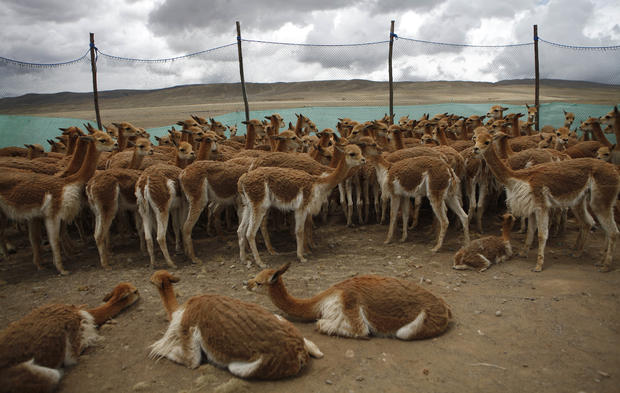
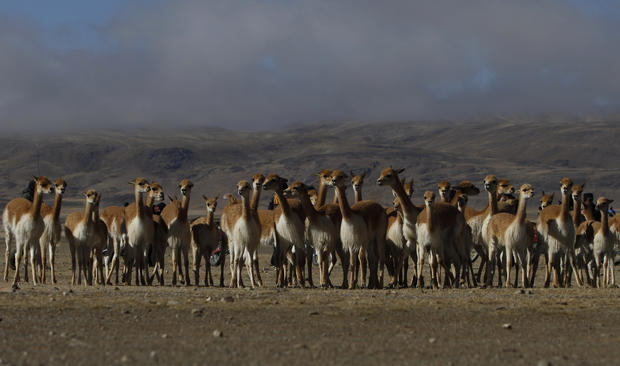
Freshly sheared wild vicunas group in a corral before their release inside the Apolobamba protected nature reserve, the animal's natural habitat near the Andean village of Ucha Ucha, Bolivia, Oct. 8, 2013.
The residents of Ucha Ucha harvest the vicunas' fine fur, which produces one of the world's most expensive wools.
Juan Karita/AP
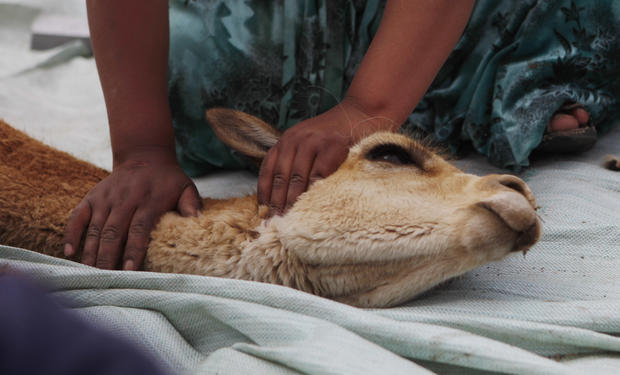
An Aymara Indian woman holds down the head of a wild vicuna while it is sheared inside the Apolobamba protected nature reserve, Oct. 7, 2013.
Ucha Ucha is 14,800 feet above sea level in the Apolobamba nature reserve, 167 miles northwest of the Bolivian capital of La Paz.
Juan Karita/AP
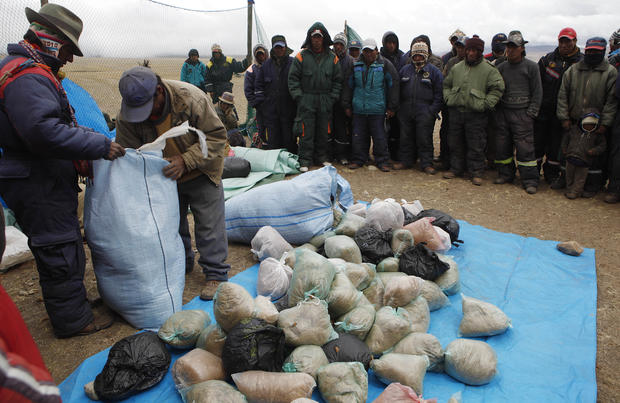
Aymara Indian families count the wool they sheared from wild vicuna inside the Apolobamba protected nature reserve, Oct. 7, 2013.
These families work together to sheer the vicuna every two years and sell the wool through Bolivia's national wool organization and split the money evenly.
The families said they earned $300 dollars each during the last shearing season in 2011.
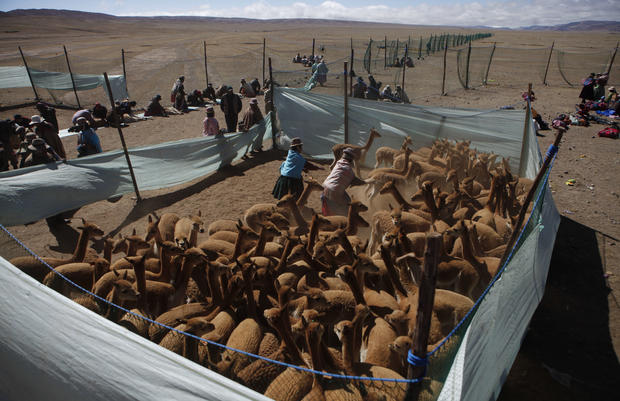
Juan Karita/AP
Aymara Indian women try to grab wild vicuna for shearing inside a temporary corral inside the Apolobamba protected nature reserve, Oct. 8, 2013.
Juan Karita/AP
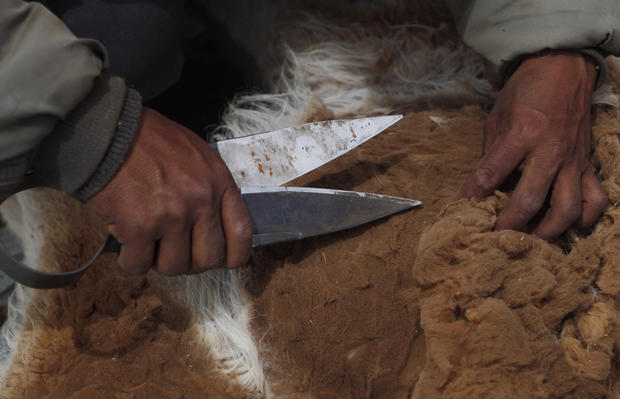
An Aymara Indian shears a wild vicuna inside the Apolobamba protected nature reserve, Oct. 7, 2013.
Unprocessed wool from the vicuna, the smallest of the South American camelids, fetches between $140-$230 a pound.
The fiber is highly prized by the world of fashion, and has been used to make suits for movie stars like Daniel Craig and tycoons like Donald Trump.
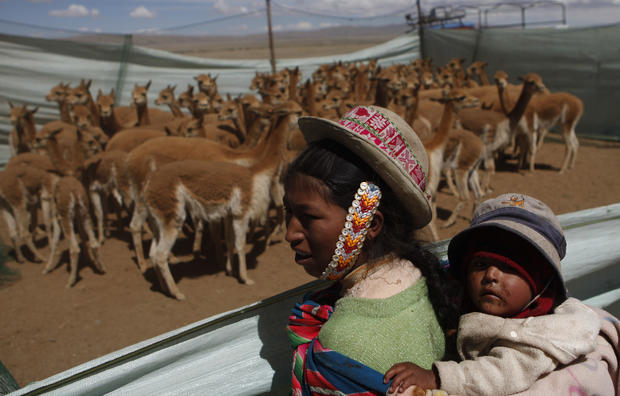
Juan Karita/AP
An Aymara Indian woman carries her son on her back as she keeps watch over wild vicuna inside a temporary corral inside the Apolobamba protected nature reserve, Oct. 8, 2013.
Ucha Ucha is 14,800 feet above sea level in the Apolobamba nature reserve, 167 miles northwest of the Bolivian capital of La Paz.
The icy wind and burning sun at this altitude slice and bake the skin of the area's indigenous residents.
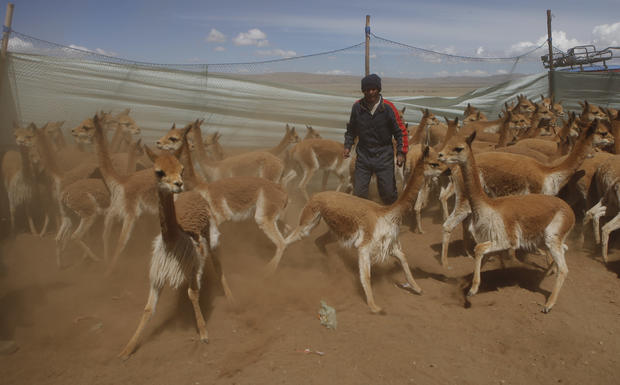
Juan Karita/AP
Wild vicuna move around inside a temporary corral inside the Apolobamba protected nature reserve, Oct. 8, 2013.
Every two years, about a hundred men and women from Ucha Ucha come together for the biennial vicuna shearing, which lasts four days.
Vicunas were once hunted to near extinction but now hunting them is forbidden and the Aymara shear and release the animals. The vicuna population has rebounded.
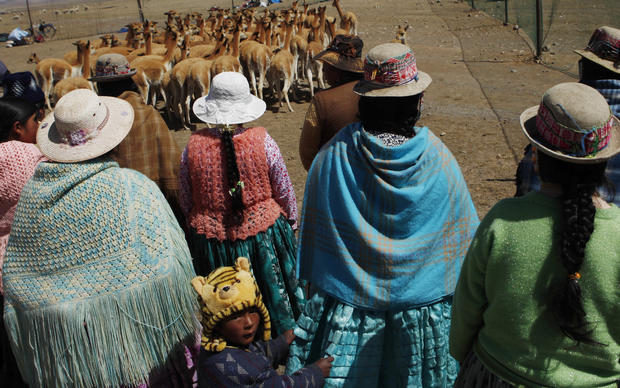
Juan Karita/AP
Aymara Indian women create a human wall to keep wild vicunas from escaping from a temporary corral inside the Apolobamba protected natural area Oct. 7, 2013.
Juan Karita/AP
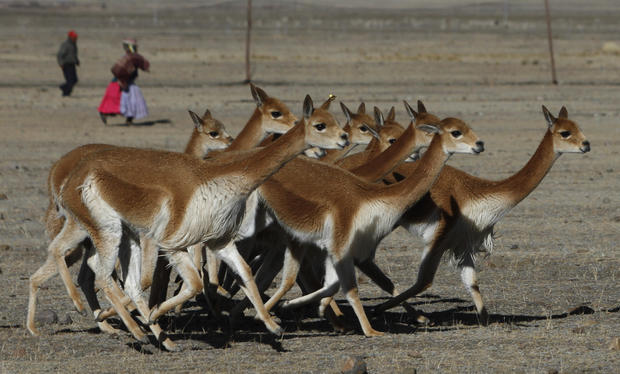
Wild vicuna run inside a temporary corral inside the Apolobamba protected nature reserve, Oct. 8, 2013.
The vicuna are an endangered species previously hunted by poachers for their fine wool.
Today Bolivia protects them in this reserve, sheering and selling the wool worldwide without killing the animal.
Juan Karita/AP
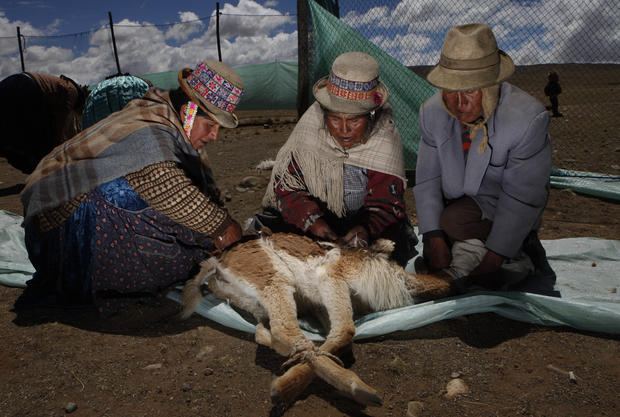
Aymara Indians hold down a wild vicuna to shear its wool inside the Apolobamba protected nature reserve, Oct. 7, 2013.
Two men hold each vicuna down while another shears its fur. With luck they can gather nearly 90 pounds of wool in a day.
"Before we sheared them every year, but now we do it every two years because the hairs are so small. The profits are divided among the community's members and it is a great help because at this altitude nothing grows," said Gregorio Blanco, head of the shearers.
Juan Karita/AP
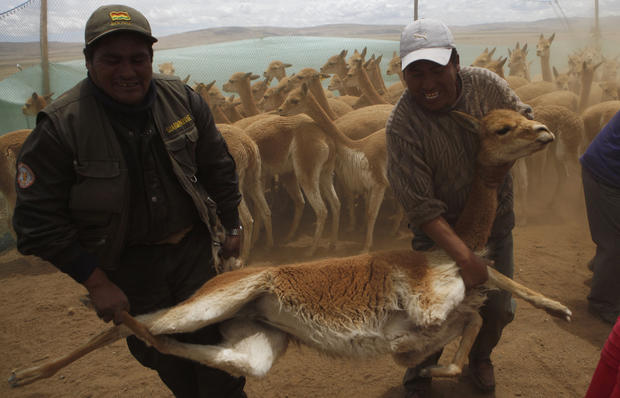
Aymara Indian men carry a wild vicuna to shear its wool with scissors inside the Apolobamba protected nature reserve, Oct. 7, 2013. T
Juan Karita/AP
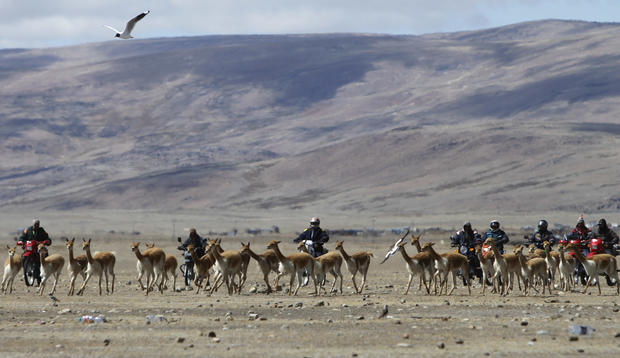
Aymara Indians on motorbikes herd wild vicuna into a temporary corral inside the Apolobamba protected nature reserve,Oct. 8, 2013.
Juan Karita/AP
Wild vicuna stand as they are temporarily corralled into an area by Aymarma Indians inside the Apolobamba protected nature reserve, Oct. 8, 2013.
While llamas and alpacas have been domesticated, the vicuna still lives in the wild.
Juan Karita/AP
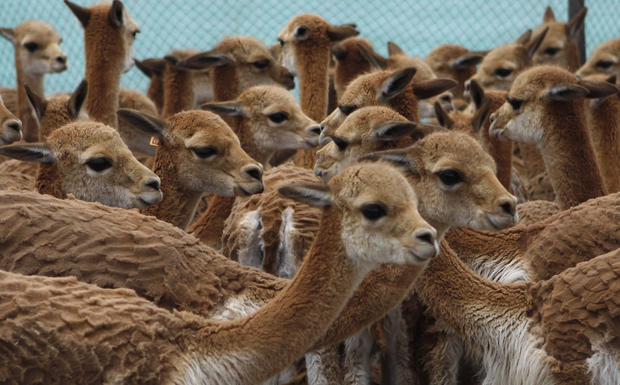
Wild vicunas stand grouped in a temporary corral before being released inside the Apolobamba protected nature reserve, Oct. 7 2013.
Juan Karita/AP
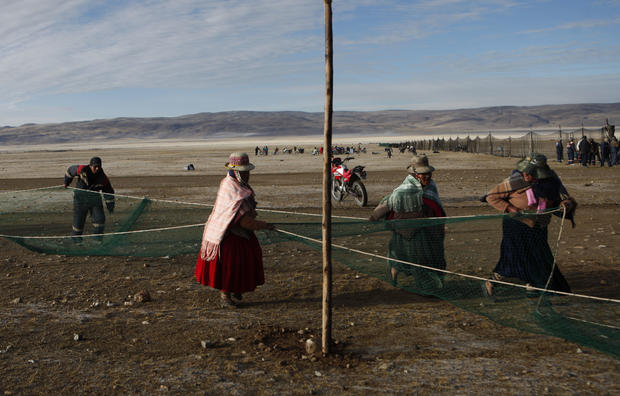
Aymara Indian women set up a net to temporarily coral wild vicuna inside the Apolobamba protected nature reserve, Oct. 7, 2013.