Grasse, birthplace to Chanel No. 5, is experiencing a perfume revival
One thousand jasmine flowers go into every 1 ounce bottle of Chanel No. 5 parfum, making the blooms critically important for the iconic scent launched in 1921.
For over a century, the jasmine blossoms used in each bottle of No. 5 have been grown and harvested in the French town of Grasse, where Coco Chanel helped craft the signature fragrance for her fashion house.
Most of Grasse jasmine is grown by the Mul family, who, since the 1800s, has farmed the land for six generations. Joseph Mul, 87, says Grasse jasmine has a distinct scent because, like grapes used in wine, it matters where it's grown.
"You can't put Burgundy in a bottle of Bordeaux," he said in French. "People will tell you, 'No, that's not Bordeaux!' For the fragrances we do here for Chanel, it's exactly the same thing."
How a town that smelled terrible became a perfume capital
Grasse, located in the hills of southern France, where the Mediterranean meets the southern Alps, was known in the 15th century for its booming leather trade, but that trade came with a problem: It made the town stink.
Then came a clever idea: to mask the stench by infusing a pair of gloves with the scent of local flowers. It sparked a new industry.
Flowers were planted and extraction techniques were developed. What began as a way to cover up the smell of dead animals grew into an art form, establishing Grasse as the perfume capital of the world.
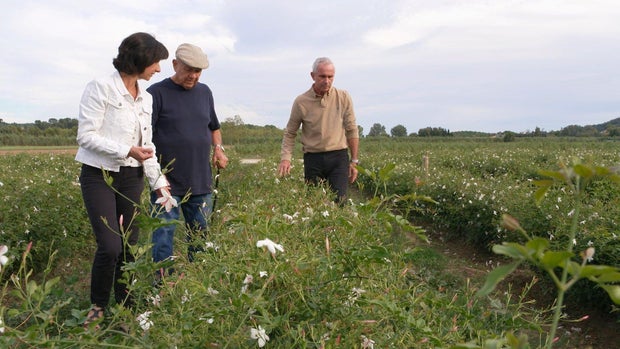
Grasse was in its golden age when Chanel arrived in search of the world's finest and most expensive perfume ingredients. In the early 1900s, the region bloomed in abundance with 12,000 acres of flower fields.
But over the decades, farms shut down as the French Riviera became a luxury real estate market, and cheaper flowers were grown abroad in countries such as India and Egypt. Today, there are only 142 acres due to rising real estate prices and cheaper labor overseas.
"It was a pity to see this evolution, but we couldn't do anything about it. It's how it went," Mul said. "We had to hang in there for many years."
To maintain the scent of No. 5, Chanel depends on Grasse jasmine, which smells fruity with a note of green tea. In 1987, the company established a deal with the Mul family to grow and sell flowers exclusively for them — the first time a luxury brand partnered directly with Grasse farmers, helping to revolutionize the industry.
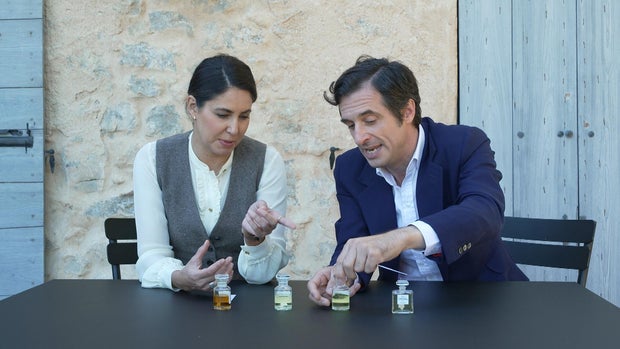
According to Oliver Polge, Chanel's master perfumer, who creates new fragrances for Chanel and ensures the classic scents smell as they always have, says the jasmine grown in Grasse today smells like the jasmine originally used in the fragrance.
"I think this is why we are very careful in maintaining the way we harvest the jasmine, the way we extract the jasmine, and we do it exactly as it was at the beginning," Polge said.
"La fleur au flacon" – Flower into the bottle
There are more than 80 separate scents in a bottle of Chanel No. 5, with the secret formula kept in a safe in Paris, but the most important ones are from Grasse, according to Polge.
Jasmine, a tiny flower, opens at night and is harvested as the sun comes up, when the blooms are at their most fragrant. Each one is picked by hand; they're too delicate for machines. The harvest ends before the midday heat can damage the petals, which are kept covered with a wet cloth so they stay cool.
Workers line up to weigh what they've picked; there are 4,000 jasmine flowers in a pound. The blooms are rushed to an on-site factory where the fragrance is extracted using a 150-year-old technique developed in Grasse. Speed is essential. If the flowers brown, the scent changes.
"It smells of bad fruit," Polge said.
Jasmine is placed into a vat and steeped overnight, like tea. The process leaves behind withered petals and a liquid that cools into a thick wax. Around 35 million jasmine flowers go into one 22-pound tub of wax. The wax is turned back into a liquid, and filtered again into the most concentrated form of jasmine called absolute, which is sent to a factory near Paris where a few drops go into each bottle of Chanel No. 5.
Revival underway in Grasse
Over the past decade, other major luxury houses have invested in Grasse by tying their brand to its reputation. Lancôme built what looks like a Barbie dream house on a farm where it grows roses for its fragrances. Downtown, an abandoned perfumery became a workshop for Louis Vuitton. And Christian Dior's former estate was restored, preserving the gardens that inspired the designer's first scent.
Since taking office in 2014, Grasse Mayor Jérôme Viaud has worked to revitalize the region's perfume industry. He helped designate Grasse a UNESCO Intangible Cultural Heritage Site, recognizing its centuries-old perfume-making traditions. And, he blocked development on 170 acres of land so that new flower fields could be cultivated.
"We have everything to get success," Viaud said, pointing to Grasse's "savoir faire," or knowledge, and the region's "terroir", or ideal environment. "So we think it's possible, and we are working on it every day."
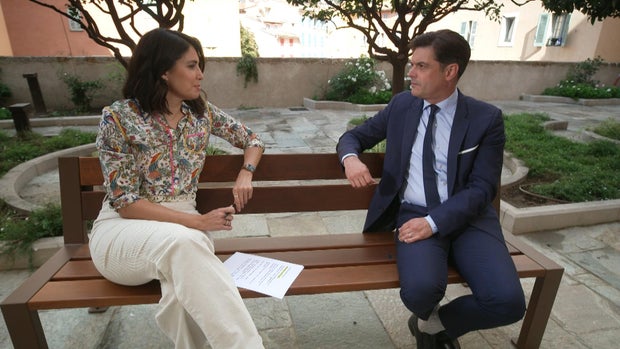
As part of the Grasse revival, one of the world's largest fragrance companies, DSM-Firmenich, opened Villa Botanica, a private retreat for its top perfumers to discover new smells. The master noses, as they are known in the industry, create perfumes for brands such as Valentino and Gucci. Company master nose Honorine Blanc said she thinks the Grasse of today holds more significance for the industry than ever before.
"You know why? Because we're going back to authenticity," she said.
Creating fragrances today
People don't realize what goes into developing perfumes, according to Blanc. Sometimes she needs thousands of trials to get a recipe just right.
"For me, when I come to Grasse, it's a place where I can slow down and smell the value of an ingredient," she said. "Because, you know, everything is speed, speed, speed, speed."
Today, fine fragrance is a more than $20 billion a year industry, according to market research firm Circana. The industry is largely built on synthetics bottled in a lab. Synthetic scents created in a lab, which Chanel also uses, are essential to modern perfumery, Blanc said.
It's not just about putting good smells into a bottle.
"You create perfection by balancing note[s] that are unpleasant with note[s] that are pleasant," she said. "If your apple is too perfect, you say, 'Oh my god, it's not organic, it's not natural.' So the imperfection and this off-note are very important for your fragrance."