What to know about Minnesota's "industrial-scale fraud" scandal, as more charges are filed and Trump weighs in
Federal prosecutors unveiled charges Thursday against another six people, accusing them of defrauding public assistance programs in Minnesota — including two men they allege traveled to the state for that express purpose.
The latest indictments add fuel to a scandal that has now led to charges against more than 90 people who have been accused, and in many cases convicted, of bilking hundreds of millions of dollars from the Midwestern state, putting Gov. Tim Walz's administration in the hot seat and drawing attacks from President Trump.
Thursday's charges focus on housing assistance and autism services. And the pandemic-era food aid fraud case that set off the scandal is still brewing.
Minnesota is far from the only state that has grappled with allegations of public assistance fraud, especially scams targeting pandemic aid funds. But Assistant U.S. Attorney Joseph Thompson said Minnesota faces a particularly large problem, pointing to 14 different Medicaid programs that the state has flagged for "significant fraud problems." He suggested total losses could reach into the billions.
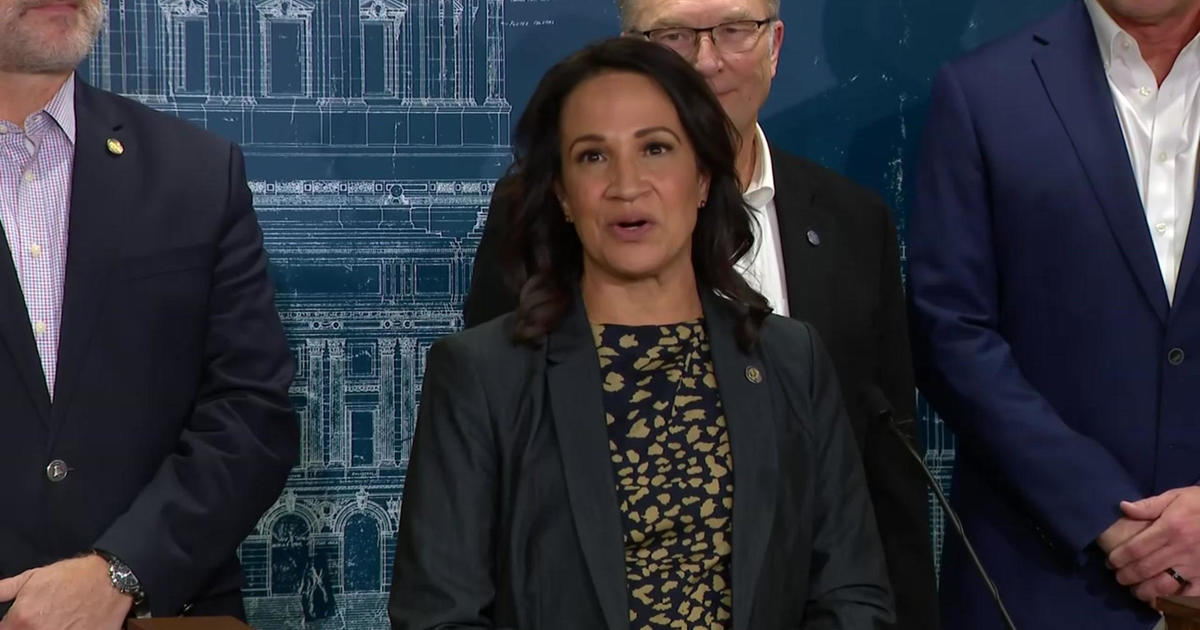
"The fraud is not small. It isn't isolated. The magnitude cannot be overstated," Thompson said at a press conference Thursday. "What we see in Minnesota is not a handful of bad actors committing crimes. It's a staggering, industrial-scale fraud."
Walz, whose administration has faced scrutiny for its handling of the issue, has vowed to crack down. Meanwhile, Mr. Trump has sharply criticized Minnesota — and he's lashed out at the state's large Somali-American community as most, but not all, of the defendants are of Somali descent.
Here's what to know about the new charges and the wider scandal:
Pennsylvania natives accused of "fraud tourism" in housing program
An alleged fraud scheme involving a now-defunct housing stabilization program in Minnesota expanded Thursday, as federal prosecutors charged five new people with wire fraud — including two Philadelphia men who allegedly traveled from halfway across the country because they heard the state programs presented "a good opportunity to make money."
The program in question was launched in 2020 to help seniors and people with disabilities find, apply for, move into and stay in housing. Offered as a benefit in Minnesota's Medicaid plan, it was recognized at the time as the nation's first program of its kind. State officials shut it down earlier this year, however, after finding "large-scale fraud."
Federal prosecutors have said in the past that the program was vulnerable to fraud because of its "low barriers to entry" and light recordkeeping rules.
In court papers, prosecutors claim the two Pennsylvanians signed up as providers for the program despite no clear ties to the state. The two men allegedly submitted some $3.5 million in claims, often sending in "fake and inflated bills," the indictment alleges.
Thompson said the state "has become a magnet for fraud, so much so that we have developed a fraud tourism industry."
A third defendant was charged with fraudulently claiming $1.4 million. Prosecutors say he flew to Amsterdam shortly after he was subpoenaed by federal authorities last month, and he has not returned to the U.S. since then. And two other new defendants were accused of submitting around $750,000 in fraudulent claims for the program.
The Justice Department charged eight other people with allegedly defrauding the same program in September. Six of those defendants have pleaded not guilty, and two pleaded guilty.
New charges in alleged autism services fraud scheme
Charges were also unsealed Thursday in an alleged fraud scheme that hit a second state program, one that provides services to children with autism.
Prosecutors allege that the new defendant in this case raked in millions from Medicaid reimbursements, many of which were inflated or for services that weren't provided.
In court papers, the Justice Department alleged the defendant's company claimed to offer one-on-one behavioral therapy to children with autism, but actually employed "unqualified" 18- and 19-year-olds. He allegedly recruited parents within Minnesota's Somali community to sign up for the program, helped to get their kids qualified for autism services and, in some cases, paid kickbacks to the parents.
Federal officials charged a different person with defrauding Minnesota's autism program in September, leveling similar allegations. That defendant pleaded guilty on Thursday.
As with the housing stabilization program, claims in the autism program have grown rapidly in recent years, according to court papers unsealed by the government on Thursday.
CBS News has reached out to attorneys for the six defendants who were charged Thursday for comment.
Feds tease another possible fraud case
The Justice Department unsealed a search warrant Thursday for a Minnesota business that participated in yet another state Medicaid-funded program, which offers health and safety assistance at home for adults with disabilities.
The business and its owners have not been criminally charged. CBS News has reached out to the business for comment.
In an affidavit attached to the search warrant, an FBI agent claimed there was a "massive scheme to defraud" the state's Integrated Community Supports program, which he said has faced an "explosion in fly-by-night operators" since it was created in 2021. State officials flagged similar concerns about the program earlier this year, the Minnesota Star Tribune reported.
Thompson said Thursday that instead of giving day-to-day help to clients, some providers "simply obtained apartments or condos … and then just put them in there and started billing," sometimes to the tune of hundreds of dollars a day.
Scandal started with Feeding Our Future fraud case
The largest known COVID-era fraud scheme — and the first one to fall into the federal government's crosshairs — targeted programs that offered food to needy children.
The Minnesota-based nonprofit Feeding Our Future was accused of stealing from the Federal Child Nutrition Program by falsely claiming to distribute millions of meals during the pandemic. More than 75 people have been charged; at least 56 have pleaded guilty and seven have been convicted, including the group's leader. Prosecutors have put the losses at almost $250 million.
Here's how prosecutors allege it worked: Feeding Our Future recruited hundreds of local groups and businesses to run distribution sites and submitted reimbursement claims for the meals. The Minnesota Department of Education then paid out the claims using federal dollars. But many of those claims were falsified, with phony invoices and attendance rosters filled with fake children's names.
Feeding Our Future collected millions in administrative fees and raked in kickbacks from the operators of its local sites, according to an indictment against founder Aimee Bock, who was convicted this year of wire fraud and several other charges. Dozens of site operators who worked with Feeding Our Future or other sponsors have also been charged, many of whom have been convicted or pleaded guilty.
Bock has long denied any wrongdoing. Her attorney has said she plans to appeal.
Some of the defendants who ran distribution sites spent the taxpayer money on lavish personal expenses like lakefront property, luxury cars, jewelry, first-class plane tickets and a rented private villa in the Maldives, according to documents obtained by CBS News.
The scheme was part of a wave of pandemic fraud nationwide. Prosecutors say the Feeding Our Future defendants took advantage of a COVID-era expansion of the child nutrition program.
State auditors have faulted the Minnesota Department of Education for its handling of the situation, too. Minnesota's Office of Legislative Auditor said last year the state agency "created opportunities for fraud" by missing warning signs and failing to address complaints.
The report also claimed the agency was stymied by Feeding Our Future's history of accusing the state of racial discrimination when officials started taking a closer look at the group. The organization's founder is White, but most of those charged in the scheme are of Somali descent, and the group said in a 2020 lawsuit against the state that it primarily served minority communities.
State officials spotted early signs of fraud before the COVID-19 pandemic began, but faced pressure from Feeding Our Future to stop asking questions, CBS News previously reported. An attorney for Bock denied that she pressured state officials.
Trump weighs in — and links it to Somalia
Mr. Trump has ripped Minnesota over the controversy, calling the state a "hub of fraudulent money laundering activity" and claiming Somali immigrants have "ripped off that state."
He has lashed out at Somali people in often-incendiary terms, calling them "garbage" and claiming they "contribute nothing." Frequent targets of his ire include Walz and Democratic Rep. Ilhan Omar of Minnesota, who was born in Somalia and came to the U.S. as a teenager.
Walz and Omar, in turn, have denounced the president for his rhetoric, which the governor called "vile, racist lies and slander towards our fellow Minnesotans."
Roughly 76,000 people of Somali descent lived in Minnesota last year, 52% of whom were born in the U.S. and 42% of whom were naturalized citizens, according to Census Bureau data.
Immigration authorities launched a crackdown in early December in the Minneapolis-St. Paul area, and Mr. Trump has said he will revoke deportation protections for potentially hundreds of Somali migrants in Minnesota.
The fraud scandal itself has also drawn attention from the Trump administration. The U.S. Treasury says it is investigating whether Minnesota tax money went to the Somali terror group al Shabaab, following allegations in the conservative magazine City Journal. But multiple federal investigators told CBS News Minnesota's Jonah Kaplan that there is no evidence taxpayer dollars were funneled to al Shabaab.
"The vast majority of the money that these folks made went to spending on luxury items for themselves," said Andy Luger, the former U.S. attorney who led the office which prosecuted these frauds from 2022 until January. "There was never any evidence that this money went to fund terrorism nor was there any evidence that was the intent of the 70 people we indicted."
A 2019 report by the state's Office of the Legislative Auditor said it was "unable to substantiate" allegations that funding from one program was going to terrorist groups, though the report didn't rule it out, saying it's "possible" that state funds may have found their way to terrorists.
Walz's handling of fraud scandal under scrutiny
Republicans at the state and national level have criticized Walz for years, accusing him and other state officials of being slow to act on warning signs of fraud. Walz has led Minnesota since 2019, but he gained national prominence after serving as the Democratic nominee for vice president last year.
Earlier this month, the GOP-led House Oversight Committee opened an investigation into alleged fraud in Minnesota state programs, requesting documents from Walz.
Walz has long defended the state's handling of the situation. He said in 2022 that officials caught the Feeding Our Future scheme early on, but couldn't take further action due to an order from a judge and a request from the FBI not to do anything that could harm its investigation.
The governor said last week that he will "take responsibility" for the mistakes that led to theft of taxpayer dollars. But he added that the "guardrails were taken off" by the federal government during the pandemic, and "the guidance was to move the money."
Walz launched a new fraud prevention program on Dec. 12, led by a former FBI agent. He applauded the new federal charges on Thursday.
"This is exactly the type of strong action we need from prosecutors to ensure fraudsters are put behind bars," Walz said in a statement. "We will not tolerate fraud, and we will continue to work with federal partners to ensure fraud is stopped and fraudsters are caught."
James Clark, inspector general of the Minnesota Department of Human Services, said in a statement Thursday the agency "has been moving more aggressively than ever to suspend payments where we see evidence of fraud." He also urged federal officials to share information with the agency, which oversees many of the programs that were hit by fraud allegations.
"If there is evidence of Medicaid fraud, the state should be given the information so DHS can slam the door shut on payments to those individuals and businesses," Clark said.