DOJ releasing more than 3 million pages of records related to Jeffrey Epstein
Washington — Deputy Attorney General Todd Blanche said Friday that the Justice Department is releasing more than 3 million pages of records related to its investigation into convicted sex offender Jeffrey Epstein.
Blanche said during a news conference at the Justice Department that the release Friday will include more than 2,000 videos and 180,000 images, and said that in total, the Trump administration has produced roughly 3.5 million pages as part of its efforts to comply with the Epstein Files Transparency Act.
That law, passed by Congress and signed by President Trump last year, required the Justice Department to disclose all of its unclassified material related to its investigation into Epstein and his longtime associate Ghislaine Maxwell by Dec. 19.
Blanche said that the images and videos made public include "extensive redactions" to protect survivors of Epstein's crimes.
"We redacted every woman depicted in any image or video, with the exception of Ms. Maxwell," he said. "We did not redact images of any man, unless it was impossible to redact the woman without also redacting the man."
Maxwell was convicted in 2021 for her role in a scheme to sexually exploit and abuse minor girls with Epstein and is serving a 20 year prison sentence.
"Today's release marks the end of a very comprehensive document identification and review process to ensure transparency to the American people and compliance with the act," Blanche said. "The department has engaged in an unprecedented and extensive effort to do so."
He said that the Justice Department is submitting a final report to Congress and providing written justifications for redactions, which will be published in the Federal Register. Once those requirements are fulfilled, the Justice Department obligations under the Epstein Files Transparency Act "will be completed," he said.
Blanche said the Trump administration collected more than 6 million pages in response to the Epstein-related law but is withholding a portion of them for various reasons, including because they contain survivors' personal information or would jeopardize an active federal investigation.
"I can assure that we complied with the statute, we complied with the act, and we did not protect President Trump. We didn't protect or not protect anybody," he said. "There's a hunger or a thirst for information that I do not think will be satisfied by the review of these documents. There's nothing I can do about that."
Jay Clayton, the U.S. attorney for the Southern District of New York, is leading an investigation into Epstein's ties to prominent Democrats, including former President Bill Clinton, and major financial institutions. Mr. Trump had asked the Justice Department to look into Epstein's relationships with them in November.
Blanche said the White House was not involved in the department's review.
"There's no oversight by the White House in the process we've taken over the past 60 days," he said.
Before the latest tranche of records were made public Friday, the Justice Department had released more than 100,000 pages of material, which have included photos, videos, court records and emails, among other documents. While the first batch of records contained few mentions of Mr. Trump, many records made public in a second wave mentioned the president. Mr. Trump has not been accused of wrongdoing.
Included in the earlier files was a 2020 email from a New York prosecutor, who said that flight logs revealed Mr. Trump flew on Epstein's private jet "many more times" than was previously known. Investigators also discussed "10 conspirators" before Epstein was arrested in 2019, according to emails made public just before Christmas. Prosecutors had also drafted a memo about co-conspirators they could potentially charge, a message from 2020 showed.
Several photos released in mid-December featured Clinton, including one showing him in a hot tub with another person, whose face is redacted.
Angel Ureña, a spokesperson for Clinton, accused the Trump administration in a statement last month of "shielding themselves from what comes next, or from what they'll try and hide forever." Clinton's team "knew nothing and cut Epstein off before his crimes came to light," he said.
"So they can release as many grainy 20-plus-year-old photos as they want, but this isn't about Bill Clinton. Never has, never will be," Ureña said.
While Congress set a Dec. 19 deadline for the Justice Department to release all of the unclassified material related to Epstein, Attorney General Pam Bondi and Blanche said earlier this month that the department was still reviewing more than 2 million documents that it had to make public under the law.
The department leaders said in a letter to the U.S. district court in New York, which oversaw the criminal cases against Epstein and Maxwell, that more than 500 people were tasked with reviewing and redacting the information related to Epstein. In another update to the court, Bondi and Blanche said Tuesday that they expected to publish all of the remaining material "in the near term."
Lawmakers on Capitol Hill have criticized the Justice Department over its release of the documents and the scope of the disclosures after Blanche said they would be made public on a rolling basis because of the volume of material and the need to redact the personal information of survivors.
Rep. Ro Khanna, a Democrat from California who co-sponsored the Epstein Files Transparency Act, accused the Justice Department of "openly defying the law" by refusing to disclose all of the files.
The Trump administration faced pressure from Congress and some of the president's allies to release all material from the federal probe into Epstein after the Justice Department and FBI said in a memo last July that they would not disclose any additional information about Epstein's case.
Following that revelation, lawmakers on Capitol Hill launched their own investigation into the federal government's handling of Epstein's case, and have sought and received documents and photos from Epstein's estate.
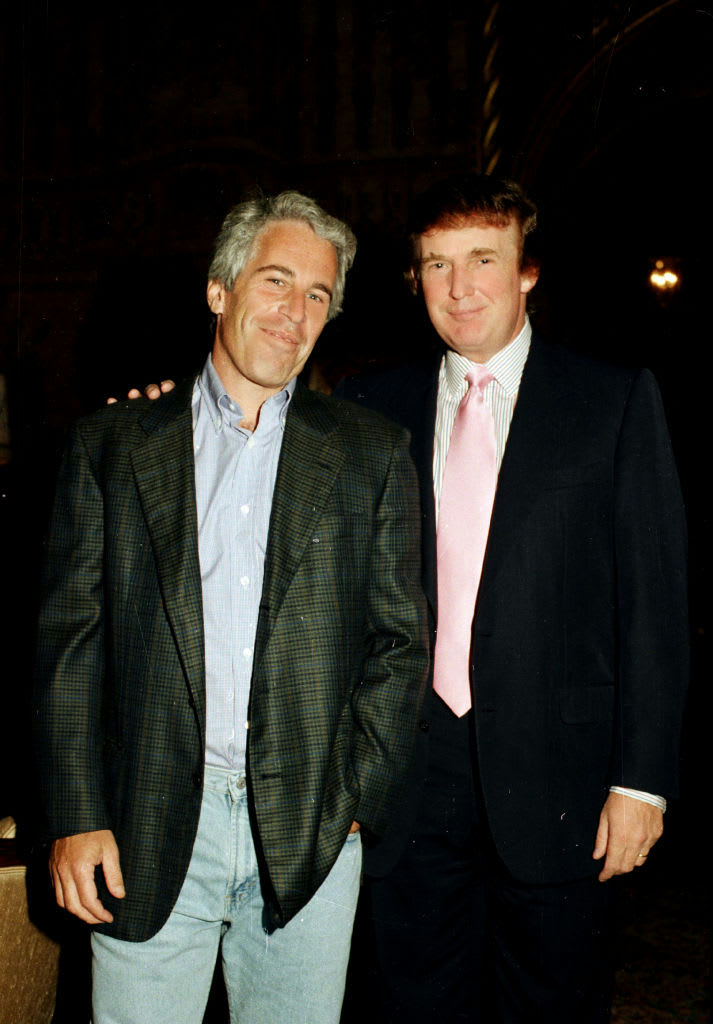
Mr. Trump and Epstein were friends for years and ran in the same social circles in New York and Florida from the late 1980s to the early 2000s. But the president said they had a falling out around 2004, more than a decade before Epstein was indicted on federal sex trafficking charges in 2019. He died by suicide at a Manhattan correctional facility while awaiting trial.
Epstein was initially investigated by state authorities in Florida in 2005 and indicted on a state prostitution charge the following year. He was also investigated by federal law enforcement. But Epstein reached a deal with federal prosecutors in Florida in 2008 that saw him plead guilty to two state prostitution charges and serve an 18-month prison sentence, and avoid federal prosecution.