How solar sailing could impact the future of space exploration
SAN FRANCISCO -- In a laboratory, time lapse video shows a tiny satellite opening a huge sail that could carry it deep into space. Launched on a conventional rocket, the satellite will eventually be powered only by sunlight hitting a Mylar sail.
The spacecraft was not developed by NASA but a non-profit group -- The Planetary Society.
"Our mission is to empower citizens to do things in space," said Jennifer Vaughn, the group's chief operating officer.
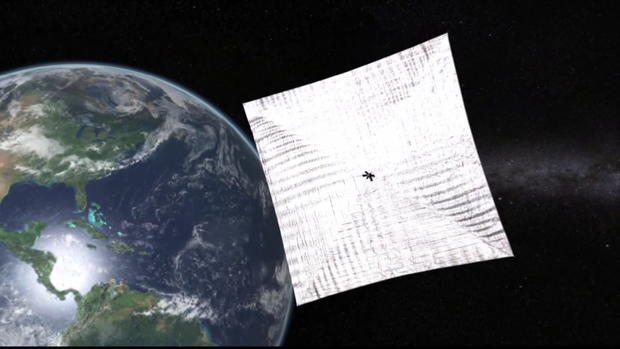
The Planetary Society raised $4.5 million to build LightSail.

"Although solar sailing isn't necessarily fast when you get started, it's constant -- it never stops," said Vaughn. "You can actually build up the speed that you need to escape our solar system."
LightSail's mission is made possible by a new generation of small, relatively inexpensive spacecraft called "CubeSats." About the size of a loaf of bread, they are making space exploration affordable to universities and businesses.
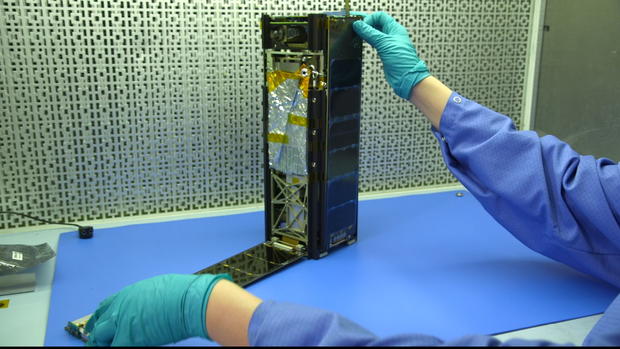
"Last year about 150 spacecraft this size were launched," said Rex Ridenoure.
Ridenoure's company, Ecliptic Enterprises, built LightSail for the Planetary Society to test whether a spacecraft can be propelled simply by capturing light. Ridenoure says it'll be a first.
"We really hope to kick-start a process where others now take the technology and make it better and really start pushing the boundaries," said Vaughn. "
The test flight scheduled for early May will last just a few weeks but eventually LightSail could do what sailing ships once did on earth -- enable exploration of distant and mysterious places.