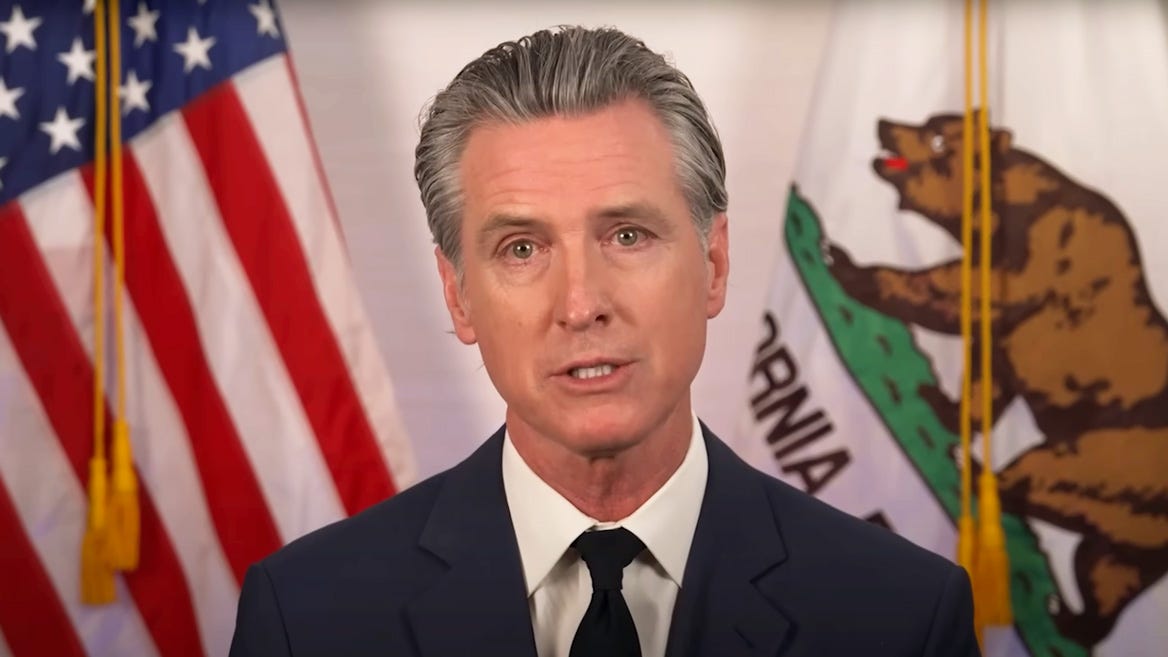
Newsom moves to stop Louisiana from extraditing doctor accused of mailing abortion pills
California Gov. Gavin Newsom said Wednesday he was blocking Louisiana's attempt to extradite a doctor in the Golden State accused of mailing abortion pills.
The Democratic governor's announcement comes a day after Louisiana Gov. Jeff Landry, a Republican, said he sent the extradition paperwork in an effort to bring the physician "to justice." Louisiana has some of the strictest anti-abortion laws in the country, while California law aims to protect abortion providers from criminal prosecution for treating out-of-state patients.
Newsom said extraditing the doctor would have violated an executive order he signed in 2022 barring state agencies in his administration from assisting other states' efforts to prosecute abortion providers.
"We will not allow extremist politicians from other states to reach into California and try to punish doctors based on allegations that they provided reproductive health care services," he said in a statement. "Not today. Not ever."
Landry's office did not immediately respond to The Associated Press' request for comment on Newsom's announcement.
Louisiana was pushing to extradite Remy Coeytaux, a physician in the San Francisco Bay Area, who allegedly provided pills to a Louisiana woman in 2023. Louisiana Attorney General Liz Murrill said Tuesday Coeytaux faced a criminal charge of abortion by means of abortion-inducing drugs and risked spending up to 50 years in jail if convicted.
An email and a telephone message seeking comment from Coeytaux on Tuesday on the extradition push went unanswered.
The woman who was provided the pills, Rosalie Markezich, and Murrill sought to join a lawsuit aimed at blocking telehealth prescriptions of mifepristone, a drug commonly used in medication abortions.
In court filings, Markezich said her then-boyfriend used her email to order abortion pills from Coeytaux and had her forward a $150 payment. She said she never spoke to the physician, did not want to take the pills and felt coerced.
The claim echoes arguments from anti-abortion groups that remote prescribing and mail delivery enable coercion.
Pills are the most common way abortions are accessed in the U.S. and are a major reason that, despite the bans, abortion numbers rose in 2024, according to a report. Medication abortion has been available in the U.S. since 2000, when the Food and Drug Administration approved the use of mifepristone.