Tsunami advisory expires for parts of California. Here are the different alert levels.
A tsunami advisory has expired for coastal areas south of Santa Barbara County on Wednesday morning, the National Weather Service says.
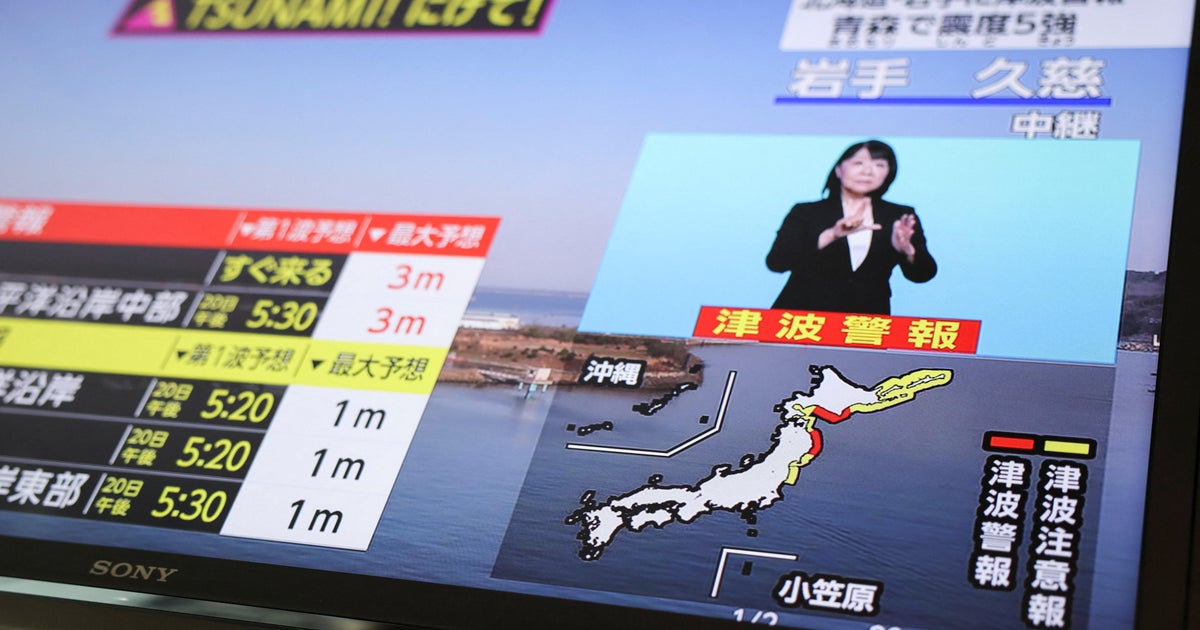
The entire West Coast of the U.S. was placed under a tsunami alert Tuesday night after a massive 8.8-magnitude earthquake struck near Russia's Kamchatka Peninsula.
The advisory remains in effect for all coastal areas of Santa Barbara and San Luis Obispo Counties. Weather officials said the advisory was allowed to expire after waves remained under a foot.
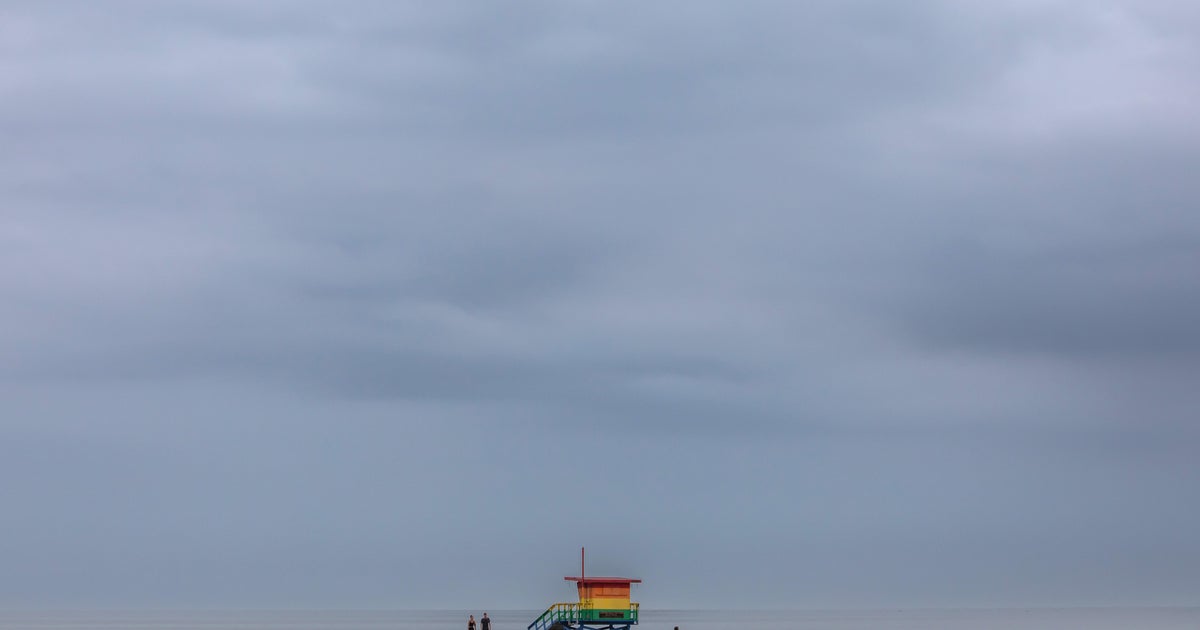
The National Weather Service upgraded an initial tsunami watch to an advisory after first issuing an alert for the West Coast shortly after the earthquake was reported at around 4:30 p.m. Pacific. The area under the advisory stretches from the California-Mexico border north to the British Columbia-Alaska border.
At around 8:30 p.m., NWS officials upgraded the alert to a warning for a portion of the Northern California coast from Cape Mendocino to the Oregon border. They also noted that Humboldt County, where 1-to-2-foot waves were expected, is not at risk of inundation of dry land from a tsunami.
What are the four tsunami alert levels and what do they mean?
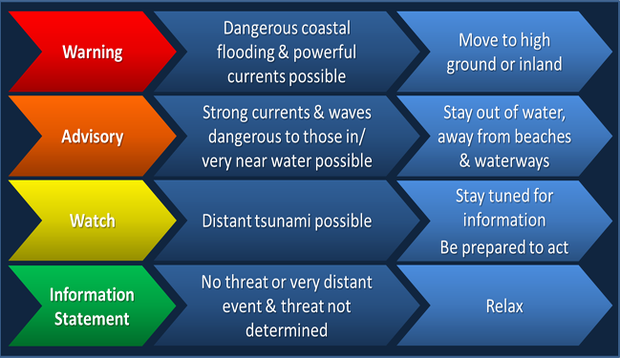
The National Weather Service has a four-tier alert system for tsunamis, which are issued in the event that powerful waves make landfall in the aftermath of an earthquake.
- Tsunami warning: The most severe alert is a tsunami warning, meaning that widespread flooding is expected and powerful currents could last in the area for several days. Under a warning, people are urged to seek higher ground and immediately leave low-lying areas, especially those at or below sea level.
- Tsunami advisory: A tsunami advisory is the second tier in the tsunami alert system. Strong currents and waves could bring danger to people in or near large bodies of water, as well as flooding to beaches or harbors. People are advised to stay out of water and be vigilant for updates from local government officials.
- Tsunami watch: The third level of alert is a tsunami watch, which means that a tsunami could be possible. Residents in the affected area should be prepared to act at a moment's notice.
- Information statement: The final tier of the tsunami alert system is an information statement, which signifies that there is no tsunami threat from a distant event that occurred. No action is required in such a situation.
How to stay safe after a tsunami alert is issued
National Weather Service officials shared a series of tips for people living in coastal areas that are affected by a tsunami alert. Boaters are advised to leave the harbor and seek higher ground, and people are urged to leave beaches, marinas and harbors.
What officials and experts are saying about the tsunami threat in California
California Gov. Gavin Newsom shared a statement on X, noting that the state's Office of Emergency Services was coordinating with local officials in Northern California, from Cape Mendocino to the Oregon border.
Dr. Lucy Jones, world-renowned seismologist, spoke with reports on the aftermath of the earthquake, stating that experts with the National Oceanic and Atmospheric Administration estimated that waves could reach approximately 1 foot for coastal areas along Southern California.
"So, this is a lot of water moving, and water is heavy, and it can really push you around," she said, referring to modeling on what to expect during a large tsunami. "The main losses we saw were actually damage to boats and ships in the ports and harbors as they got thrown around by these moving currents. So, I think that that's going to be an issue to be watched for tonight. But it's not something like Indonesia or Japan with the big waves ... those predicted waves were 20 meters, 65 feet."