Communities along "CoCo" route approve tax increase to support Front Range Passenger Rail
Residents along the proposed Colorado Connector passenger rail route have approved a tax increase to fund the project's expansion.
The rail project will connect Fort Collins and Denver with a commuter train that uses existing rail lines. The Denver Regional Transportation District and the Colorado Department of Transportation are funding the route, which they hope to have operational in 2029.
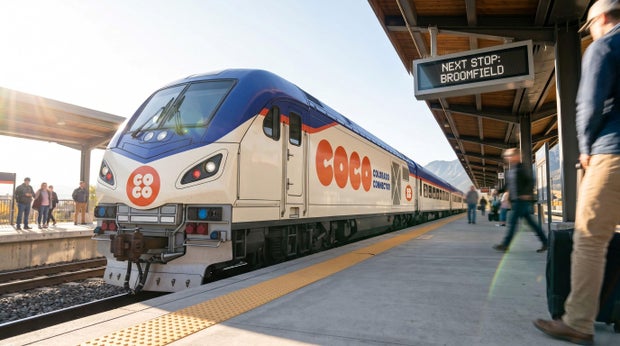
But over the next 20 years, the district hopes to extend the line south through Colorado Springs to Pueblo. To fund that extension and other upgrades, Ballot Measure 7A was added to the November ballot.
Ballot Measure 7A proposed a 0.333% sales tax in 29 municipalities and Sterling Ranch metropolitan districts 1-7 to help fund multiple additions, including:
- Extending the route south to Pueblo
- Building a new Amtrak station in Trinidad
- Increasing the northern route's round trip frequency from three times daily to 10
- Running the southern route round trips eight times a day
- Providing upgrades and improvements
Supporters of the measure say the move will help alleviate traffic, provide a reliable transportation option, reduce emissions, and expand educational and commercial access across the Front Range. But opponents raised concerns about funding an expensive project, its timeline, and its effectiveness.
Part of the sales tax would also go to supporting the affected communities.
On Wednesday, FRPR board members said getting through the first phase of the project will be a lot of work despite the rail lines already being there.
"It's a signaling system and automation system to basically ensure that there are no train collisions, and it's mandatory for passenger rail service," said John Putnam, Chair of the Front Range Passenger Rail District Board of Directors. "It's present in Colorado Springs and in Pueblo and Denver, but is not currently present on the line between Westminster and Fort Collins."
The sales tax will not apply to food, prescription drugs, medical supplies, gasoline or electricity and gas services to residences.


