Fighting the fire within: How I managed menopausal hot flashes

Sponsored and provided by Astellas. Pam is a real VEOZAH (fezolinetant) patient who has been compensated by Astellas. Please keep reading to see Important Safety Information, including BOXED WARNING.
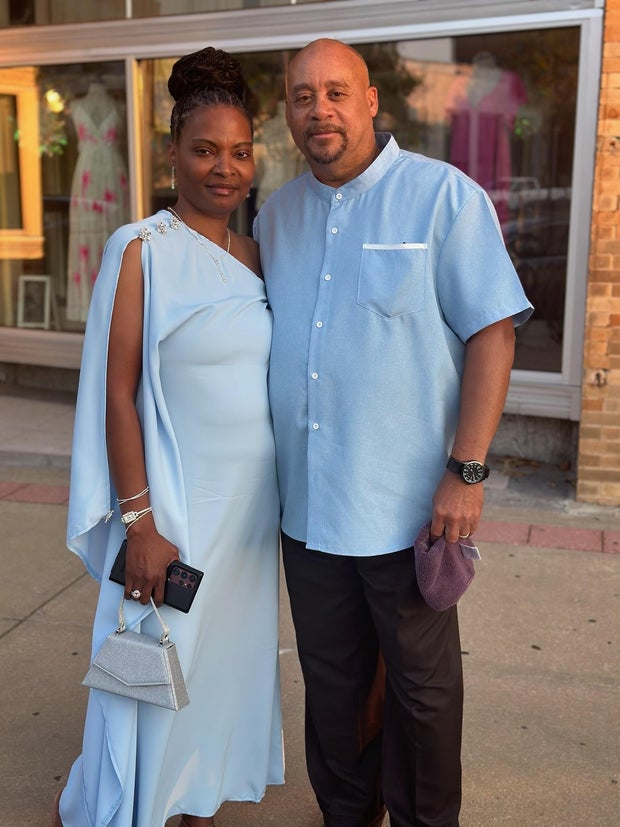
Like many women, Pam is always on the go. At 51 years old, she's a busy director of a rural health clinic, a full-time graduate student, and a mother of four. Recently, Pam's life was further complicated by the onset of menopause, which brought hot flashes and night sweats, causing her to wake ten times a night.* [1]
Sleepless nights because of her night sweats occurred along with frequent hot flashes during the day – at work, at school, and while spending time with her family and friends. [1] "It feels like you're burning from the inside out," said Pam. "I wouldn't wish this on my worst enemy." [1]
After more than a year of discomfort, Pam talked to her healthcare professional about her symptoms and learned that this new challenge she was experiencing was moderate to severe vasomotor symptoms (VMS), or hot flashes and night sweats, due to menopause. [1]
Nearly half of women in the U.S. going through menopause may experience moderate to severe VMS due to menopause. [2] Hot flashes manifest as sudden and intense sensations of heat in the upper body, sometimes accompanied by sweating, reddening skin, chills, and a rapid heartbeat. [1] Hot flashes classified as moderate in severity are described as a sensation of heat with sweating, while severe hot flashes consist of a sensation of heat with sweating, causing cessation of activity. [1] As Pam knows all too well, these symptoms can impact many aspects of a woman's life, from sleep to work to personal relationships. [3]
Despite so many women in the U.S experiencing VMS due to menopause, many don't openly talk about their struggles or seek help in managing symptoms due to shame or embarrassment. [2,4,5] Pam was lucky to have a supportive environment with her colleagues and loved ones to talk openly about her symptoms, and they encouraged her to talk to her healthcare professional about treatment options. After speaking with her healthcare professional about treatment options and doing further research, Pam learned about VEOZAH™, a hormone-free prescription treatment for moderate to severe VMS due to menopause, which is the first FDA-approved treatment designed to block a source of hot flashes directly. [5,6] VEOZAH blocks the binding of neurokinin B, a brain chemical known to trigger hot flashes. [1,7]
Encouraged by her family, Pam asked her healthcare professional about VEOZAH to determine if it was the right treatment for her. Her healthcare provider talked to her about the benefits and advised her that VEOZAH can cause serious side effects, including liver problems. [6] Her healthcare professional advised her that she would get a blood test prior to and while taking VEOZAH, and to stop taking VEOZAH right away if she has signs or symptoms of liver problems such as feeling more tired than usual, decreased appetite, nausea, vomiting, itching, yellowing of the eyes or skin (jaundice), pale feces, dark urine, or pain in the stomach (abdomen). [6] See additional Important Safety Information, including BOXED WARNING, below. [6] Once Pam decided with her healthcare professional to move forward with VEOZAH, her healthcare professional gave her a prescription and sample at no cost.
VEOZAH is proven to reduce the number and severity of hot flashes day and night based on clinical studies measuring efficacy at 4 and 12 weeks. [6] While everyone's experience differs, Pam had fewer and less severe hot flashes and night sweats within a few weeks after starting VEOZAH. [8,9]
"The impact of having fewer hot flashes and night sweats on my day-to-day life as a student, wife, and working mom has been great," commented Pam. "I also found the VEOZAH Savings Card to be tremendously helpful. Since I am commercially insured and eligible for the Savings Card, it lowered how much I pay out of pocket."
Pam is one of many women who have taken VEOZAH since it was approved by the U.S. Food and Drug Administration (FDA) in May of 2023. [6,10,11] Dr. Risa Kagan, a board-certified OBGYN, and The Menopause Society-certified practitioner, as well as a clinical professor at UCSF and gynecologist at Sutter Health, is grateful to have another option to offer her patients. [6]
"Women have long endured hot flashes and night sweats due to menopause with few treatment options available, so the approval of VEOZAH in 2023 has been an important addition to available treatments," noted Kagan. [6,9] "As a physician, I see firsthand the impact that these symptoms can have on a woman's life – both personally and professionally – and it's rewarding to have this nonhormonal, first-of-its-kind option available that may help appropriate patients." [3,5,6]
Dr. Kagan recommends women work closely with their healthcare professional to find the best treatment for them to manage their hot flashes and night sweats due to menopause. [1] It is important that women and their healthcare professional have the ability to choose what's right for them based on their individual medical history and personal choices. However, due to insurance challenges, such as prior authorizations or step therapy with "fail first" requirements, accessing prescribed medications is not always straightforward. Astellas is actively working to educate payers to ensure that their utilization management policies are well-grounded in clinical practice and do not impose unnecessary burdens on patients.
Despite its universal impact and the fact that all women who reach midlife will experience menopause, related symptoms like hot flashes and night sweats are often underappreciated and overlooked. [4,12]
"It's high time that the U.S. healthcare system acknowledges the burden of hot flashes and night sweats due to menopause on women and prioritize access to medicines that have the potential to help alleviate that burden," said Dr. Kagan. [3] "I strongly encourage women to talk to their healthcare professionals about their experience with hot flashes and night sweats due to menopause that may be affecting their day-to-day lives. [3] Your wellbeing matters, and you are not alone in your menopause journey." [2]
Women should consult with their healthcare professional to determine if VEOZAH is the right treatment for them. [6] Patients should also understand the details of their health insurance policy, such as which treatments are covered, coverage restrictions and limits, and exclusions. For instance, a patient's insurance may require prior authorization to cover VEOZAH, which can be provided to their insurance company by their healthcare professional.
Women taking VEOZAH with commercial insurance coverage may be eligible for the VEOZAH Savings Card. To learn about the applicable terms and conditions and enroll, patients should visit VEOZAH Support Solutions.
What is VEOZAH™ (fezolinetant)?
VEOZAH is a prescription medicine used to reduce moderate to severe vasomotor symptoms due to menopause. VEOZAH is not a hormone. Vasomotor symptoms are the feelings of warmth in the face, neck, and chest, or sudden intense feelings of heat and sweating ("hot flashes" or "hot flushes").
IMPORTANT SAFETY INFORMATION
What is the most important information I should know about VEOZAH?
VEOZAH can cause serious side effects, including:
- Liver Problems. Your healthcare provider will do a blood test to check your liver before you start taking VEOZAH. Your healthcare provider will also do this blood test monthly for the first 3 months, at month 6, and month 9 after you start taking VEOZAH or if you have signs or symptoms that suggest liver problems. If your liver blood test values are elevated, your healthcare provider may advise you to stop treatment or request additional liver blood tests.
Stop VEOZAH right away and call your healthcare provider if you have the following signs or symptoms of liver problems:
- feeling more tired than you do usually
- decreased appetite
- nausea
- vomiting
- itching
- yellowing of the eyes or skin (jaundice)
- pale feces
- dark urine
- pain in the stomach (abdomen)
Do not use VEOZAH if you:
- have cirrhosis.
- have severe kidney problems or kidney failure.
- are taking certain medicines called CYP1A2 inhibitors. Ask your healthcare provider if you are not sure.
Before you use VEOZAH, tell your healthcare provider about all of your medical conditions, including if you:
- have liver disease or problems.
- have kidney problems.
- have any medical conditions that may become worse while you are using VEOZAH.
Tell your healthcare provider about all the medicines you take, including prescription and over-the-counter medicines, vitamins, and herbal supplements. VEOZAH may affect the way other medicines work, and other medicines may affect how VEOZAH works.
The most common side effects of VEOZAH include:
- stomach (abdominal) pain
- diarrhea
- difficulty sleeping (insomnia)
- back pain
- hot flashes or hot flushes
These are not all the possible side effects of VEOZAH. Tell your healthcare provider if you have any side effect that bothers you or does not go away.
Call your healthcare provider for medical advice about side effects. You are encouraged to report negative side effects of prescription drugs to the FDA. Visit www.fda.gov/medwatch or call 1-800- FDA-1088.
Please see full Prescribing Information and Patient Information, including BOXED WARNING.
*Individual experiences with moderate to severe VMS (also known as hot flashes and night sweats), due to menopause, may vary. [1]
MAT-US-VEO-2025-00790 10/25
References
1. Thurston RC. Vasomotor symptoms. In: Crandall CJ, Bachman GA, Faubion SS, et al, eds. Menopause Practice: A Clinician's Guide. 6th ed. The North American Menopause Society; 2019:43-55.
2. Freeman EW, Sammel MD, Sanders RJ. Risk of long-term hot flashes after natural menopause: evidence from the Penn Ovarian Aging Study cohort. Menopause. 2014;21(9):924-932.
3. English M, Stoykova B, Slota C, et al. Qualitative study: burden of menopause-associated vasomotor symptoms (VMS) and validation of PROMIS sleep disturbance and sleep-related impairment measures for assessment of VMS impact on sleep. J Patient Rep Outcomes 2021;5(37):1-13. Erratum in: J Patient Rep Outcomes 2021;5:42
4. Nosek M, Kenedy HP, Gudmundsdottir M. Silence, stigma, and shame: a postmodern analysis of distress during menopause. ANS Adv Nurs Sci. 2010;33(3):E24-E36. doi: 10.1097/ANS.0b013e3181eb41e8.
5. The North American Menopause Society. The 2023 nonhormone therapy position statement of the North American Menopause Society. Menopause. 2023;30(6):573-590.
6. Veozah [package insert]. Northbrook, IL: Astellas Pharma US, Inc.
7. Jayasena CN, Comninos AN, Stefanopoulou E, et al. Neurokinin B administration induces hot flushes in women [published online February 16, 2015]. Sci Rep. 2015. https://www.ncbi.nlm.nih.gov/pmc/articles/PMC4329553/pdf/srep08466.pdf.
8. Johnson KA, Martin N, Nappi RE, et al. Efficacy and safety of fezolinetant in moderate to severe vasomotor symptoms associated with menopause: a phase 3 RCT. J Clin Endocrinol Metab. 2023;108(8):1981-1997.
9. Lederman S, Ottery FD, Cano A, et al. Fezolinetant for treatment of moderate-to-severe vasomotor symptoms associated with menopause (SKYLIGHT 1): a phase 3 randomised controlled study. Lancet. 2023;401(10382):1091-1102.
10. Financial Results (FY2023)
11. Data on file. 2025.
12. Santoro NF. Menopause. In: Crandall CJ, Bachman GA, Faubion SS, et al, eds. Menopause Practice: A Clinician's Guide. 6th ed. The North American Menopause Society; 2019:1-21.